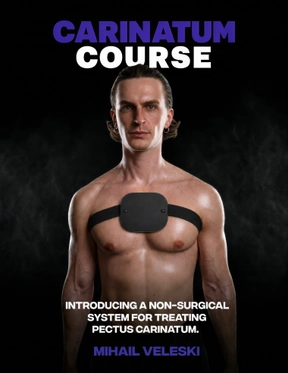
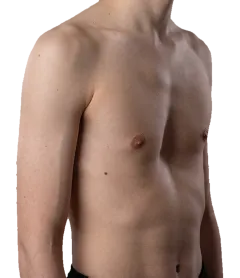
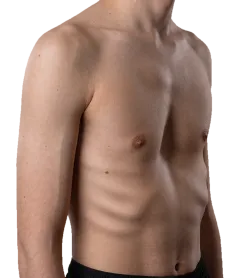
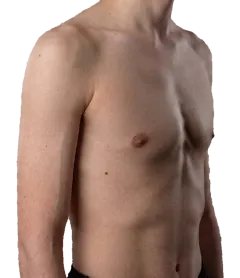
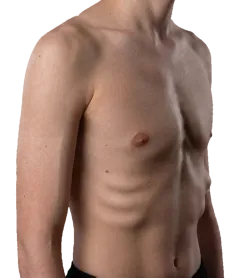
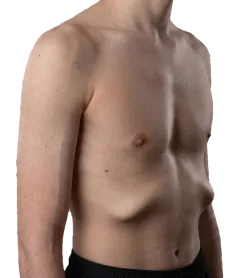
Flatten the bump.
No surgery.
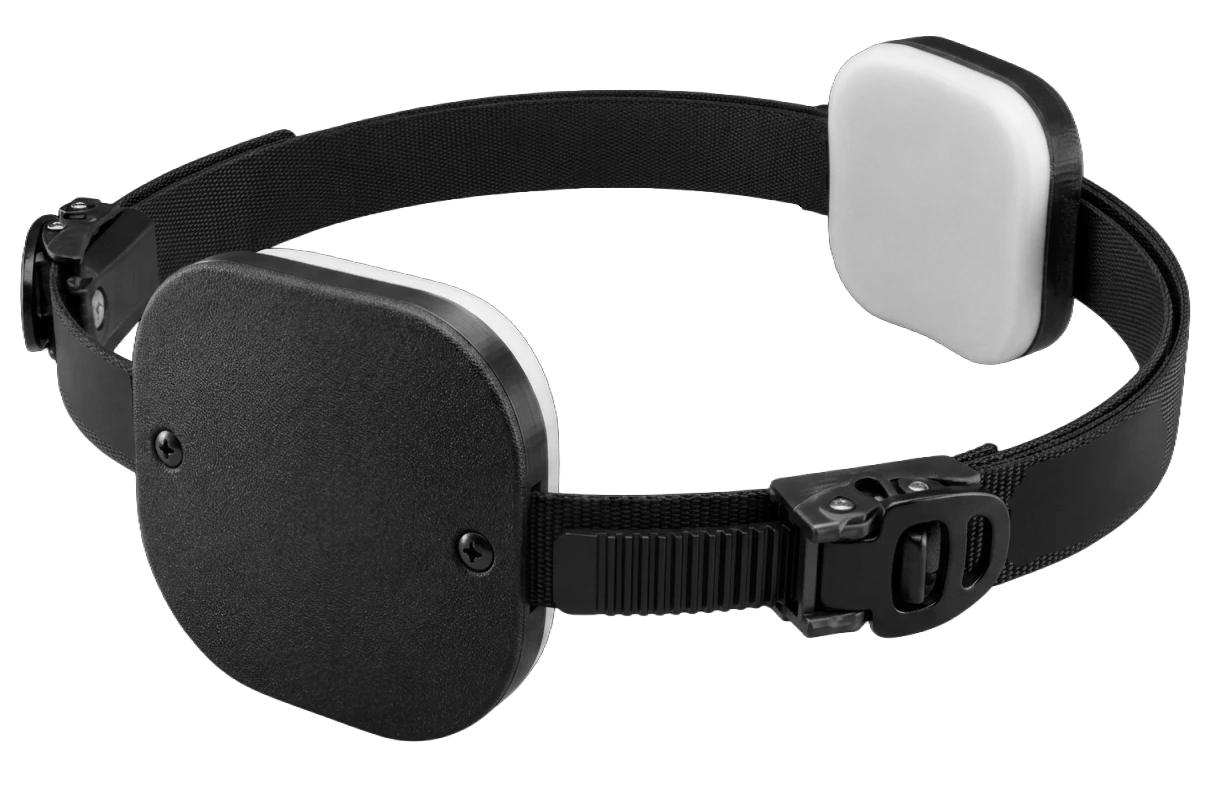
A pectus carinatum brace does one job: steady pressure on the bump. That's what flattens a flexible carinatum chest. It's adjustable, and you wear it under your clothes.




Joined by 1,000+ people fixing their chest without surgery, since 2015
A bump responds to pressure.
Angle and hours do the work.
Cartilage gives way to steady, directed pressure. Force doesn't do it, and neither does waiting.
This in-app browser can only play video fullscreen. To watch it here in the page, open the menu in the corner and pick Open in browser.




The bump that sticks
out through everything.
Six questions. If you're nodding at most of them, you're on the right page.
Carinatum is one of the most correctable pectus types.
Steady compression reshapes flexible cartilage over time (the same idea as Wolff's Law for bone), and dynamic bracing corrects most flexible chests when the brace is worn as planned. If your chest is flexible, you probably don't need surgery.
Meet the
carinatum brace.
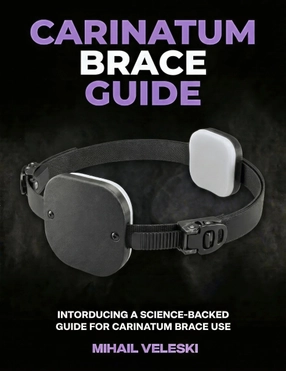
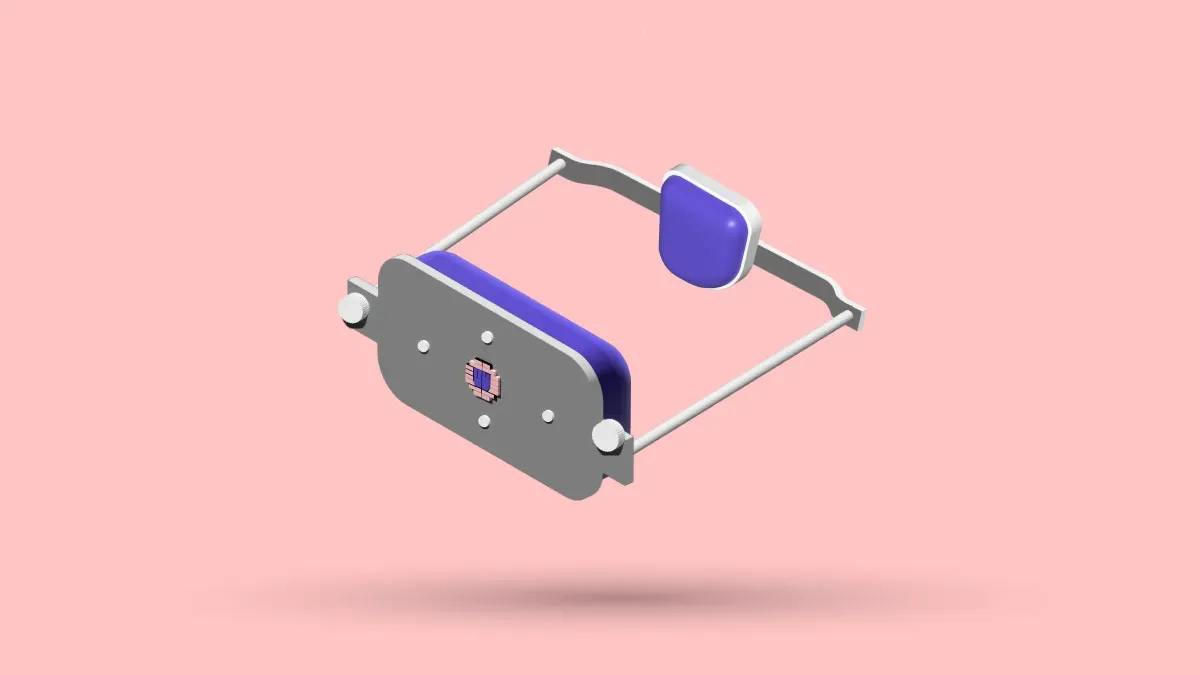
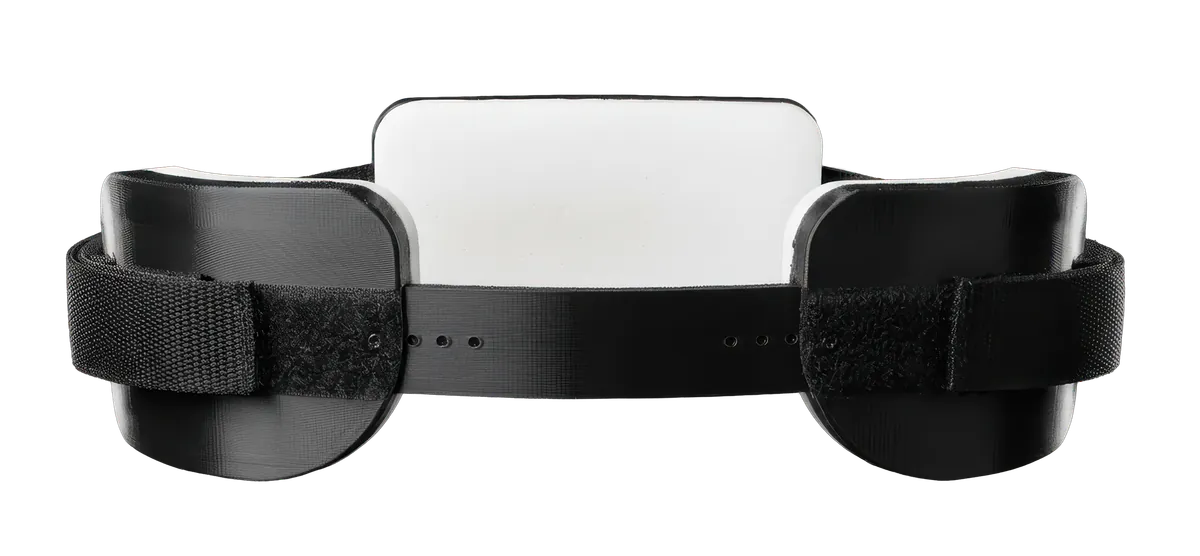
Adjustable silicone pads on a slim frame sit over the highest point of your bump and press it back toward flat, under your clothes. These are photos of the exact brace that ships to you.
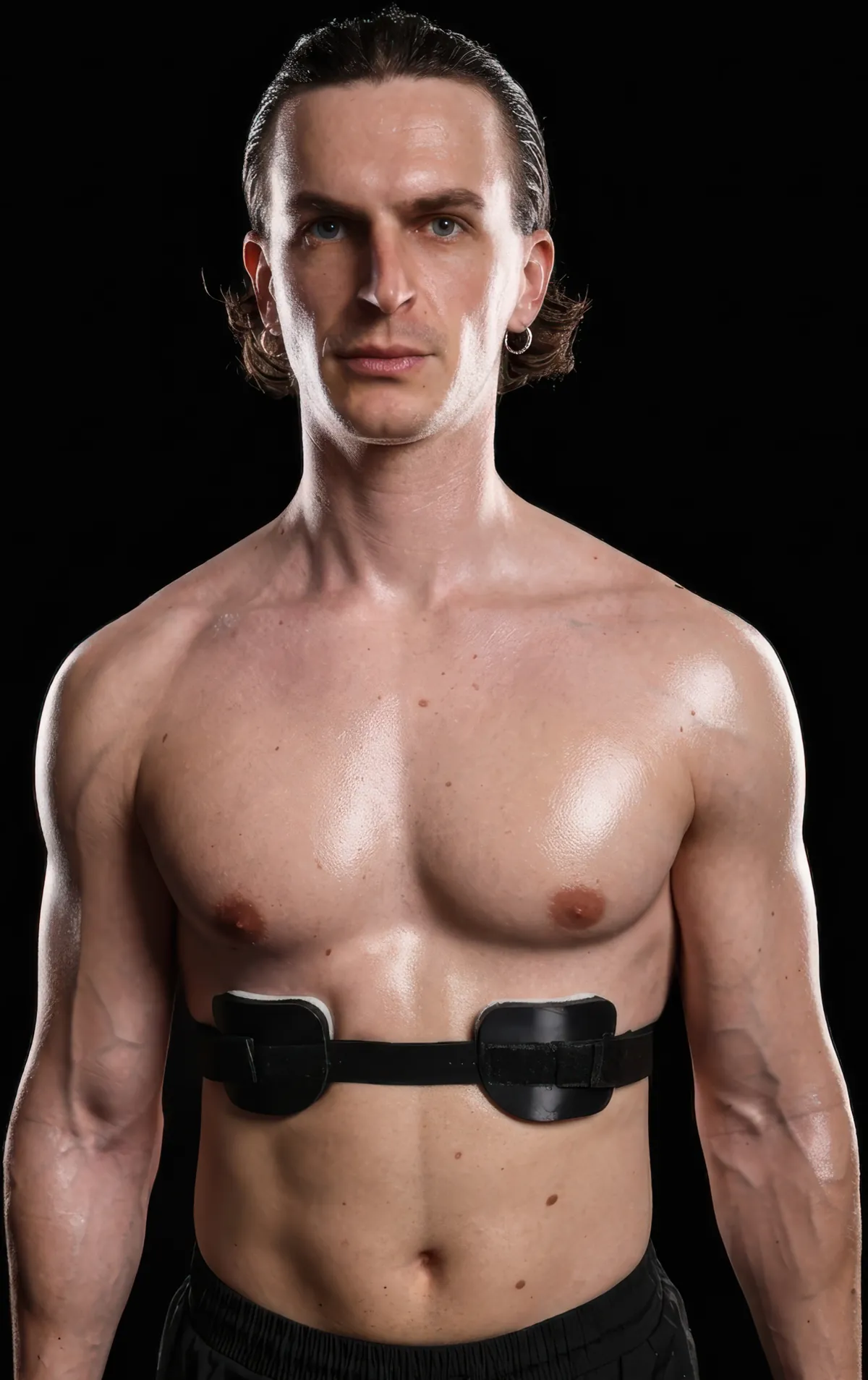
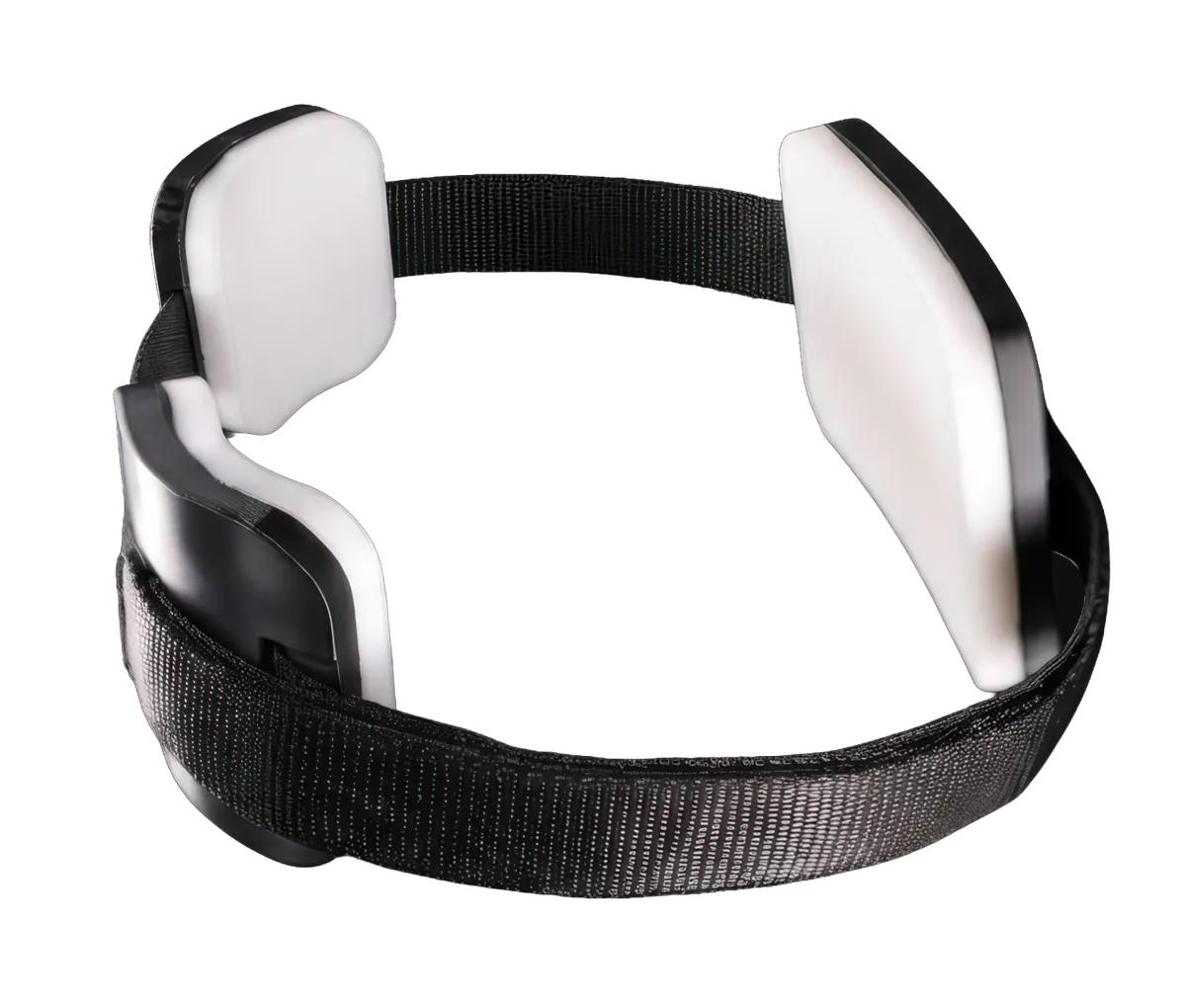
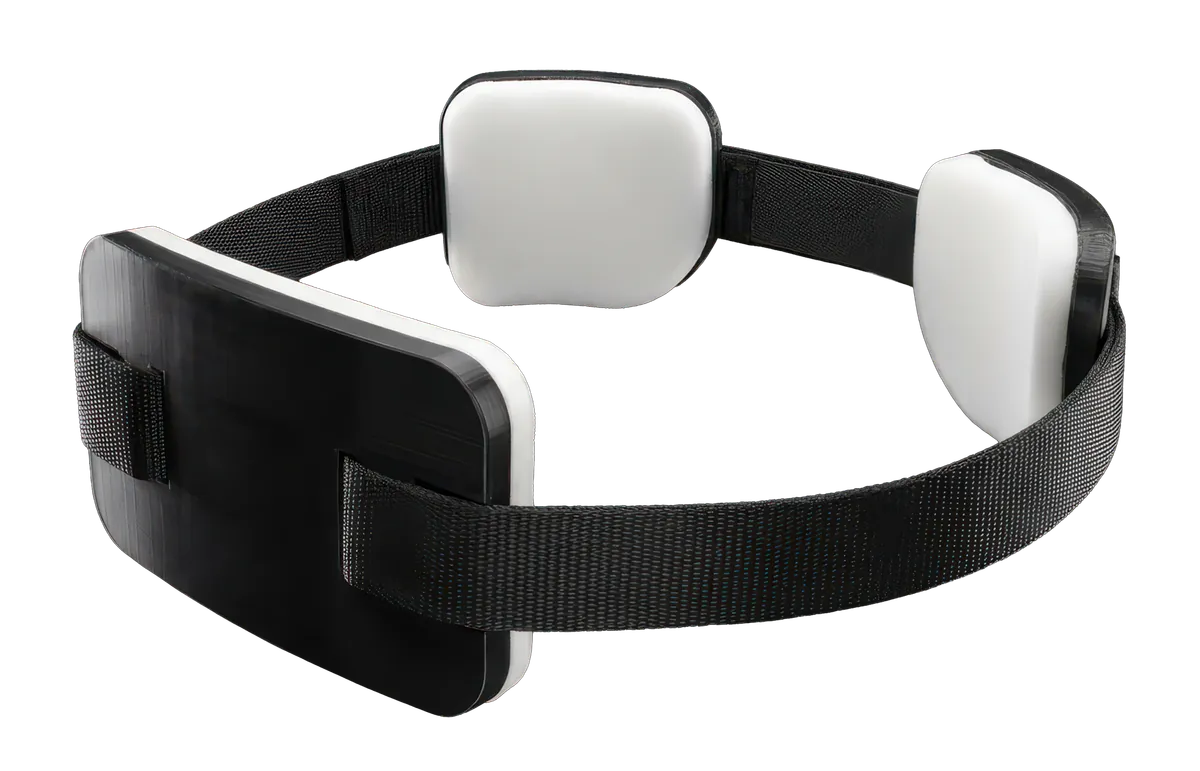
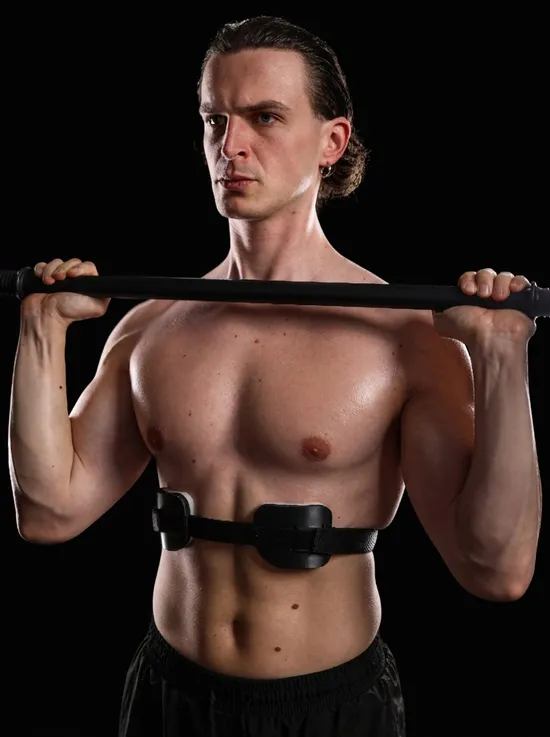
Steady compression.
A bump that settles flat.
Carinatum cartilage is usually flexible. That's why steady, directed compression is the recognised first-line treatment around the world. This brace gives you that, measured to your chest.
Pads land on the
apex of the bump
The brace is built from your measurements, so the adjustable silicone pads sit right over the highest point of your bump, whether it's centred or off to one side. The pressure goes on the cartilage that needs to move.
Comfortable, constant load,
hour after hour
Pain isn't progress. Good compression is firm, steady and comfortable enough to wear for hours, because the hours are what correct it. The dial lets you find that level and raise it click by click as your chest responds, and the brace stays slim enough to hide under a T-shirt at school or work.
The bump remodels back
toward the chest wall
Under steady load, flexible cartilage reshapes and the bump slowly settles flatter. Then you taper to maintenance hours to hold it there while the correction sets. Taper slowly, so the new shape has time to hold.
Flexible chests respond in weeks to months. The hours decide it.
In a small early study, patients who wore it as planned showed a 33–44% reduction in sternal rotation. Full citations are in the evidence section below.
How to wear it.
Four steps. Once you know them, it takes about a minute to put on.
Run a finger down your chest to the highest point of the bump. That is where the pressure lands.
Set the pads over that high point and close the brace. The back panel sits flat between your shoulder blades.
Turn the adjuster until the pressure feels steady and even across the bump. Firm, never sharp.
Break in over the first week, then build toward 14–23 hours a day. Click the dial up as the bump settles.
But does it
really work?
Fair question. The answer starts 280 years ago, and the method was first used on a carinatum chest, like yours.
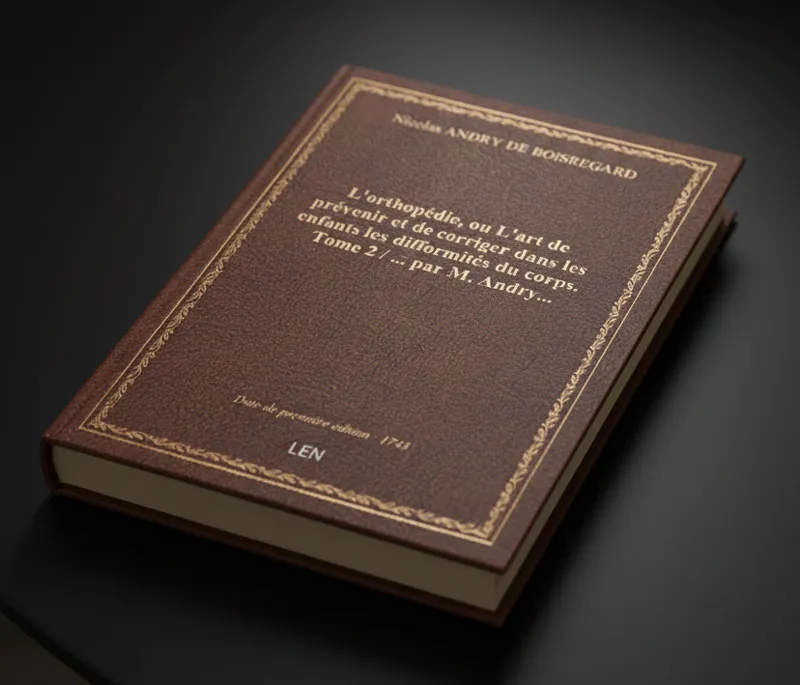
The Father of Orthopedics
writes it down
The idea is older than you would guess. In 1741 Nicolas Andry, the man who coined the word orthopedics, published L’orthopédie ou l’art de prévenir et de corriger dans les enfants, les difformités du corps.
What he argued, long before anyone could measure it:
“Bones and cartilage are living substances that reshape under consistent pressure.”
Nicolas Andry, 1741
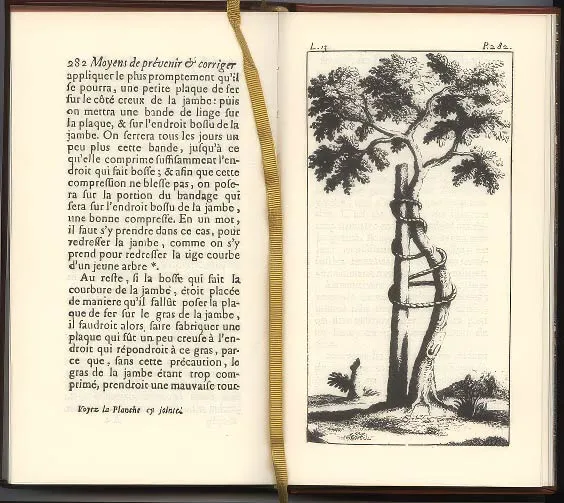
A crooked tree,
straightened by support
This crooked tree became the symbol of orthopedics. It first appeared in Andry’s book.
It shows a young tree that, like a growing child with a deformity, can be straightened with the right support.
That is the whole idea behind a carinatum brace, 280 years early.
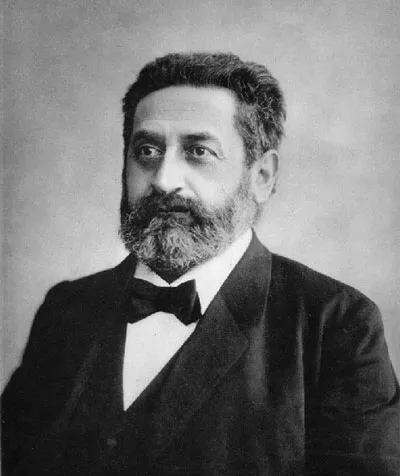

Wolff’s Law:
bone obeys force
Over 150 years later in 1892, German surgeon Julius Wolff expanded on Andry’s observations and published The Law of Bone Remodelling.
His conclusion became known as Wolff’s Law, and orthopedics still treats it as a law:
“Bone tissue is a dynamic structure that can be remodeled according to external forces.”
Wolff’s Law, 1892
The method was invented
for your chest.
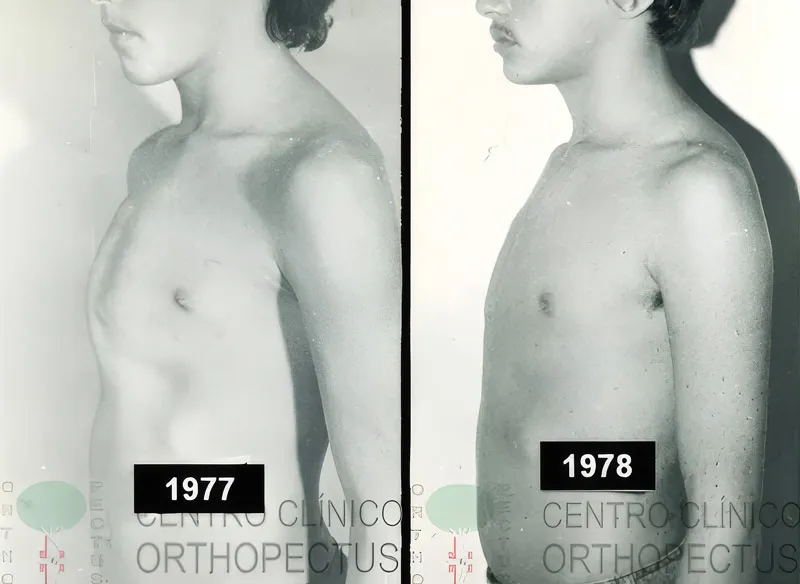
Dynamic Remodeling
starts with carinatum
In 1977, Brazilian orthopedist Dr. Sydney Haje developed the Dynamic Remodeling Method and went on to treat thousands of patients; his team’s review covers 4,012 over 32 years.
He started with a pectus carinatum patient.
He created a custom brace that applied pressure directly to the protruding chest, and it worked. Everything that followed, including the rib flare and excavatum bracing that came a decade later, was adapted from that first carinatum case.
Carinatum is not the afterthought of pectus bracing. It is the original.
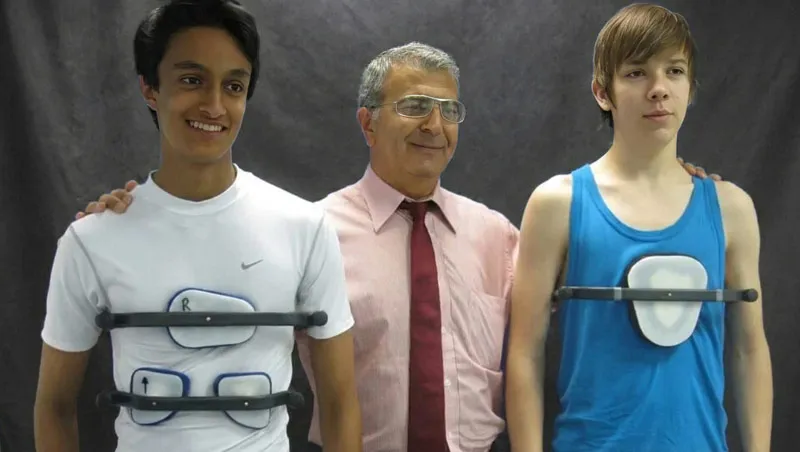
32 years,
4,012 patients
For 32 years (1977–2009), doctors followed 4,012 patients with chest deformities. What they found comes down to one line.
Your chest can change shape.
Dental braces use steady force to slowly move crooked teeth. A compression brace works the same way on a protruding chest.
Modern studies:
wear time decides it
Haje’s method grew into compression bracing as it is done today, and the modern studies below back it up.
● Reduction in sternal rotation in compliant patients (small early study): 33–44%
The biggest thing that decides your result is wear time. Paper after paper below says bracing works in patients who wear it as planned.
Backed by the research,
not just my opinion.
The bracing evidence,
paper by paper.
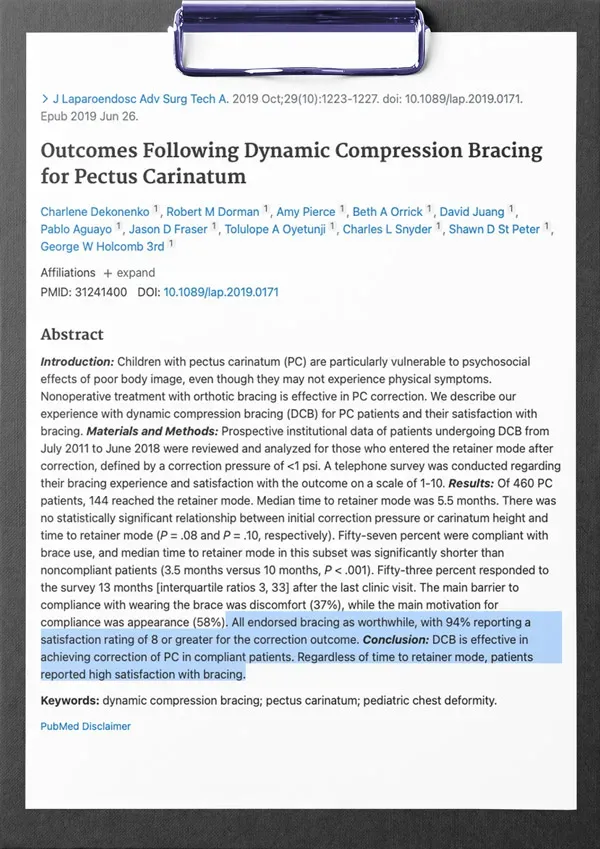
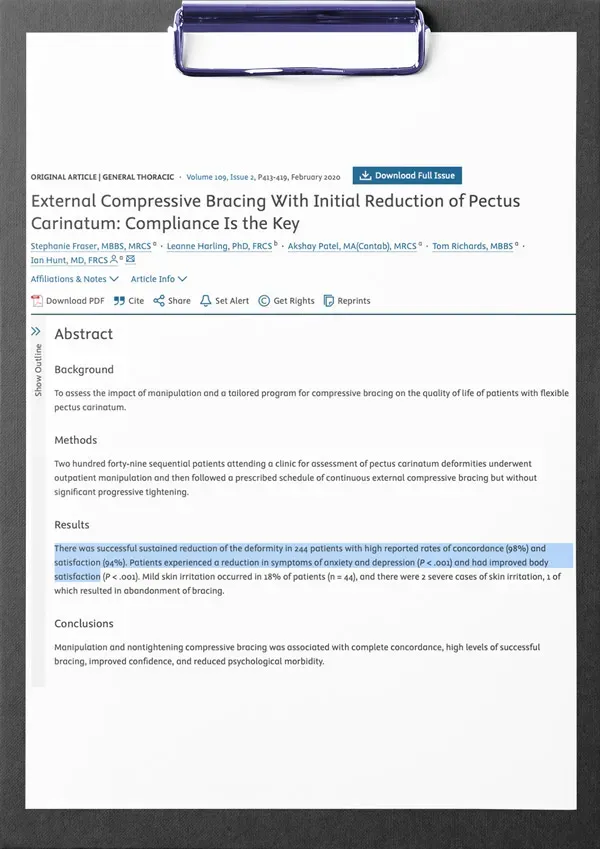
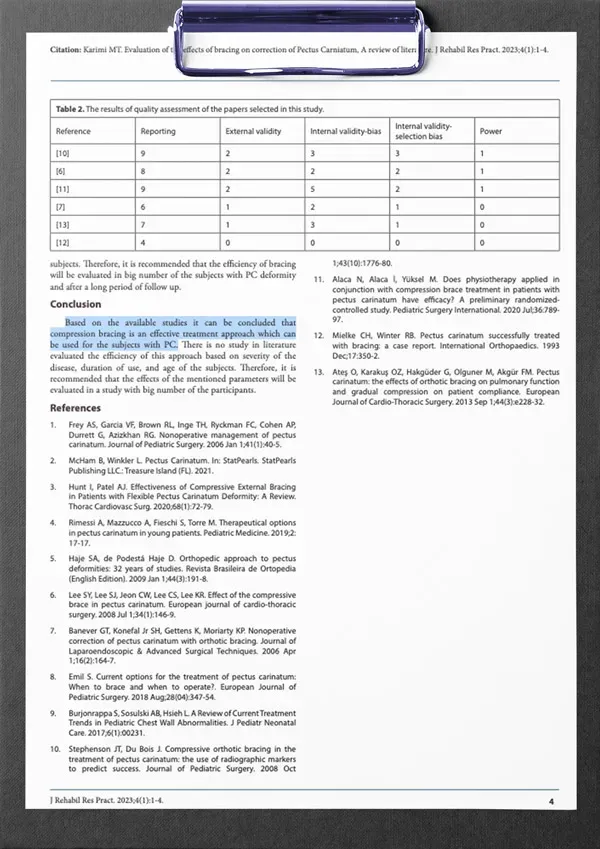
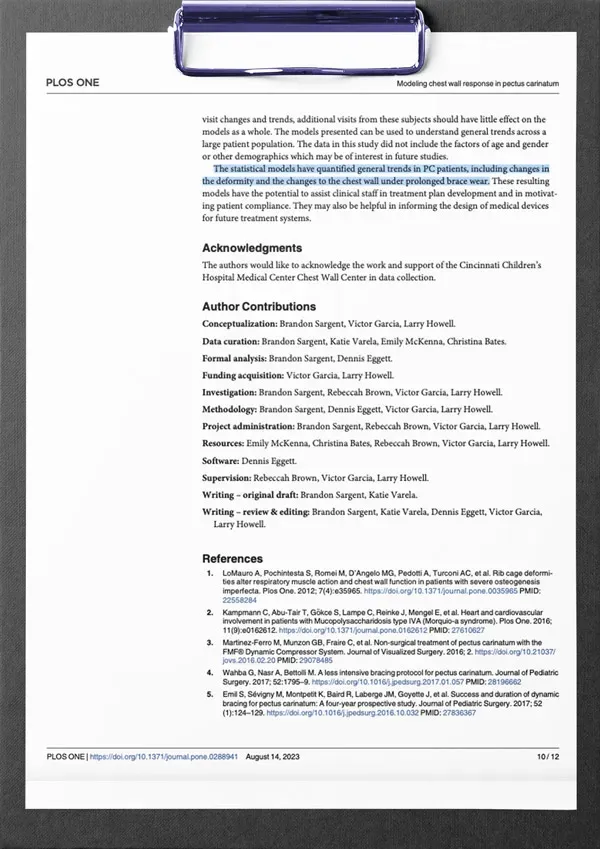
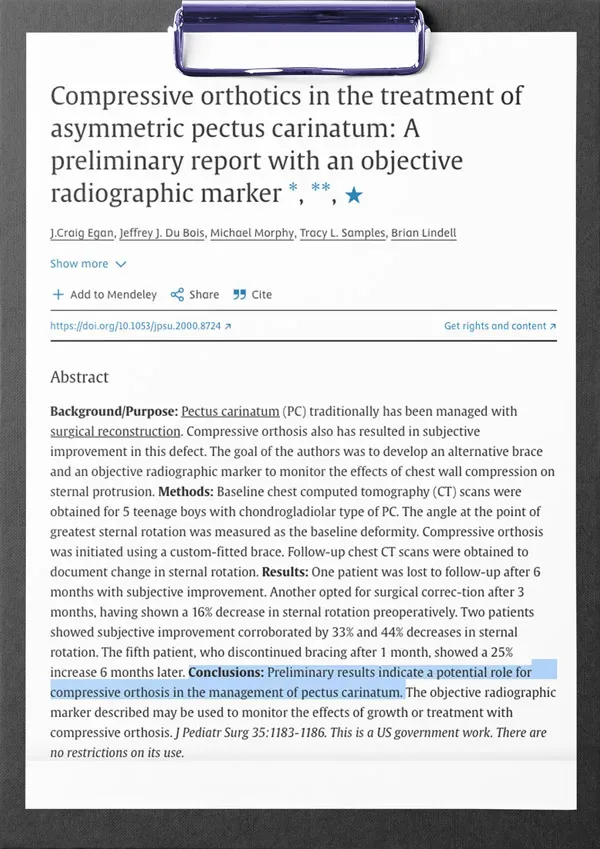
Compression bracing doesn't rest on one flattering result. Here are the published papers, each with its first page, title and conclusion, so you can check what they found instead of taking my word for it.
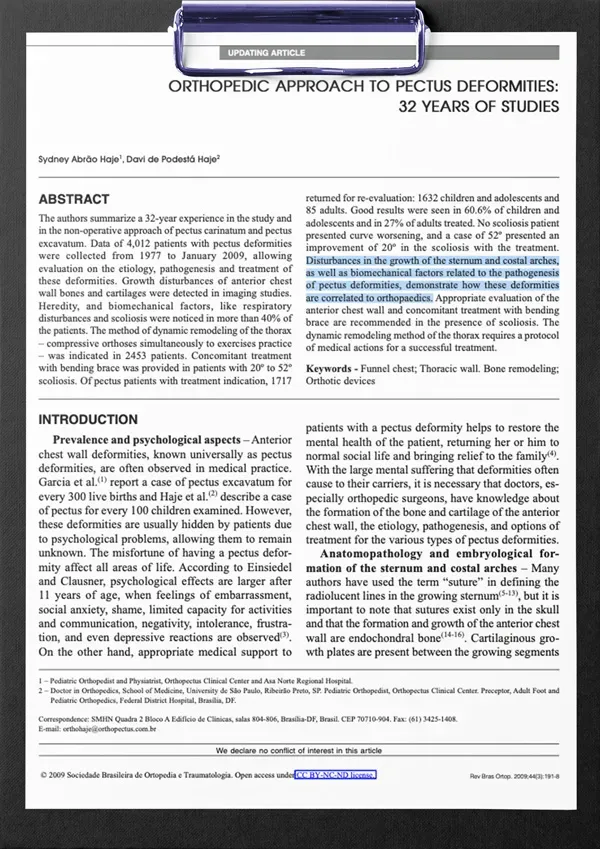
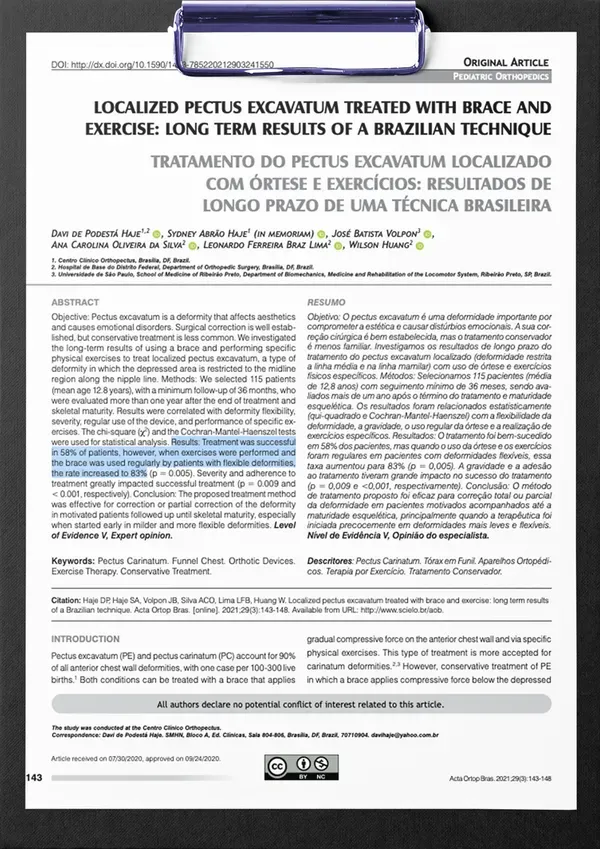
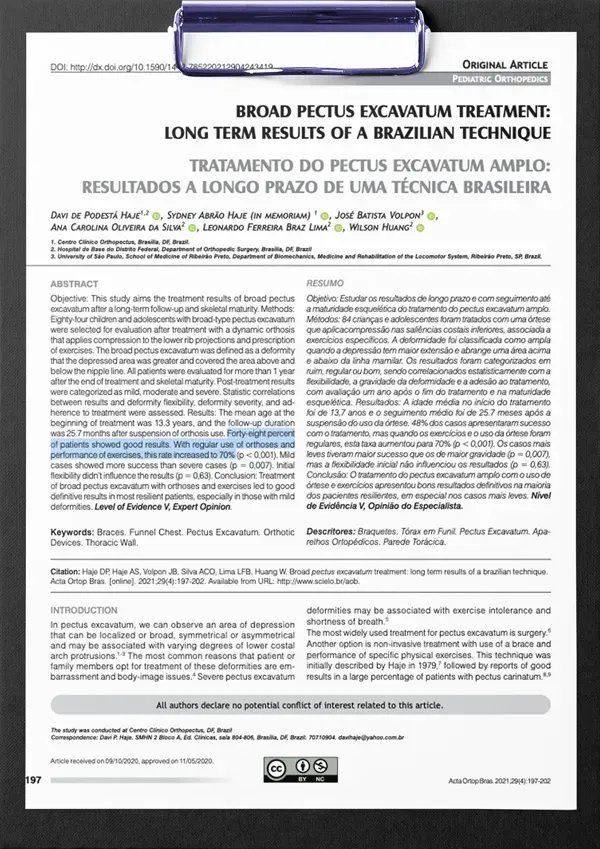
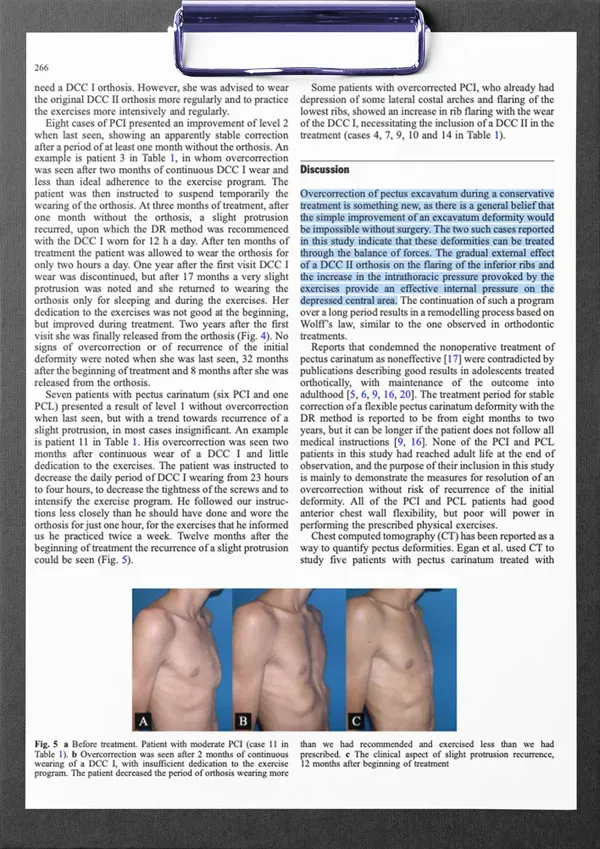
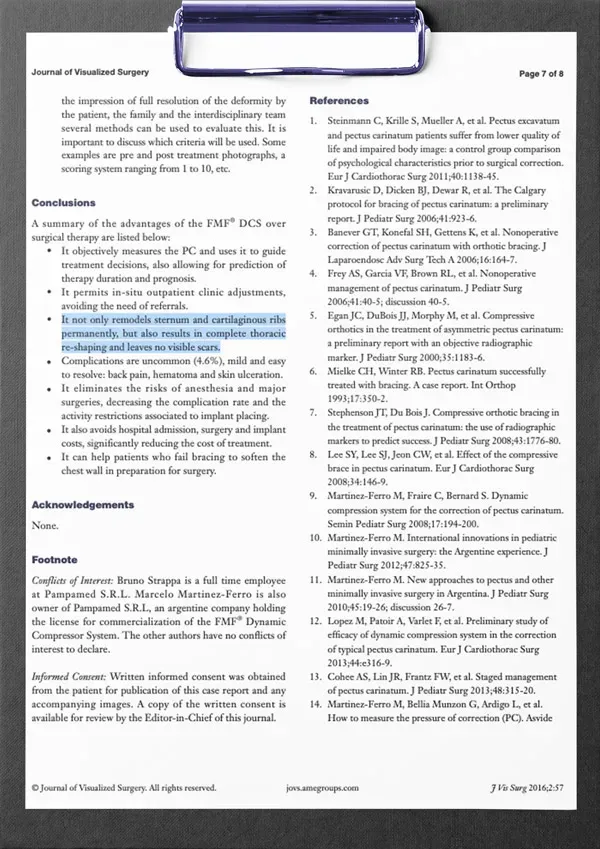
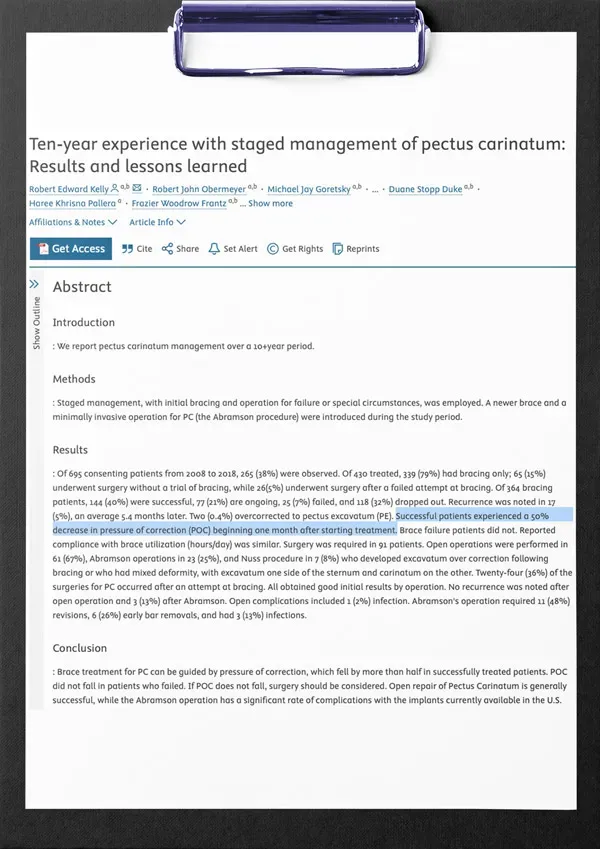
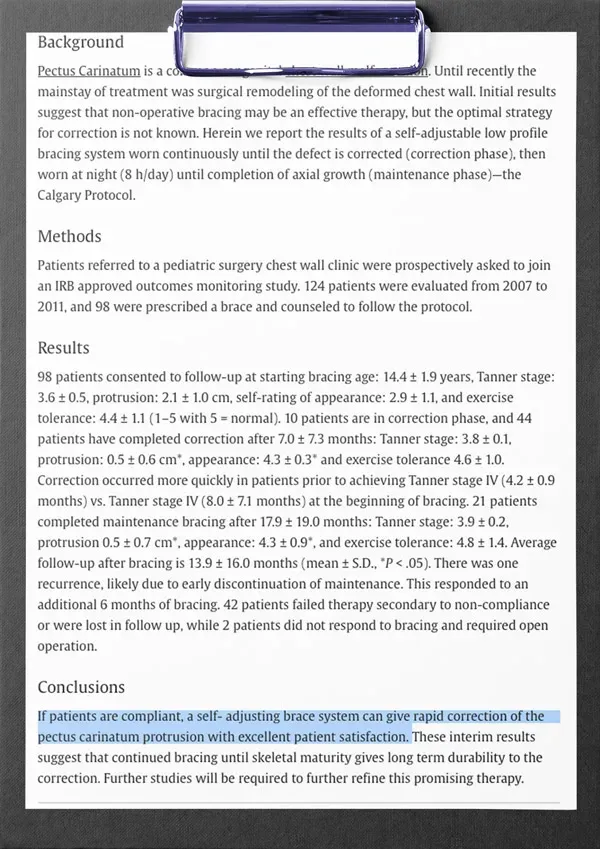
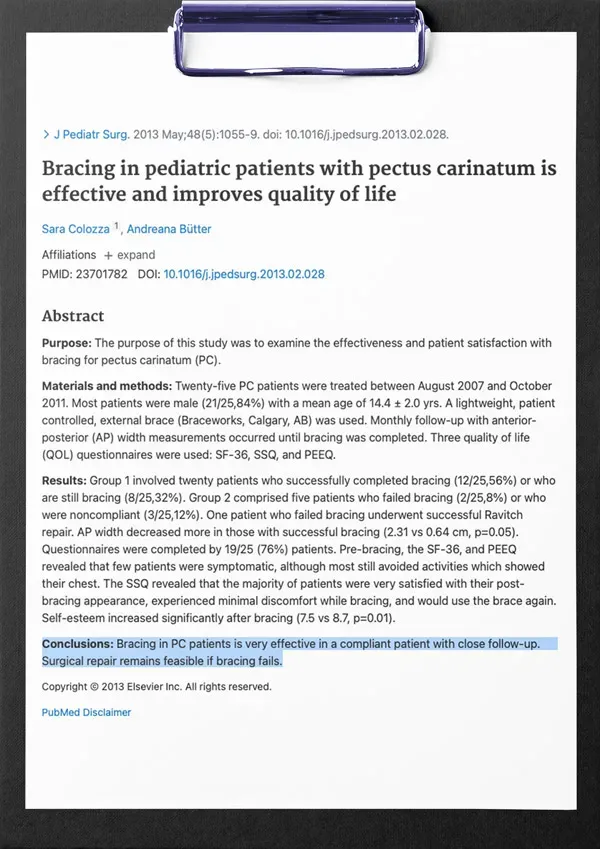
Click here to show the rest17 more studies+
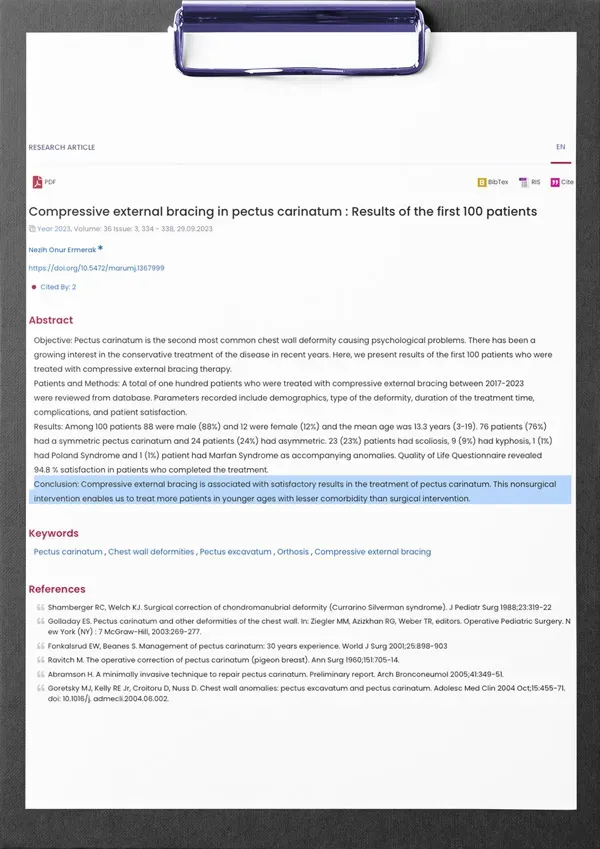
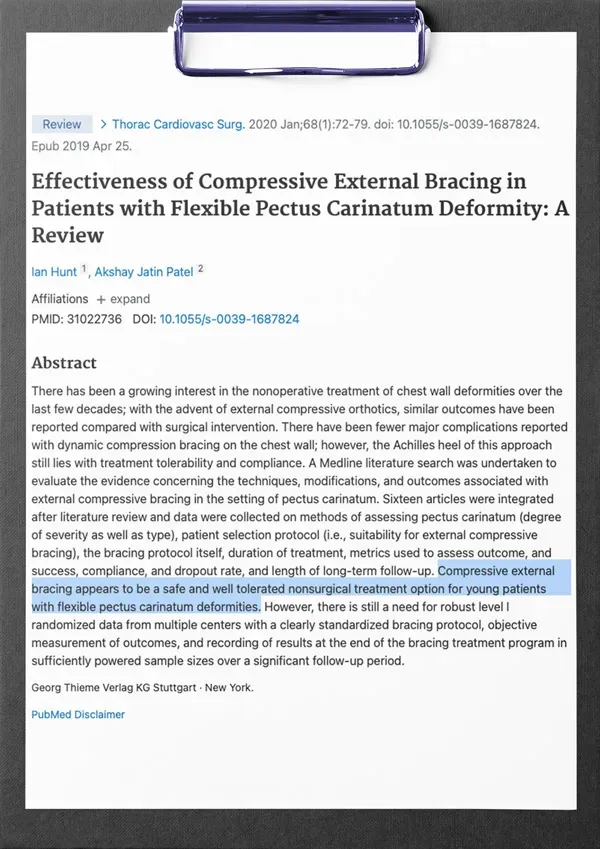
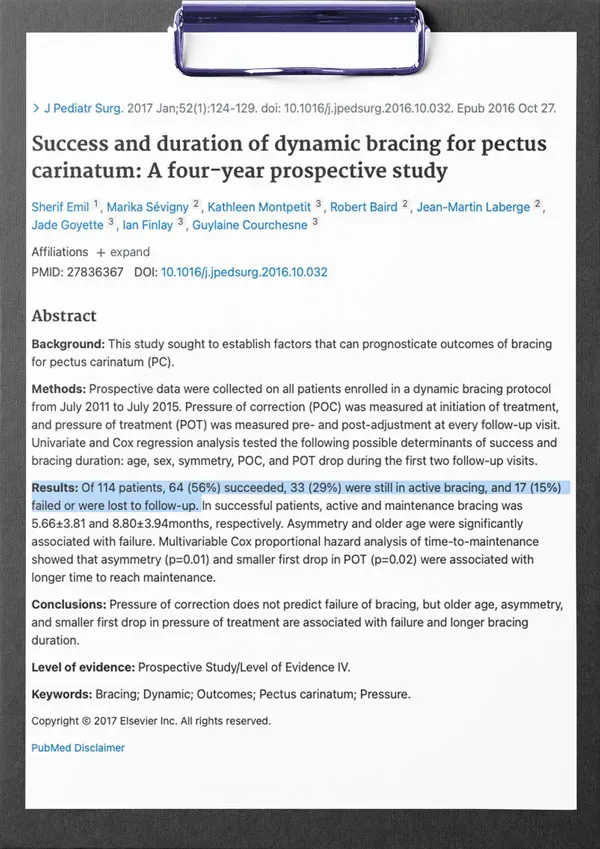
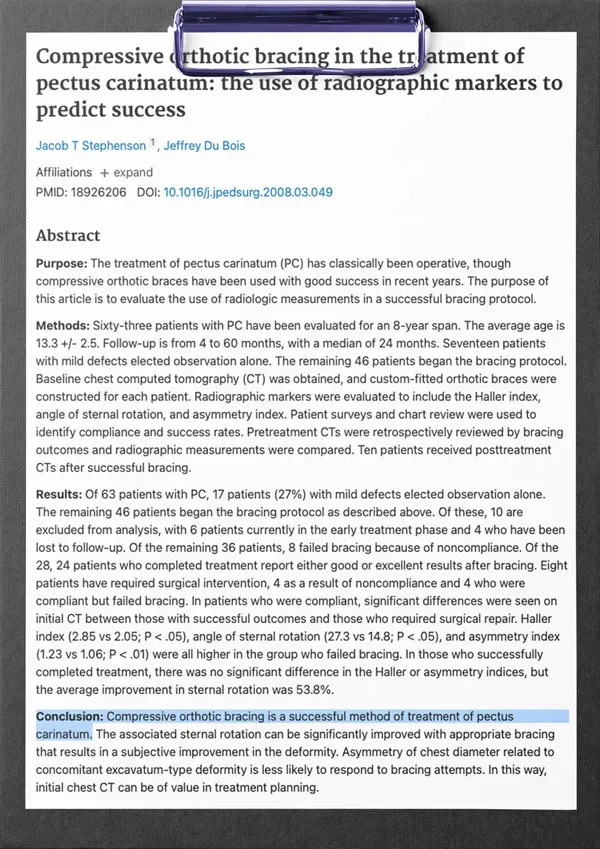
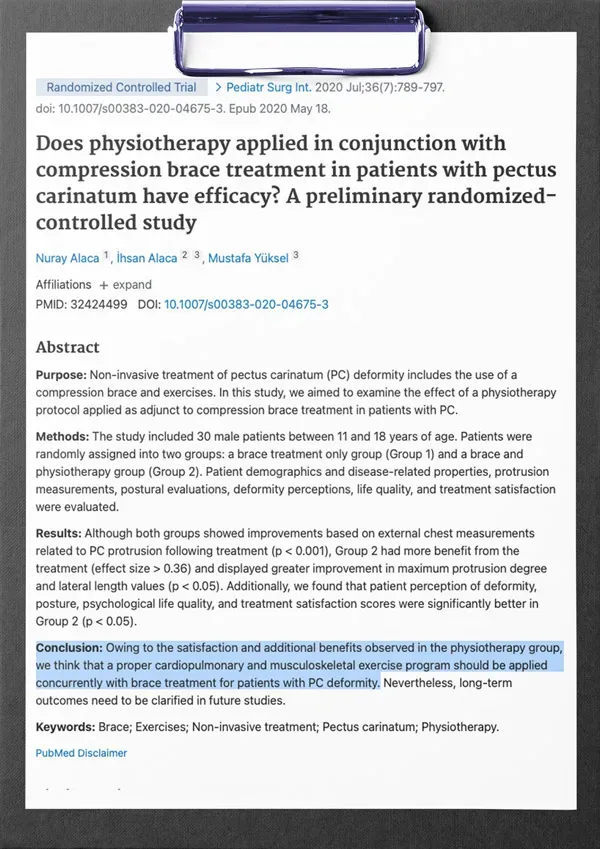
Alaca, Alaca & Yüksel, 2020 (co-authored by Prof. Dr. Mustafa Yüksel, who reviews this site).
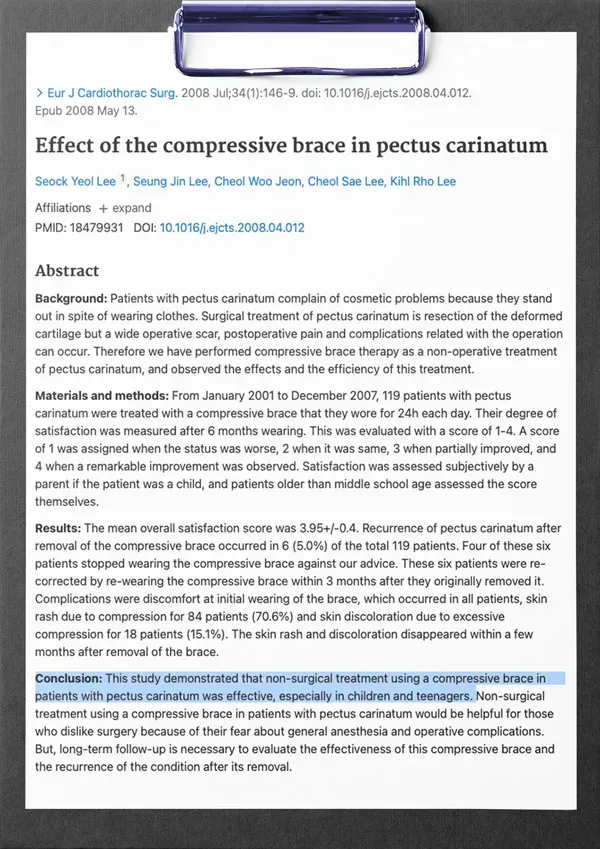
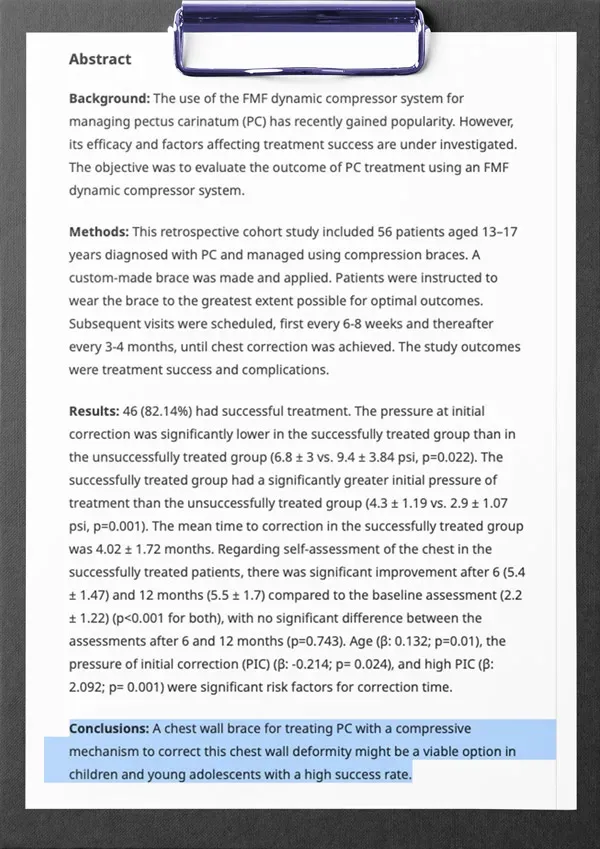
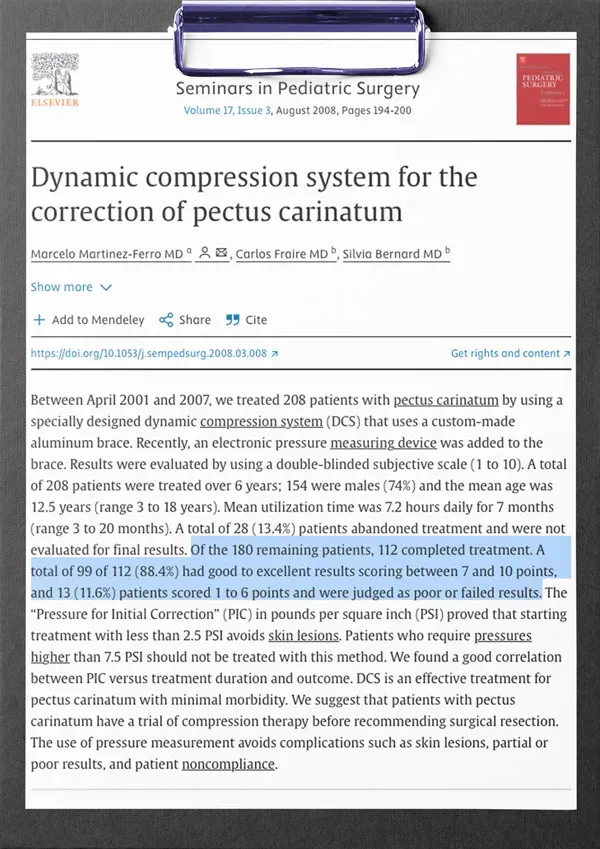
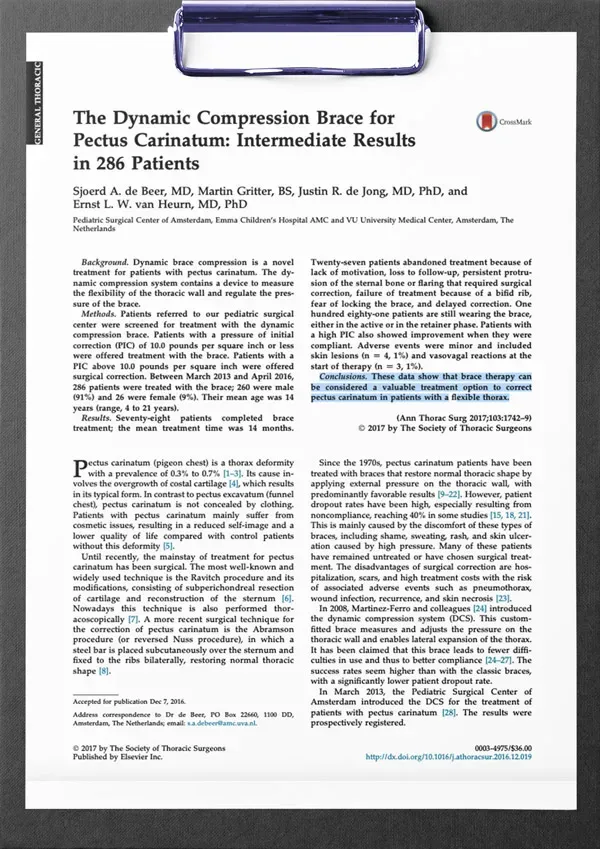
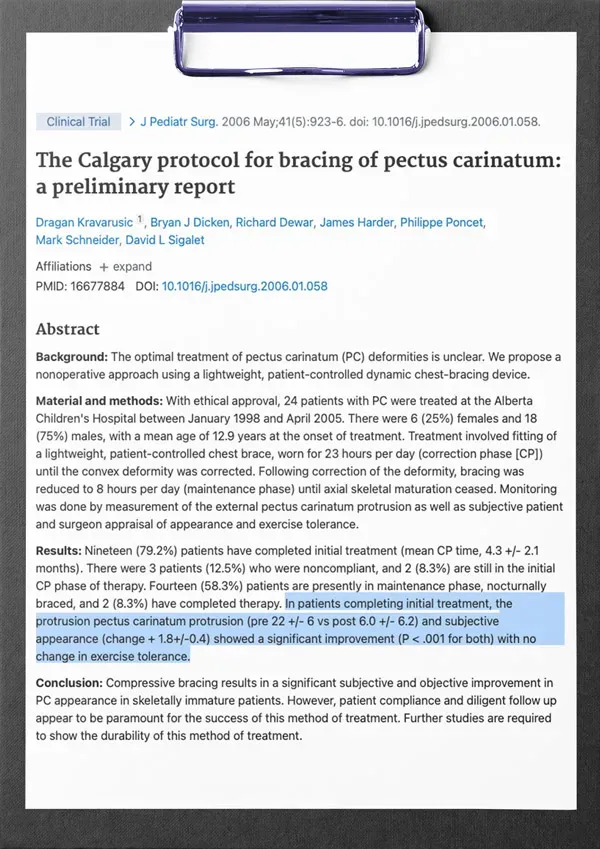
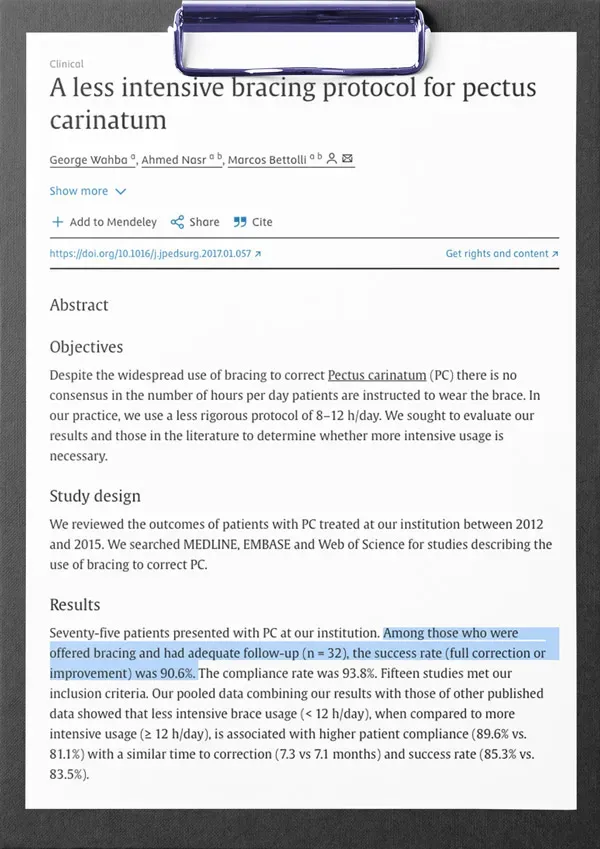
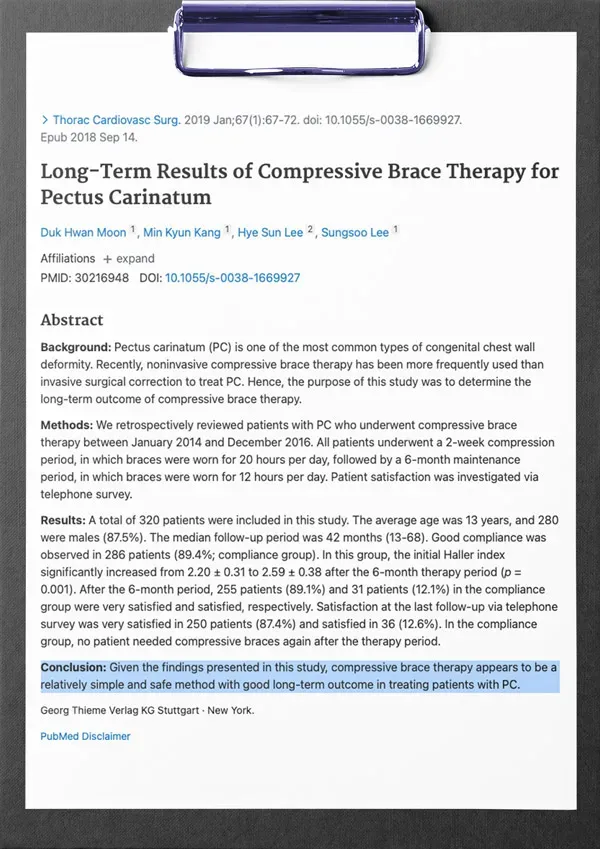
Transformations
& Real Stories
Read them by rating, or by what people actually got out of it - the transformations, the honest reviews, and the messages that land in my inbox every week.




"first call he told me straight up itd take a year and id hate months 2 through 5. he was right about both lol. 12 months on and my PC is flat. took my shirt off at the beach in january without doing the whole towel thing"
"the brace is made really good, i wear it under the t-shirt at school and nobody has noticed in 4 months. my mother was crying when we compare the photos. sorry for my english"
"My son is 15 and had started keeping a shirt on in the pool, which is how I worked out something was wrong in the first place, because he certainly wasn't going to tell me. He would never have stuck with the brace on his own. It was the fortnightly check-ins that did it - he didn't want to turn up with nothing to report. Six months now and the bump has visibly come down. He swims without the shirt."
"I came across your blog about a year ago and I just want to say how much you've changed my life for the better. I thought it was going to be another average article, but the tips you gave were things I hadn't heard of before. Now I've improved so much and im more confident then ever."
"read the blog for months before i actually did anything with it. no coach, no brace, just the stuff in the articles done properly. i feel a lot better now and the photos say the rest"
"Two months in and I've put on 3 kg of muscle. My chest doesn't cave the way it used to when I'm standing relaxed, and that alone was worth it."
"Had the flare since i was about 14 and just assumed that was my ribcage, permanently. Brace plus the breathing drills and my mrs asked when i'd lost weight. I hadn't lost anything, it's just the ribs sitting where they should now."
"didnt know you could be breathing wrong for 21 years. thats the whole thing right there. flare started going down on its own once i stopped breathing into my shoulders, which is not what i paid for but ill take it"
"the bell leaves a red ring on your chest the second you take it off, and nobody warns you about that. it fades within the hour and the skin has never been an issue since. 100% satisfied - the sternum sits higher than it has my whole life"
"He knows more about this than the two consultants I paid to see, which says more about them than it does about him. Showed my GP the 9 month photos and he asked me for the website. Half a star off because the time zones make the calls a nightmare from Ireland."
"ive bought like four programs for this over the years and quit every one of them by week two. finished this one. i think its cus you cant move on until you can actually hold the position, so theres never that thing where you're guessing if youre ready or not"
"watched the youtube for six years before i spent a single cent. bought the program, did it properly for 7 months, and the only thing i actually regret is the six years"
"I went in wanting to debunk it, honestly. Started opening the citations one at a time and they were real papers that said what he said they said. That is a depressingly low bar and nowhere else online clears it."
Shared with each client's permission.
Did I help you with your pectus?
Share your before & after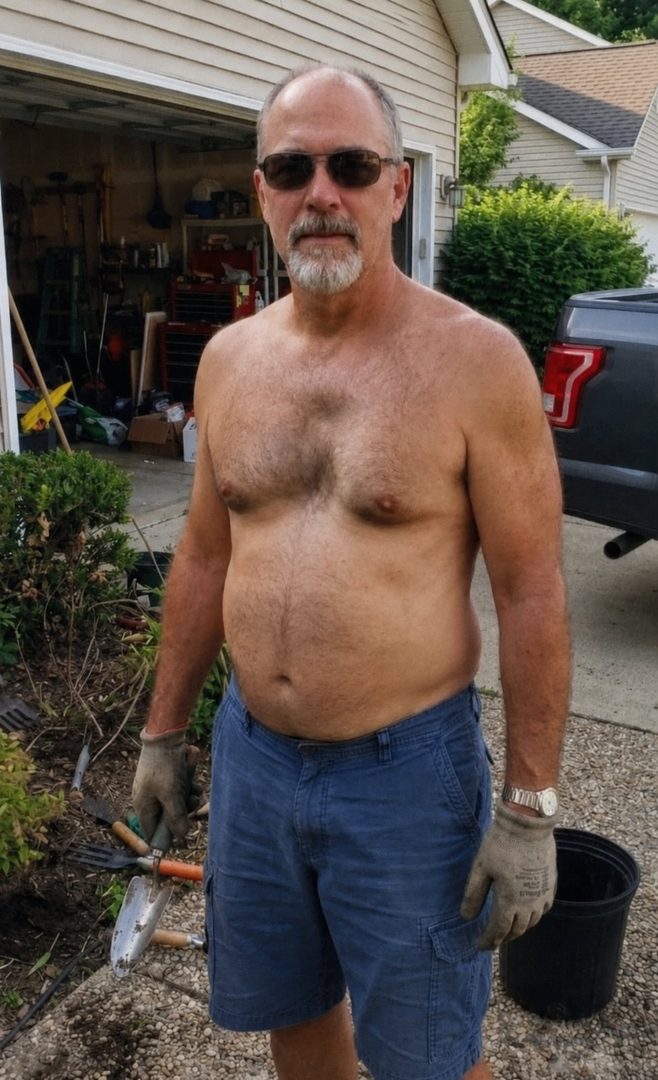 Before
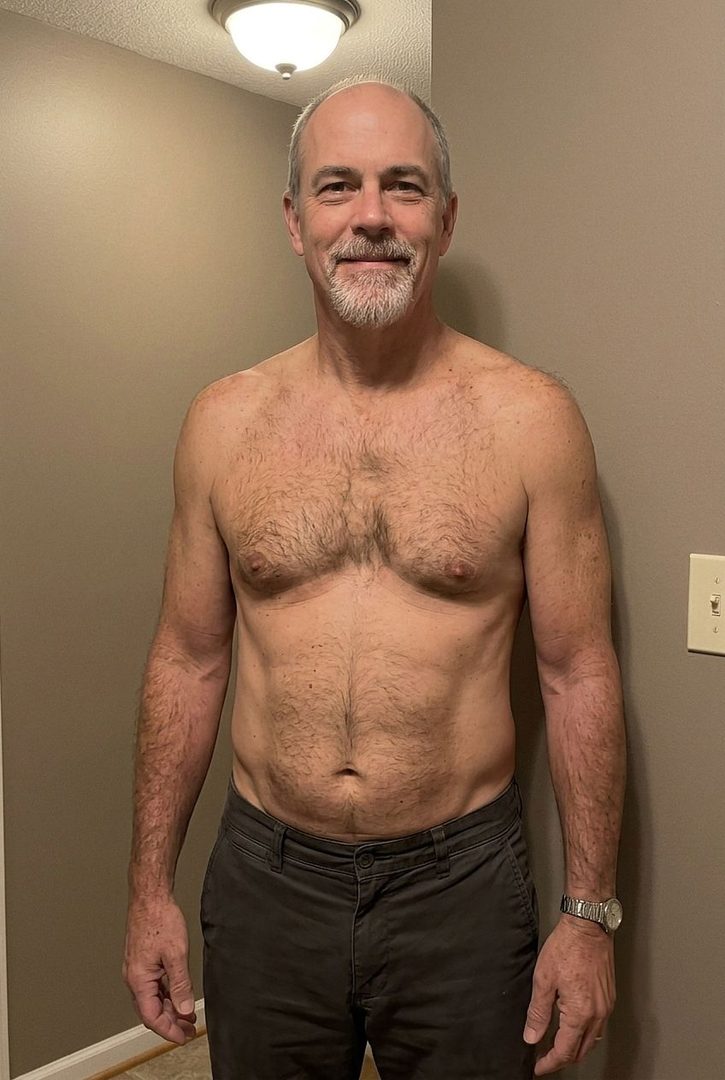 After

“I'm 52. I have both a bump and a dip, which I'm told is unusual, and I've had the pair of them since I was a boy. Nine kilos off in five months and for the first time my chest looks like one chest. I did not expect to be sorting this out at my age, but there we are.”
 Before
 After

“3 months and 5kg later the bump is sitting lower than its ever been. i was 100% convinced surgery was the only option, like id already looked up how much it costs and everything”
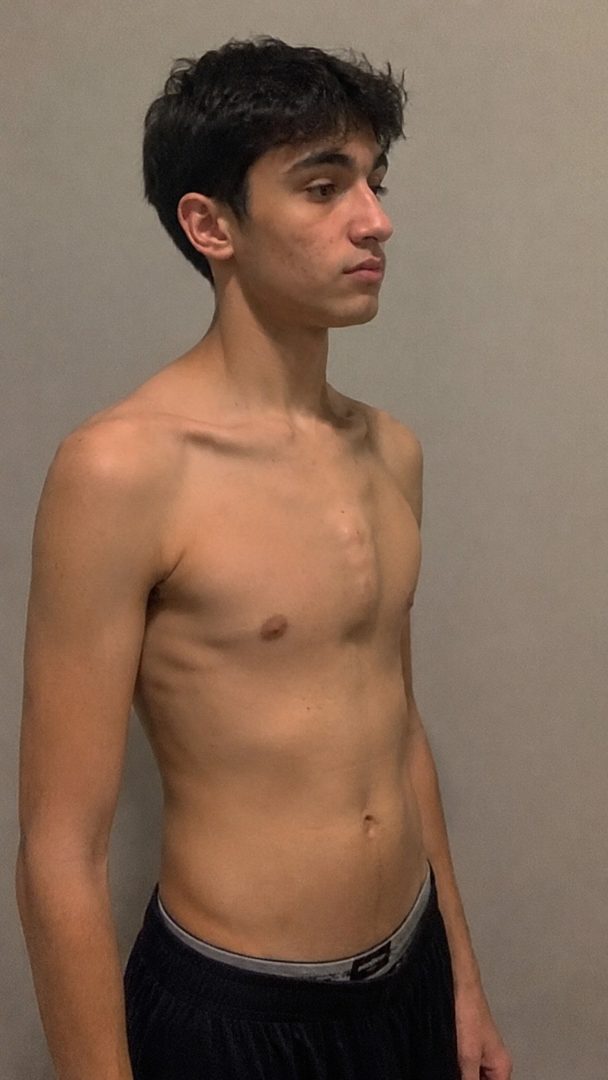 Before
 After

“9 kilos in 6 months. the trick nobody tells you is you build the muscle around the bump, then the bump is not the first thing people see. before this i am buying only loose shirts, maybe 8 years like this”
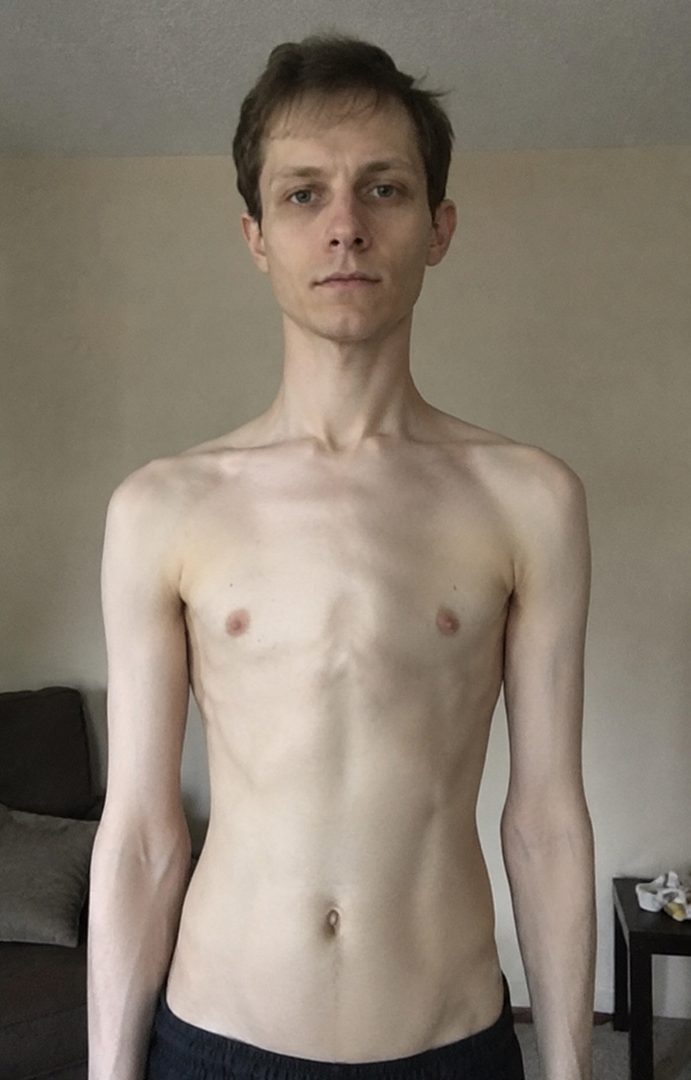 Before
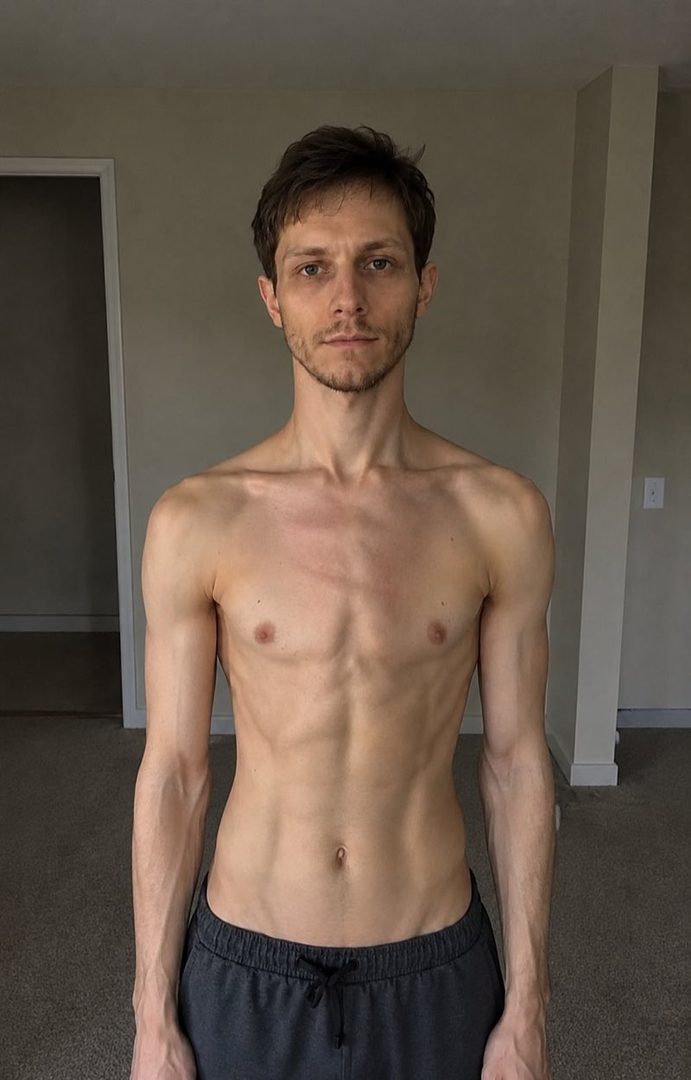 After

“before, the carinatum is the first thing i see in every photo of me. now i show someone and they must ask me where it is. i did not have any surgery, only the training”
PE pectus excavatum · PC pectus carinatum · RF rib flare
Drag each slider to compare.Tap any case to open and compare. Published only with the client's written consent.
Five reasons it corrects,
and you can live in it.
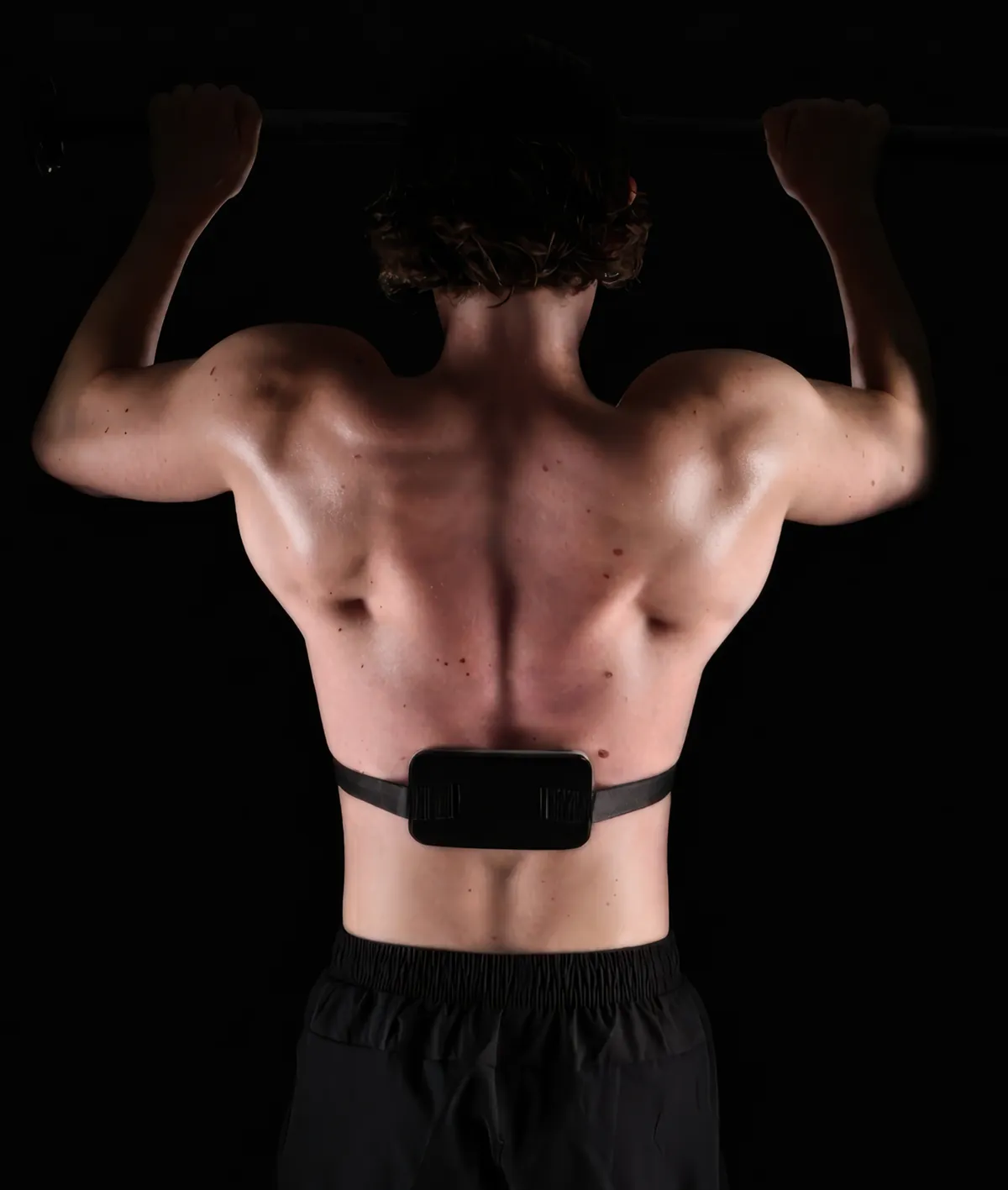
The old carinatum braces are rigid and obvious, and they often end up in a drawer within a week. This one is made to your measurements, adjustable, and slim enough to wear for the hours that move the bump.
Custom 3D-fit compression
The silicone pads sit over the highest point of your bump, placed for your chest, so the pressure lands where the bump is.
Dial-adjustable pressure
A simple adjuster lets you set a firm but comfortable pressure and raise it as your chest responds.
Built to last through the hours
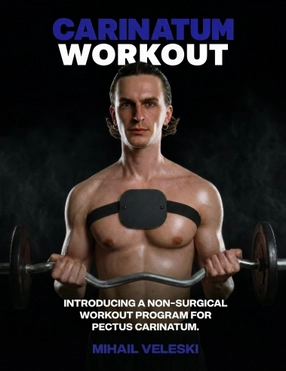
It is tough enough for daily wear under your clothes. Take it off for sport and training, then put it back on, because pairing it with exercise and breathing work helps the results hold.
Safe, comfortable medical silicone
Medical-grade silicone pads: firm where it counts and gentle on your skin through the long daily hours.
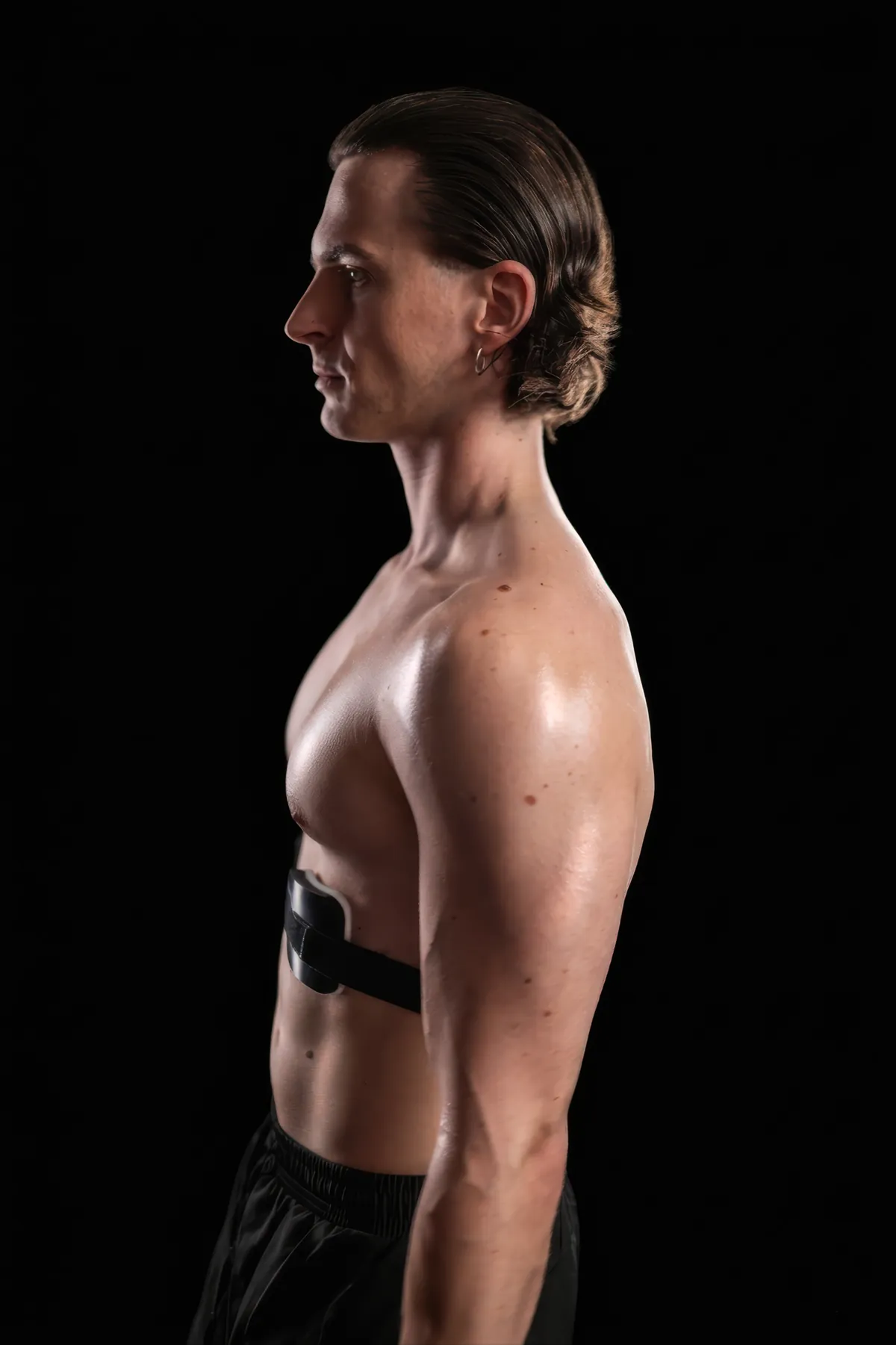
Integrated posture panel
A back panel keeps your shoulders back so you stop hunching to hide the bump, working on the bump and your posture at the same time.
No bars. No scars.
No reason to cut.
Same lift. None of what surgery adds on top.
I had it. I fixed it.
Now I help you do the same.
I'm not writing this as a doctor looking at a scan. I had the sunken chest, the flared ribs, the shirt that stayed on at the pool, and nobody could tell me what actually works.
Years of consistent, non-surgical training made mine unnoticeable. Everything on this page exists because I needed it to exist ten years ago.
I tested all of it on my own body first, then refined it every time someone hit a wall I had not planned for.
Featured in Healthline · Level 5 DUKE Institute Certified Personal Trainer (ISSA) · Specialised in pectus excavatum, carinatum and rib flare.

Medical reviewer
Prof. Dr. Mustafa Yüksel, MD is the medical reviewer for the mrpectus correction plans. He checks the clinical claims they make.
Thoracic surgeon, founder of the Chest Wall International Group
Fitted to your chest,
and your real life.
You'll only wear a brace 14–23 hours a day if it fits and hides under a shirt. You send me your measurements, I set it up around the high point of your bump, and the dial lets you progress.
It's slim, so you can wear it to school, work or out in public without anyone noticing. Take it off for sport, contact sport and showering. If you're unsure about your measurements or how flexible your chest is, message me before you fit it and I'll help you set it up.
Whose chest this brace
is actually built for.
A brace applies the pressure; your consistency does the correcting. Speak to your doctor before wearing one if the skin over your chest is broken, infected or inflamed; if you have had chest, heart or breast surgery in the last six months; if you have osteoporosis, a connective-tissue condition such as Marfan syndrome, or a heart or lung condition affecting your breathing; or if you are pregnant. Take it off and check in with a clinician if you get chest pain, numbness, breathlessness or skin that stays broken. If a doctor has flagged a rigid or complex case, get it reviewed first.
No surprises between
you and starting.
No consultations to book, no waiting list, no size chart to gamble on.
The brace, the dial,
and direct support.
Every brace is made to your measurements and ships with tracking. The breathing tools, the full Carinatum Brace Guide and lifetime support from me are included. No upsells at checkout.
Try the whole thing for 30 days. Use it, and if it isn't what was described, message me for a full refund, no questions asked. The risk stays with me, not you.
Common questions.
Is carinatum really correctable without surgery?+
Yes. Carinatum cartilage is usually flexible, and steady compression is the recognised first-line, non-surgical treatment. In flexible chests, dynamic bracing corrects the bump in most patients who wear it as planned. For carinatum, surgery is a last resort, not a starting point.
How long until I see results?+
Flexible chests can show visible flattening within weeks to a few months of consistent wear. The firmer the cartilage, the longer it takes. Daily wear time and pressure matter most, and the dial lets you progress as your chest responds.
How many hours a day do I wear it?+
Early on, aim for 14–23 hours a day, depending on how your chest responds and how comfortable the pressure is. It’s slim enough to wear under clothes and to sleep in, so most of those hours pass without you thinking about it. As the bump settles, you taper to maintenance hours.
Does it hurt?+
It shouldn't. You want firm, steady pressure on the bump that you can feel but that doesn't hurt. If it's sharp or sore, the pressure is too high, so ease the dial back. Some redness under the pads is normal. Pain means turn it down.
Can I work out in it?+
Take it off for sport, contact sport and training, then put it back on afterwards. Do the training, though, along with the breathing work, because paired with the brace it helps the correction hold. It’s worn under your clothes through the rest of the day, 14–23 hours early on.
Does it work for adults?+
It can. Younger, more flexible chests respond fastest, but adults whose cartilage still gives correct carinatum with consistent compression too. It just takes longer. Message me about your chest and I’ll give you an honest read.
Why custom-built instead of an off-the-shelf compression brace?+
Because carinatum correction depends on where the pressure lands. A brace built to your measurements puts the pad right on your bump (centred or off to one side) at even, adjustable pressure. That's the point of building it to your measurements.
Is it visible under a shirt?+
It's made to sit flat under normal clothes. A regular T-shirt covers it day to day, and nobody at school or work needs to know it's there.
How tight should it be?+
Firm, steady and comfortable, never painful. Pain doesn't speed up correction. It cuts the wear hours that do the correcting. The dial lets you find the right pressure and raise it slowly as the bump responds, and the included guidance shows you how.
Will the bump come back when I stop?+
The correction usually holds, but stop gradually, not on the first day it looks good in the mirror. You taper to maintenance hours while you keep an eye on it, and training alongside the brace helps the new shape hold on its own.
Do I get a wear schedule with it?+
Yes. Guidance on breaking it in, building your daily hours and raising the pressure ships with the brace, plus lifetime support, so you can message me any time. For the full evidence-based method, the Carinatum Brace Guide is included free.
Does it ship to my country?+
Yes. Shipping is free and tracked to anywhere in the world. It ships 2–3 days after your measurements are confirmed, and you get the tracking number as soon as it leaves.
What happens after I order?+
You send your measurements (the guided process takes about five minutes), then your brace is built to them and ships in 2–3 days with tracking. If a measurement looks off, I contact you personally before building.
What if it doesn’t work for me?+
Message me within 30 days and I’ll refund you in full, no explanation needed. Support stays free for life either way, so if the brace is close but the fit is off, tell me before you ask for your money back and I’ll try to fix it first. You don’t need the original packaging, and it doesn’t matter that you’ve worn it. You can’t judge a made-to-measure brace without wearing it. You cover tracked return postage, and I refund everything you paid, shipping included.
Is there a warranty on the brace?+
Twelve months against manufacturing defects. If the frame cracks, a pad tears away or the adjustment hardware strips through normal use, I replace it free, with no charge for the part or the postage. That is on top of the 30-day money-back guarantee, not instead of it. The guarantee is for changing your mind. The warranty is for the brace failing. Silicone pads compress over months of wear, which is normal and not a defect, and I send replacements at cost.
Three honest ways forward.
Take the free 1-minute assessment and get a straight answer for your condition and severity.
Take the assessment →The chat bubble in the corner reaches me directly, ask anything about your case before you decide.
Try the whole thing. If it isn't right for your chest, every dollar comes back.
Start risk-free →Flatten the bump.
Skip the operation.
A compression brace built to your chest, slim enough to wear all day, with direct support from me. It's the method carinatum responds to best.
Get my custom fitP.S. If you've read this far, part of you has already decided. The only thing you can lose by trying is the version of next year where nothing changed. - Mihail
Pair it with the plan