Contents · 9 sections
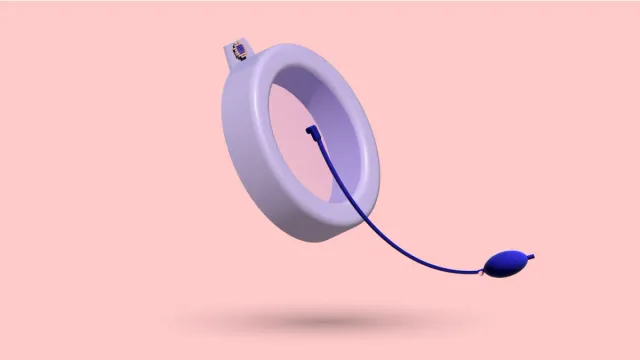
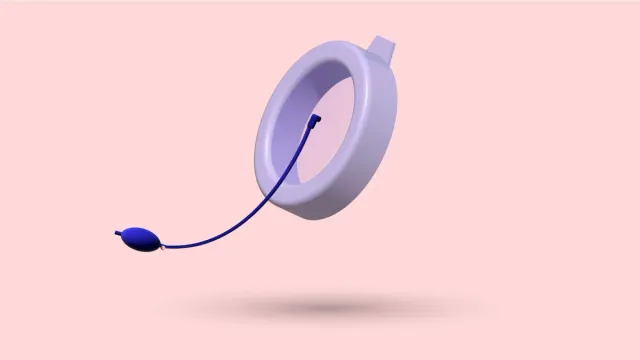
I don’t recommend building a vacuum bell (also called a suction bell), and I won’t give you build steps. Not because DIY or 3D printing is bad in itself, but because the safety of hours of suction on your skin comes from what a home build skips: a pump that stops at a set level, a rim made and sized for skin, and someone who checks you before you start.
A bell from a maker costs hundreds of dollars, so if that’s out of reach, building or printing one at home can look like a sensible way to save. The cheaper routes further down don’t leave you testing a design on your own skin.
I also couldn’t find a single published study or case report on homemade vacuum bells when I searched PubMed on 25 October 2026. So nobody has measured the risk, and an empty search shouldn’t reassure anyone.
I sell a custom vacuum bell, and it’s 3D printed, so every question here applies to mine too. Instead of a build guide, here’s what makers build in, what supervised bells still do to skin, who shouldn’t use any bell, and cheaper routes.
What a homemade bell can’t give you
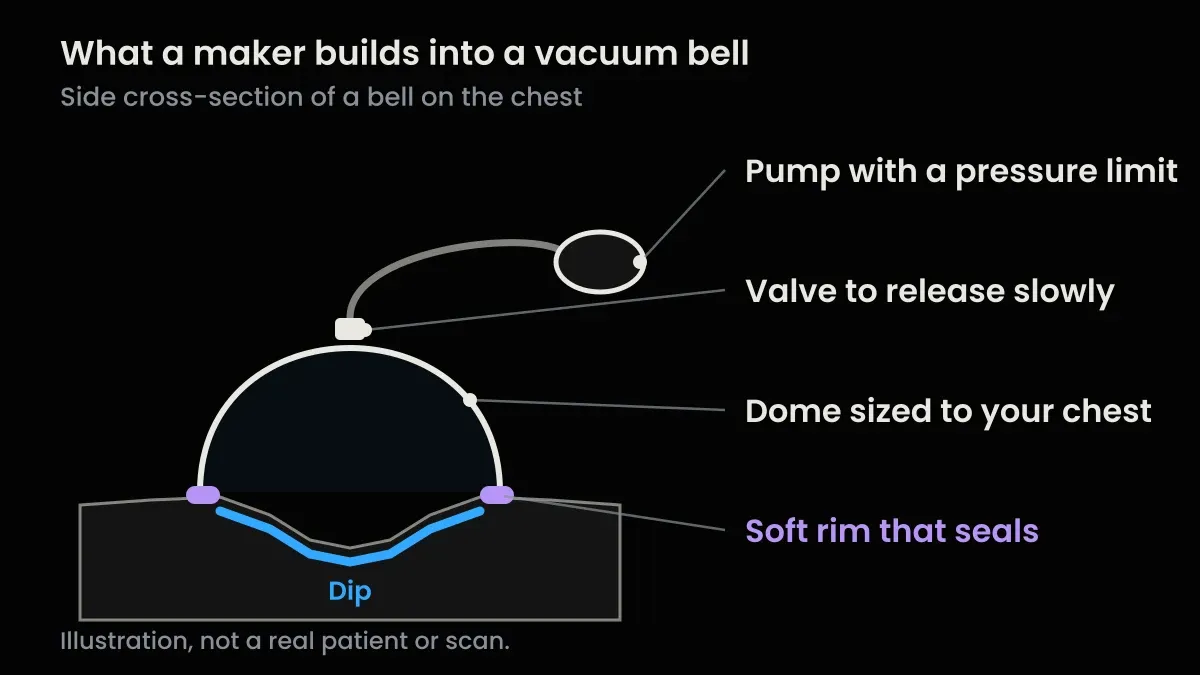
The safeguards that come with a maker’s bell and a clinic, and none of them is a part you can order. They’re design, testing and supervision. The original bell, developed by the engineer Eckart Klobe, shows what they look like:
- A pump that stops. Klobe’s instructions for use (2010) say that “for safety reasons the power of the suction bulb is limited”, and that his bells should only be used with the bulbs he supplies.
- A gentle release. The same instructions tell you to let air back in through the bulb’s valve “in order to avoid abrupt aeration”, and to lift the bell off slowly.
- A rim made for skin, and a check every time. Klobe’s bell body is orthopaedic silicone, which he calls very compatible with skin, and the bell must be checked for proper operation before each use.
- A size picked by someone who knows. The bell has to rest outside the dip without pressing painfully on the throat, belly or breasts, and without losing vacuum at the sides. Klobe writes that choosing the right type “requires a certain experience”. My vacuum bell sizing guide shows what each maker asks you to measure.
- Someone checking you first. Klobe’s bell is meant for use only after a medical examination, with a supervised first application and check-ups usually every three months. In Basel, Switzerland, patients had a heart tracing (ECG) and a heart ultrasound (echocardiogram) before starting, and parents supervised children under 10. At Children’s Hospital of The King’s Daughters (CHKD) in Norfolk, Virginia, the surgeons recommend how often to wear the bell and at what pressure.
My interpretation: a homemade bell usually has no tested shape, no built-in pressure limit and nobody watching the first session. So the trial and error happens on your skin.
How much suction a home pump can pull
A common automotive hand pump can pull far more than clinics use. Pressures here are in kilopascals (kPa). Air at sea level presses at about 101 kPa, so “15 kPa” on a bell means 15 kPa below that.
Pump capability and clinic figures, not settings to copy.
| Figure | What it is | Who, where, when | Source |
|---|---|---|---|
| Up to 15% below air pressure (about 15 kPa) | Klobe’s own hand pump | 34 patients aged 6 to 52, Basel, Switzerland, published 2006 | Haecker and Mayr, 2006 |
| 8 kPa or less under age 6; 1 to 15 kPa under 18 | One hospital’s limits by age | 72 children analysed, Changsha, China, published 2024 | Lei, 2024 |
| Median 20 kPa, range 10 to 30 (family-reported) | Read on a gauge built into the bell | 40 young children (median age 3.6), Changsha, China, treated from 2018, published 2020 | Deng, 2020 |
| Up to 30 kPa | A seller’s stated maximum for its own bell | FormaChest product page, checked 25 October 2026 | FormaChest |
| 85 kPa maximum (25 inHg) | What an automotive hand vacuum pump can pull at its limit | Maker’s product sheet, 2022; not a measurement on a chest | Pump maker’s sheet, 2022 |
My calculation: 85 kPa is about 84% below sea-level air pressure (85 ÷ 101.3). That’s roughly 3 to 10 times the 8 to 30 kPa figures clinics and makers report. It’s one common type of pump, sold for brake and engine testing, at the maximum its maker states. It isn’t what a bell reaches on a chest, and it isn’t every pump. Nothing in a pump built for engines stops at a level meant for skin.
And more suction doesn’t buy more correction. URMC Golisano Children’s Hospital in Rochester, New York, warns that strong vacuum “pulls on the skin more than the bones”. Pectus Clinic London, a surgeon-led clinic that sells its own programme, says excessive suction “leads to skin problems and does not improve outcomes”. Klobe’s standard advice for preventing skin trouble is shorter sessions and less vacuum.
Even supervised bells mark the skin
Yes, even with a maker’s pump and a doctor involved.
- Basel, Switzerland: of 140 patients aged 3 to 61, 13.6% had skin irritation, 12.1% localised pain and 7.1% a haematoma, a bruise under the skin (Haecker and Sesia, 2016).
- Amsterdam, the Netherlands: of 259 under-18s treated from 2008 to 2021, 22.8% had complications, minor and mainly skin (van Braak, 2025).
- Changsha, China: of 40 young children using bells with a pressure gauge, under a surgeon, 52.5% got petechiae (tiny red dots from bleeding just under the skin) and 30% got blisters. All of it settled with less pressure or a short pause, generally within two weeks (Deng, 2020).
The reassuring part: Haecker’s 2024 survey and review found no permanent or severe complications reported in the literature. A 2026 systematic review of 27 studies, covering 2,644 patients aged 3 to 20, found no severe complications in any group.
My interpretation: every one of those numbers comes from bells with a maker’s pump, a sized silicone rim and medical follow-up. For a home build they’re a floor, not an estimate.
Klobe’s instructions say a dark (black) bruise needs a doctor. My vacuum bell therapy guide has the full side-effect tables, and how to use a vacuum bell covers skin care and building up slowly.
Is a 3D-printed bell any different?
Not in the way people hope. Hospitals have used 3D-printed bells, but the safeguards came from what was built around the printing. In a 2020 study at Hunan Children’s Hospital in Changsha, China, 42 children with a median age of 3.6 started a custom printed bell from 2018. Each bell was designed from an optical scan of the child’s chest, with a company-made silicone part touching the skin and an electronic pressure gauge and check valve on top. One surgeon approved every child, and chests were rescanned every 3 to 6 months. Skin effects were still common, as above, and the authors wrote that whether the custom shape seals better “needs to be confirmed in further studies”.
The US Food and Drug Administration’s guidance for makers of 3D-printed medical devices (December 2017) recommends testing the biocompatibility of the finished device under the ISO 10993-1 standard. Biocompatibility testing checks whether a material is safe against the body for as long as it’s worn. That guidance is for companies submitting devices to the FDA, not home builds. For a home print, it raises one question: has anyone checked what sits on your skin for hours a day?
My view: the printer isn’t the issue. An untested design, an untested material and no pressure limit are.
Disclosure: the bell I sell is 3D printed, with a printed body and a silicone rim, built to one chest measurement you send me. No published study has used it. I used a Pectus Healing bell before designing the one I sell now, so weigh what I say with that in mind. It’s on my vacuum bell page.
So ask any seller these questions, me included:
- What is the rim made of, and is there documentation for that material?
- Does the pump have a limit or a gauge?
- Can I return a used bell if the size is wrong, and within how many days?
- What does the warranty cover, and for how long?
Who shouldn’t use any vacuum bell
Some people shouldn’t use one, however it’s made. A contraindication is a reason a treatment isn’t safe for a particular person. Klobe’s instructions list these:
- brittle bone disease (osteogenesis imperfecta) or osteoporosis
- blood vessel disease, such as Marfan syndrome or an aneurysm
- bleeding or clotting disorders
They also say not to use the bell after diving or on a plane. In Haecker’s 2024 survey, the chest wall specialists who answered also named major heart malformations and previous heart surgery as reasons not to use it.
In June 2025, the Scottish Health Technologies Group called the bell effective and safe “for carefully selected patients”, and said the decision to use it should involve a multidisciplinary team, meaning several specialists. Carefully selected is exactly the step a home build skips.
When to see a doctor
See a doctor before you start any device, brace or exercise program if any of these apply to you:
- chest pain
- fainting or nearly fainting
- breathlessness at rest or with light effort
- palpitations or an irregular heartbeat
- a diagnosed heart or lung condition
- Marfan syndrome or Ehlers-Danlos syndrome, or a doctor has raised either
- previous chest surgery
- a Haller index above 3.25 together with symptoms
- symptoms that nobody has checked yet
None of these means you’ll need surgery. They mean someone should look at your heart and lungs before you go further. An index above 3.25 is a common referral threshold, not an emergency.
Cheaper routes than building one
If cost is what brought you here, these routes don’t leave you testing a design on your own skin.
Through a clinic or your insurer
Some health services supply the bell, which also puts a doctor in the loop from the start. When I checked sellers for my where-to-buy guide on 25 October 2026, NHS Scotland’s Chest Wall Service fitted Klobe bells for children and asked families to return them when treatment ended. In Austria, the Klobe distributor said public or private insurance usually pays with a doctor’s prescription, though you may pay part. Across most of Europe, families pay for the bell themselves, according to the Basel team’s 2016 review.
In the US it varies by insurer. Aetna’s Clinical Policy Bulletin 0272 (last reviewed 17 April 2026) lists the vacuum bell as experimental, investigational or unproven. CHKD, though, says some insurers have paid for it in full or in part as durable medical equipment, the category for equipment a doctor orders for home use. Both can be true, because each insurer decides.
My rule: ask your insurer directly, and get the answer in writing before you order.
A lower-priced bell with a refund window
Checked 25 October 2026. List prices on each seller’s own page; not a ranking.
| Seller | Price | In the box | Shipping | Returns |
|---|---|---|---|---|
| Pectus Academy | €176.00 EUR, taxes included | Bell in S, M or L; other contents not listed | Calculated at checkout | 30 days after receipt, unused and in original packaging (refund policy); 14-day withdrawal right for EU deliveries |
| FormaChest | $360.00 USD men’s sizes, $390.00 USD women’s, taxes included | Bell, hand pump and hose, printed guide (their page, 30 Oct 2026) | Free; made to order, arrives in 2 to 3 weeks | 90 days, used bell accepted, you pay return postage |
| mrpectus (mine) | $399 USD | Custom 3D-printed bell, pump, spare pump, ice pack, 90-day plan, Vacuum Bell Guide | Free worldwide tracked shipping; built in 2 to 3 days | 30 days from arrival, used bell accepted, you pay tracked return postage |
Different currencies, different contents, so I haven’t ranked them. FormaChest also says it doesn’t sell to minors directly, which matters if you’re a teenager ordering on your own.
On a tight budget, refund terms matter more than they look: a used bell in the wrong size isn’t always returnable. For the Klobe bell and the other sellers I compared on 25 October 2026, plus red flags for used and unbranded bells, see where to buy a vacuum bell.
Free things to do while you save
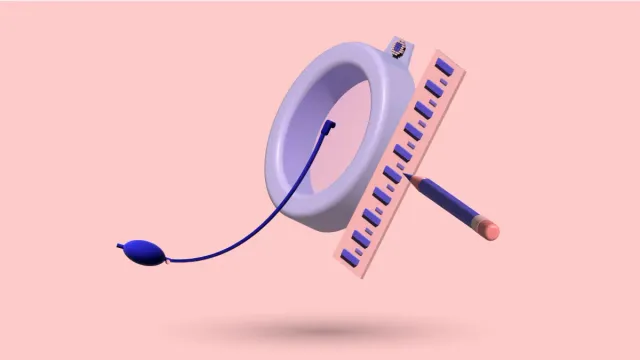
- Measure. A ruler across the dip, the same way once a month, gives you a starting number before you spend anything. Here’s how to measure pectus excavatum at home.
- Train, with the right expectations. Exercise doesn’t move the breastbone. My pectus excavatum exercises guide explains what it can help with, such as posture.
- Get checked. If anything in the doctor list above applies, that appointment is a better use of your money than any bell.
My bottom line
Don’t build one. The safeguards that come with a maker’s bell and a clinic aren’t things you can add at home, and nobody has published what happens without them.
Check first that you’re a candidate for any bell, then pick the route your budget allows. If you’re weighing a bell against an operation, here’s how a vacuum bell compares with surgery. Not sure where your chest fits? Take my free 1-minute quiz.
Whatever you choose, think in months and years: the Scottish advice talks about at least 2 hours a day for 12 months or longer.
Sources
- Klobe E. Vacuum Bell: Instructions for use. 2010 Nov 3 [cited 2026 Oct 25]. Read it
- Haecker FM, Mayr J. The vacuum bell for treatment of pectus excavatum: an alternative to surgical correction? Eur J Cardiothorac Surg. 2006;29(4):557-61. Read it
- Haecker FM, Sesia S. Vacuum bell therapy. Ann Cardiothorac Surg. 2016;5(5):440-9. Read it
- Nuss Center frequently asked questions. Children’s Hospital of The King’s Daughters. [cited 2026 Oct 25]. Read it
- Lei W, et al. BMC Pediatr. 2024;24(1):173. Read it
- Deng X, et al. J Cardiothorac Surg. 2020;15(1):240. Read it
- FormaChest vacuum bell (product page). FormaChest. [cited 2026 Oct 25]. Read it
- Hand Vacuum/Pressure Pumps (product sheet). SKF. 2022 [cited 2026 Oct 25]. Read it
- Vacuum Bell. Center for Chest Wall Reconstruction, Golisano Children’s Hospital, University of Rochester Medical Center. [cited 2026 Oct 19]. Read it
- Vacuum Bell Therapy (VBT). Pectus Clinic London. [cited 2026 Oct 19]. Read it
- van Braak H, et al. J Pediatr Surg. 2025;60(2):161891. Read it
- Haecker FM. 20 years clinical application of the vacuum bell for conservative treatment of pectus excavatum: past, present, future. J Thorac Dis. 2024;16(8):5285-98. Read it
- Kumar B, et al. Efficacy and safety of vacuum bell therapy in pectus excavatum: a systematic review of clinical outcomes. J Indian Assoc Pediatr Surg. 2026;31(1):4-19. Read it
- Technical Considerations for Additive Manufactured Medical Devices. US Food and Drug Administration. 2017 Dec 5 [cited 2026 Oct 25]. Read it
- Vacuum bell device for the correction of pectus excavatum: plain language summary. Scottish Health Technologies Group. 2025 Jun [cited 2026 Oct 25]. Read it
- Pectus Excavatum and Poland’s Syndrome: Surgical Correction. Clinical Policy Bulletin 0272. Aetna. Last reviewed 2026 Apr 17 [cited 2026 Oct 25]. Read it
- Vacuum Bell for Pectus Excavatum (product page). Pectus Academy. [cited 2026 Oct 25]. Read it
- Refund policy. Pectus Academy. [cited 2026 Oct 25]. Read it
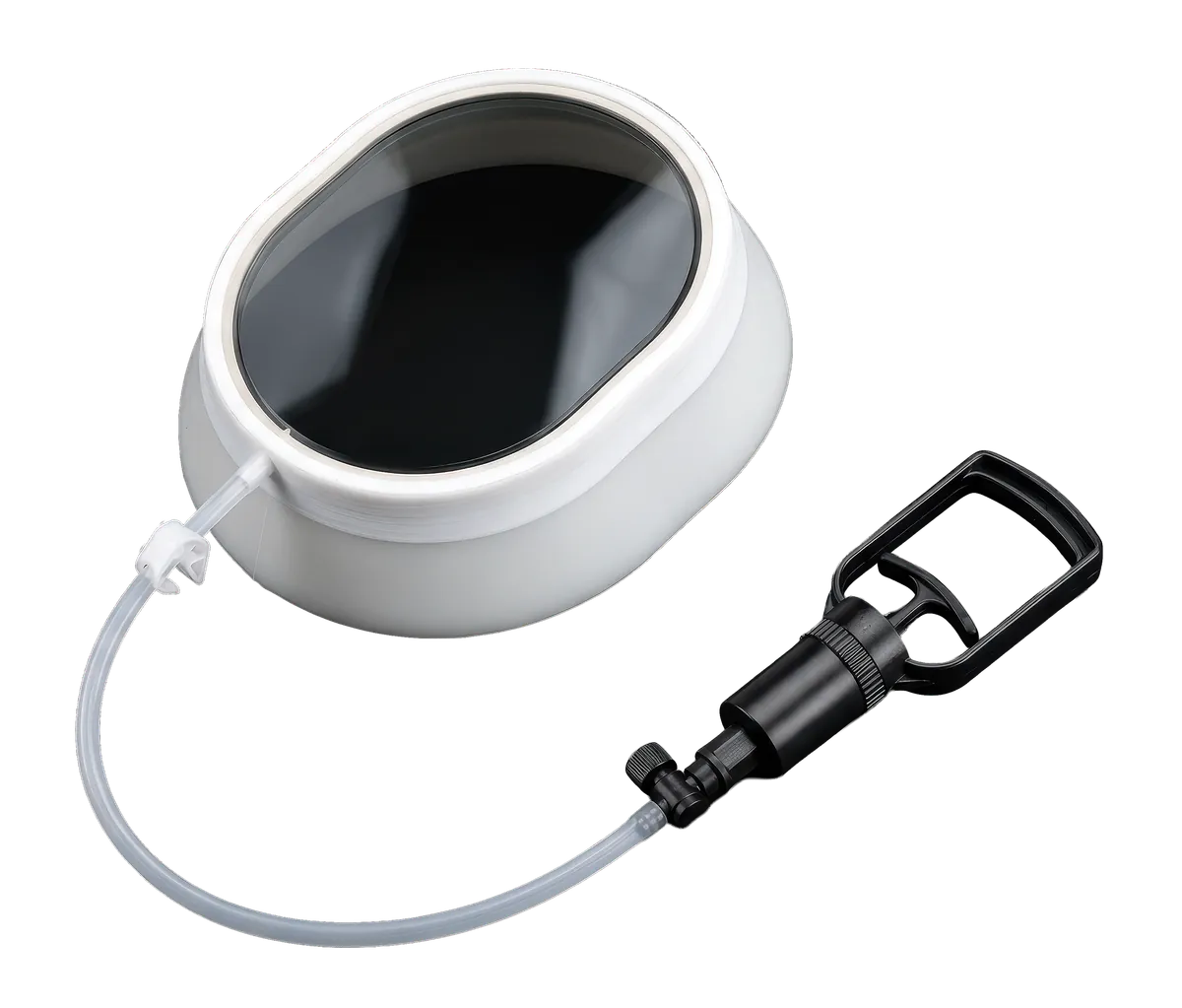
A bell sized to your chest and depth, with the session length and suction progression that decide whether it works.
- Cup sized to your chest, not a size chart
- Session length and pressure progression
- How to tell at 8 weeks if you are responding

This article is for educational purposes only and does not constitute medical advice. Always consult a qualified healthcare professional before starting any treatment plan. View full disclaimer →