Contents · 10 sections
You want to train, or you already do, and you want to know what it does to the dip in your chest.
Exercise won’t push your breastbone out. It changes almost everything around it: the muscle on your chest, back and shoulders, your posture, your strength and your stamina. Nearly every sport is open to you, and a short list of symptoms means seeing a doctor before you train hard. Below are the studies, a week you can run at a gym or at home, the key moves, and answers for running, swimming and other sports.
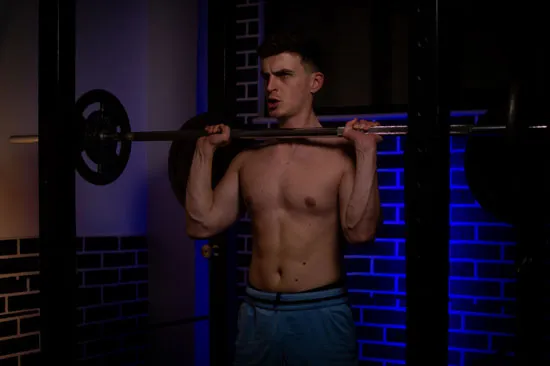
I had pectus excavatum and was diagnosed at 15. When I started training I was underweight, and my posture was poor. I’m a Level 5 certified personal trainer, and I’m not a doctor. My correction took about three years of daily vacuum bell use and structured training, and the result was visible and measurable, but not complete. The bell is what moved my chest. Training built the muscle and posture around it.

What exercise can and can’t change
Your sternum is your breastbone, the flat bone down the middle of your chest. In pectus excavatum it sits too far back. Doctors grade how deep it sits with the Haller index, a number from a chest scan that compares the width of your chest with the distance from your breastbone to your spine. The higher the number, the deeper the dip.
| Training can change | Training can’t change |
|---|---|
| Muscle on your chest, shoulders and upper back | Where your sternum sits |
| Posture, including how rounded your upper back is | Your Haller index |
| Strength, and how fit you are for sport | The depth of the dip itself |
| How you feel about training and your body |
Without surgery, what moves the sternum is a steady pull held over months. That’s the job of a vacuum bell, a suction cup worn on the chest that draws the breastbone forward. I explain how it works in vacuum bell therapy, and the full set of non-surgical options is on my pectus excavatum page.
Training is worth doing anyway. Resistance training reduced depressive symptoms across 33 randomised trials, and reduced anxiety symptoms in another review of trials. Neither was about pectus excavatum.
Will chest training make the dip look deeper?
It won’t make the dip itself deeper. Chest muscle builds on either side of the dip and can’t grow across the middle, so it changes the outline, not the depth. In my view as a trainer, building only the chest can make the edges of the dip look sharper, so pair it with back and posture work. Done that way, a fuller chest and an upright stance usually draw attention away from the dip. I couldn’t find a study that measured either, so take both as opinion.
Posture changes how deep it looks
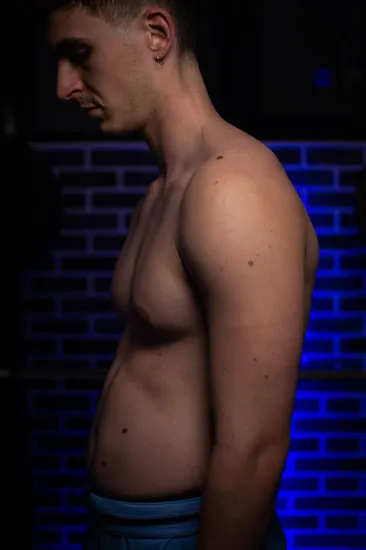
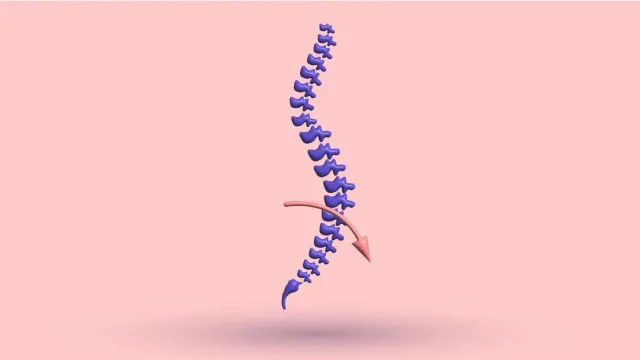
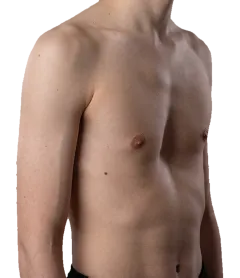
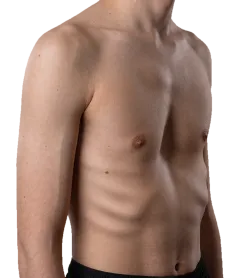
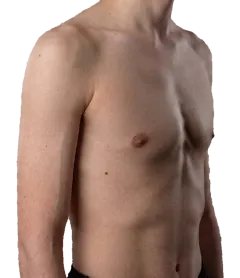
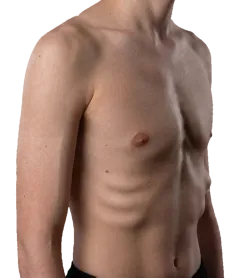
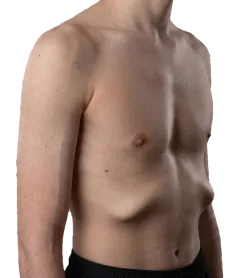
You didn’t cause pectus excavatum with bad posture. But posture changes how it looks. Roll your shoulders forward and push your belly out, like the photo above, and the dip reads deeper. Stand tall with your shoulder blades back and down, and the same chest looks different. More on that in my guide to pectus posture.
What studies of exercise programmes found
There aren’t many, and they’re small, recent and mostly in children and teenagers.
Exercise on top of the vacuum bell. In a 2026 controlled trial from Turkey, 35 teenagers used a vacuum bell. Nineteen also did a structured posture programme based on the Schroth method, and 16 used the bell alone. The groups weren’t assigned at random. The exercise group improved more in spinal posture angles and in a quality-of-life questionnaire written for pectus patients. It did not improve more in deformity severity, mobility, endurance or general quality of life. It’s the clearest evidence so far: exercise adds posture benefits, not extra correction of the dip.
A 12-week supervised programme. Fourteen Romanian children with pectus excavatum who didn’t need surgery did 12 weeks of supervised physiotherapy exercise. Their spirometry (a breathing test of how much air you can blow out, and how fast) and their 6-minute walking distance improved. By the end they matched healthy children on spirometry, but still walked less far. There was no pectus group that skipped the exercise, and chest depth wasn’t measured.
A 3-month programme. In 35 children aged 5 to 17 with a Haller index below 3.25, three months of posture, mobility, breathing and back-strengthening work improved head and shoulder alignment and standing balance. There was no control group.
Two more studies describe the starting point. Teenagers with pectus excavatum had more upper-back rounding, called thoracic kyphosis (45.7° versus 32.4°), and less spinal mobility than 21 healthy peers. That’s an association in 22 teens. It doesn’t show that posture caused their chests. And 19 boys waiting for surgery were lighter than 30 healthy boys, with a BMI of 18.7 versus 22.2. Tight chest muscles weren’t more common in them. Fewer of the pectus boys had a shortened upper chest muscle than the healthy boys did.
So exercise programmes can improve posture, breathing tests, walking capacity and balance. None of these studies tested exercise alone against chest depth, and the one that added exercise to the bell found no extra change in depth.
Check this before you train hard
See a doctor before you start a training programme or a new sport if any of these apply:
- chest pain, especially when you exert yourself
- fainting or nearly fainting
- breathlessness at rest, with light effort, or far out of proportion to the effort
- palpitations or an irregular heartbeat
- a diagnosed heart or lung condition
- Marfan syndrome or Ehlers-Danlos syndrome, or a doctor has raised either
- previous chest surgery
- a Haller index above 3.25 together with symptoms
- symptoms that nobody has checked yet
It’s the same list as in my guide to what pectus excavatum is. A 2025 sports cardiology review notes that no sports guidelines are written for pectus excavatum, and says people who have symptoms and risk factors shouldn’t take part in competitive or recreational sport. It adds that people with Marfan syndrome or a related inherited aortic condition should avoid intensive exercise, contact sports and strength training, so get your cardiologist’s plan before you lift.
During any session, stop and get checked if you get chest pain, palpitations, dizziness or breathlessness that doesn’t settle. The Children’s Mercy handout in the mobility section below gives the same rule for its exercises: if anything causes pain or discomfort, stop.
How to build your week
Everything in this section is my guidance as a trainer, not research.
- Train three or four days a week, full body each time. Chest, back, shoulders and legs all get work.
- Pull at least as much as you push. Lots of chest work with little back work is the mistake to avoid. Match every pushing set with a pulling set. If your shoulders roll forward, do more pulling than pushing, up to two pulling sets for every pushing set.
- Start with 3 sets of 8 to 12 reps, resting 60 to 90 seconds, and finish each set with one or two reps still in the tank. Treat it as a starting point.
- Progress slowly. When you hit the top of the rep range on every set, add a little weight and work back up.
- Eat enough. If you’re lean, as the boys in that study were, you won’t build much muscle without eating more. I’ve written about gaining weight with pectus excavatum.
| Pattern | Gym | Home |
|---|---|---|
| Horizontal push | Bench press, barbell or dumbbells | Push-ups, progressed from incline |
| Vertical pull | Pull-ups or lat pulldown | Pull-ups on a home bar, or band-assisted |
| Horizontal pull | One-arm dumbbell row | Inverted row under a sturdy bar or table |
| Upper back | Cable face pull | Band face pull |
| Dip | Parallel-bar dips | Dips on sturdy parallel bars |
| Squat | Front or back squat | Goblet squat or split squat |
| Hinge | Deadlift | Single-leg Romanian deadlift with a dumbbell or backpack |
A simple three-day week alternates two sessions. Day A: bench press or push-ups, dumbbell or inverted row, squat, face pull. Day B: pull-ups, dips, deadlift or Romanian deadlift, a second row. Run A, B, A one week and B, A, B the next, with a rest day between sessions.
Mobility first
Before you lift, spend five minutes on mobility. Children’s Mercy publishes a pectus excavatum exercise handout with daily moves. Three I’d start with are the doorway chest stretch, shoulder-blade squeezes, and banded shoulder extension (pulling a resistance band down and back with straight arms). For the full routine, see my stretches for pectus excavatum. Breathing drills are their own topic, covered in breathing exercises for pectus excavatum.
Training at home
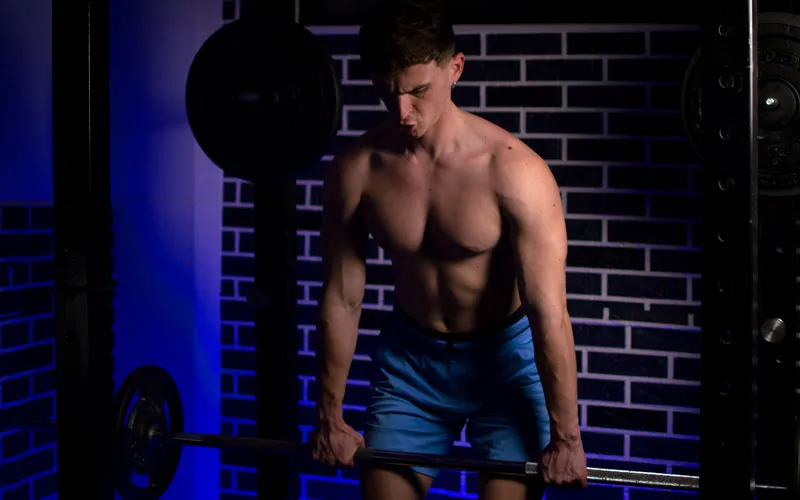
I trained in a home gym, but you don’t need one to start. Push-ups, inverted rows, pull-ups and split squats cover most of the patterns above. If you add equipment, a barbell, plates, dumbbells, a flat bench, a rack and a resistance band cover everything on this page.
If you’d rather follow a written plan, my PE Exercise Program is 16 weeks, four days a week, in gym and home versions.

The key moves, with short how-tos
These cues are my coaching guidance. Learn each move light first.
Push-ups
- Hands under your shoulders, body in one straight line from head to heels.
- Lower until your chest is a few inches off the floor, elbows angled back at roughly 45 degrees, not flared out.
- Press back up without letting your hips sag.
Too hard? Start with your hands on a wall or bench, work down to the floor, then raise your feet.
Do push-ups help pectus excavatum? They build your chest, shoulders and triceps like any press. They don’t move the sternum. Pair them with an equal number of rows.
Bench press
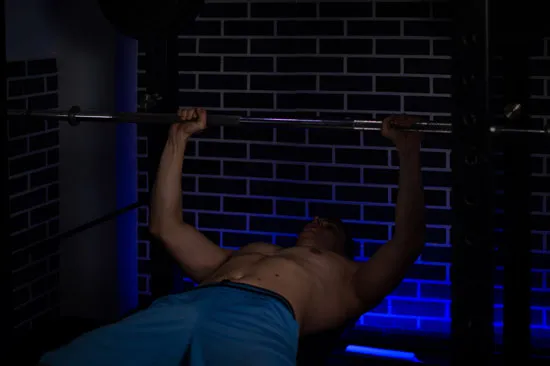
- Feet flat, shoulder blades pulled back and down into the bench, grip a little wider than your shoulders.
- Lower the bar under control to your lower chest.
- Press up and slightly back to the start.
Flat bench is still my go-to chest exercise. It builds the chest around the dip. It doesn’t fill the dip.
Does pectus excavatum affect bench press? I couldn’t find a study on it. My guidance is to bench the way anyone else would, with one rule: if touching the bar to your chest causes pain at the breastbone, stop, try dumbbells or a shorter range, and mention it to a doctor if it keeps happening.
Dumbbell pullover

- Lie on a bench holding one dumbbell over your chest with a slight bend in your elbows.
- Lower it in an arc behind your head until you feel a stretch through your lats and chest. Keep your lower ribs down rather than arching hard.
- Pull it back over your chest along the same arc.
Does the pullover expand the rib cage or lift the sternum? Old bodybuilding advice says so, but I couldn’t find a single study showing either. It’s a decent exercise for your lats and chest. Use a moderate weight and treat it like any other accessory move.
Pull-ups
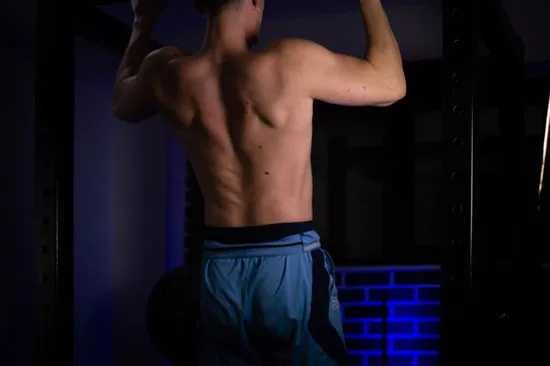
When I was diagnosed, my doctor told me to start strength training and to do pull-ups on a bar at home to strengthen my back. My dad set one up, and I did wide-grip pull-ups every day at the start.
- Grip the bar overhand, a little wider than your shoulders.
- Pull until your chin clears the bar, squeezing your shoulder blades down and together.
- Lower under control to straight arms.
For most people starting out, I’d program 3 sets two or three times a week, stopping a rep or two short of failure. If you can’t do one yet, use a band or lower yourself slowly from the top.
Rows: dumbbell and inverted
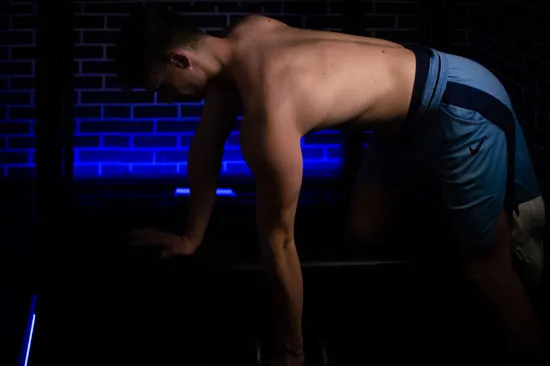
One-arm dumbbell row. Put one hand and knee on a bench, back flat. Pull the dumbbell toward your hip, squeeze your shoulder blade back, then lower until your arm is straight. Do both sides.
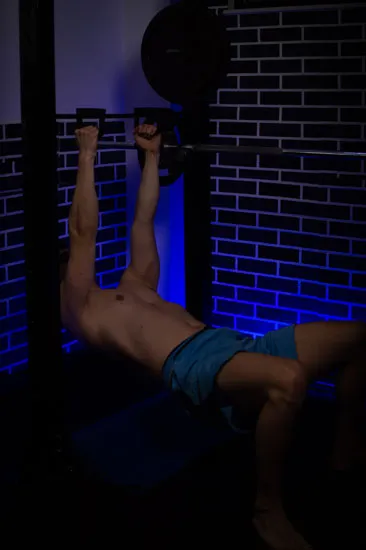
Inverted row. Hang under a bar set at about waist height, body straight from head to heels. Pull your chest to the bar, then lower. In a small study of seven men, it produced the highest upper-back and lat activity and the lowest lower-back load of the three rows tested, against the standing bent-over row and the one-arm cable row. The dumbbell row wasn’t tested. It’s a good pick if your lower back complains.
Face pulls
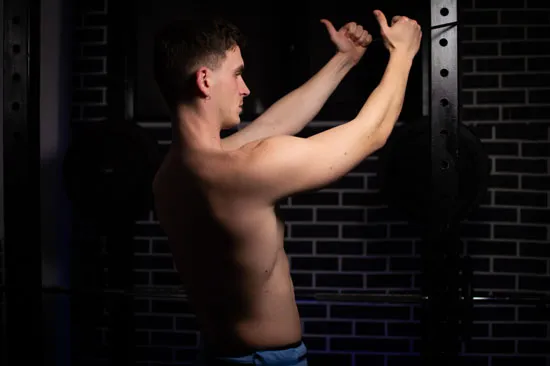
- Set a rope on a cable at upper-chest to face height, thumbs pointing back.
- Pull the rope toward your face, elbows high, and squeeze your shoulder blades together for two seconds.
- Return slowly.
Face pulls work your rear shoulders and upper back. They don’t stretch or move the sternum. At home, use a band anchored to a door or post. Start light, or it turns into an arm exercise.
Dips

- Support yourself on parallel bars with straight arms, shoulders down away from your ears.
- Lower until your upper arms are about parallel to the floor.
- Press back up.
Master bodyweight sets before you add weight. Stop adding weight, or stop the set, if you feel pain in your breastbone or shoulders.
Squats and deadlifts
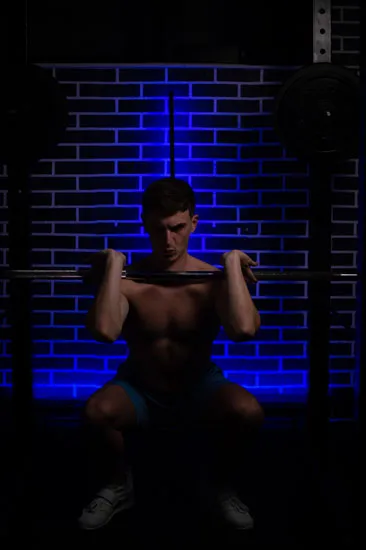
Your legs hold your biggest muscles, so don’t skip them, especially if you’re trying to gain weight.
Front squat. Bar across the front of your shoulders, elbows high. Sit down between your heels with your chest up, then stand.
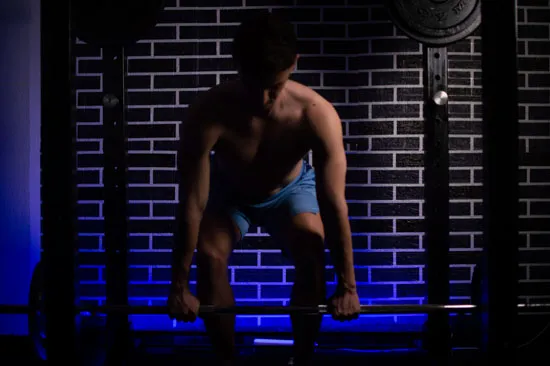
Deadlift. Bar over the middle of your feet. Hinge at the hips, grip just outside your legs, flatten your back. Push the floor away and stand tall with the bar close to your legs, then lower it the same way. Keep it light until the form is automatic.
Core and abs with pectus excavatum
Can you get abs with pectus excavatum? Your chest shape doesn’t decide that; body fat does. Train your core with the rest of your week and the abs show when you’re lean enough. That’s my view as a trainer.
What’s different is the ribs. Rib flare, where the lower edge of the rib cage sticks out, often comes with pectus excavatum. If yours flare, your core work needs to keep the ribs down. The routine for that is in rib flare exercises.
Sports with pectus excavatum, activity by activity
The general advice is encouraging. Children’s Mercy Kansas City says people with pectus excavatum can keep doing all the activities they enjoy. Some symptoms may get worse with activity, but the hospital says the activity itself isn’t a health risk. That page is written for children and families, and I couldn’t find a study of individual sports such as skiing, skating, gymnastics, hiking or triathlon in people with pectus excavatum.
For every row below: if anything on the red-flag list fits you, see a doctor first. If you’ve had the Nuss procedure, ask your surgeon about your sport by name.
| Activity | What’s known | Practical note | Doctor first if |
|---|---|---|---|
| Running | Limits tend to show in hard exercise such as running; fitness varies a lot | Build up gradually | Chest pain, palpitations or near-fainting when you run |
| Swimming | A US Olympic gold medallist has pectus excavatum | Bell off in the water | Any red flag |
| Gymnastics | No pectus-specific study found | Heavy on pushing and support holds, so add pulling work | Breastbone pain on support holds; Marfan or Ehlers-Danlos |
| Skiing and snowboarding | No pectus-specific study found | Train legs and core for it like anyone else | Any red flag; recent Nuss surgery |
| Skating and figure skating | No pectus-specific study found | Nothing pectus-specific to change | Any red flag; recent Nuss surgery |
| Hiking | No pectus-specific study found | Pace long climbs by your breathing | Breathlessness far out of proportion to the effort |
| Triathlon | No pectus-specific study found | Combine the running and swimming notes | Any red flag |
| Boxing, MMA, wrestling | No study found on blows to a sunken chest | See my MMA, boxing and wrestling guide | Marfan or Ehlers-Danlos; past chest surgery |
Running with pectus excavatum
The 2024 Pectus Care Guidelines name strenuous exercise such as running as the place where limits can show. In some people the heart can’t raise its stroke volume, the blood pumped per beat, as much as it should during exercise. The same guidelines say supportive care is enough for most patients.
Not everyone is affected. A 2026 review of 31 studies covering 2,937 people who hadn’t had surgery found average VO2max ranging from 62% to 101% of the expected value across studies. VO2max is the most oxygen your body can use during hard exercise, the standard measure of aerobic fitness. So, many people with pectus excavatum have lower aerobic fitness, and some don’t.
Activity seems to matter. In an Italian pilot study of 15 teenagers, those with pectus excavatum had lower VO2max than matched peers (77% versus 100% of expected), and how active they were predicted their VO2max. The authors encouraged training programmes. It’s a small pilot, but it fits the idea that staying active helps.
My guidance: start with easy runs or run-walk intervals and build gradually. Breathlessness that matches the effort is normal training. Breathlessness that’s far worse than the effort, or comes with chest pain, palpitations or dizziness, is a reason to see a doctor. I go deeper in pectus excavatum and shortness of breath.
Swimming with pectus excavatum
Cody Miller won Olympic gold in the 4×100 m medley relay and bronze in the 100 m breaststroke in 2016 with pectus excavatum. He chose not to have surgery, and he has said it limits his lung capacity. He’s on my list of celebrities with pectus excavatum.
For some people the harder part is taking the shirt off. The 2024 guidelines note that some people with pectus excavatum pull back from activities such as swimming. I couldn’t find a study on swim training with pectus excavatum. If you use a vacuum bell, take it off before you get in the water.

Teens, the vacuum bell and surgery
Is lifting safe for teenagers?
The old worry is that weights stunt growth. A 2006 review of 22 studies found that supervised resistance training in children before or early in puberty didn’t affect growth in height or weight, and injuries were rare: three across the ten studies that tracked them. The key word is supervised.
For a teenager starting out, my guidance is to learn every lift with light weight from someone who knows the technique, stop sets with reps in the tank, and leave maximum lifts until the form is solid. Parents, the red-flag list applies here too.
Training around the vacuum bell
Boston Children’s Hospital advises not wearing the bell during gym class, contact sports or swimming. It can be worn during ordinary daily activities. If you put it on straight after swimming, dry your skin completely first.
Should you wear it before or after a workout? I couldn’t find a study that tested the timing. The 2024 guidelines describe the bell as a safe non-surgical option that needs regular professional support, so fit your sessions around the wear plan you’ve agreed with whoever supports your treatment.
After the Nuss procedure
In the Nuss procedure, a surgeon places a curved metal bar behind the breastbone to push it out, and it stays in for a few years. Return to training varies by hospital. The 2024 guidelines describe walking straight away, limits on upper-body activity for about six weeks, and full upper-body activity only after about three months. Some centres also advise avoiding high-risk activities for as long as the bar is in. Follow your own surgeon’s plan.
How to track it: once a month
Track three things:
- Depth. Lie flat, rest a ruler across the dip without pressing, and measure down to the deepest point, the same way every month. My measurement guide walks through it. A ruler reading is your tracking number, not a Haller index.
- Photos. Same light, same angle, same time of day, front and side.
- A strength log. Weights, sets and reps for the main lifts.
Be honest with the timeline. As a rough guide from training, not research, strength climbs within weeks and visible muscle and posture changes take months. Structural change in the chest is measured in months and years. Mine took about three years of daily bell use alongside training.
If you want to know where your chest stands and which non-surgical route fits it, my free 1-minute quiz is the place to start.
Sources
- Dunning J, et al. Pectus care guidelines. Eur J Cardiothorac Surg. 2024;66(1):ezae166. Read it
- Kandemir B, Yagci G, Uysal S, Akkas Y, Erbahceci F. Prosthet Orthot Int. 2026 (online ahead of print). doi:10.1097/PXR.0000000000000545. Read it
- Amăricăi E, et al. Wien Klin Wochenschr. 2019;131(5-6):126-131. Read it
- Rezumeș MZ, et al. Children (Basel). 2026;13(5):664. Read it
- Mete O, et al. Pediatr Surg Int. 2024;40(1):178. Read it
- Jarosz M, et al. Kardiochir Torakochir Pol. 2013;10(1):72-78. Read it
- Gordon BR, et al. JAMA Psychiatry. 2018;75(6):566-576. Read it
- Gordon BR, et al. Sports Med. 2017;47(12):2521-2532. Read it
- Małek Ł, Lemańska A, Śpiewak M. Pectus Excavatum: A Frequent but Often Neglected Entity in Sports Cardiology. Diagnostics (Basel). 2025;15(23):2956. Read it
- Pectus excavatum exercises (patient handout). Children’s Mercy Kansas City. [cited 2026 Oct 19]. Read it
- Fenwick CM, Brown SH, McGill SM. Comparison of different rowing exercises: trunk muscle activation and lumbar spine motion, load, and stiffness. J Strength Cond Res. 2009;23(2):350-8. Read it
- Pectus Excavatum. Children’s Mercy Kansas City. [cited 2026 Oct 19]. Read it
- Lokietek M, et al. Physiol Rep. 2026;14(13):e71005. Read it
- Casatori L, et al. Front Physiol. 2022;13:831504. Read it
- Malina RM. Weight training in youth-growth, maturation, and safety: an evidence-based review. Clin J Sport Med. 2006;16(6):478-87. Read it
- Vacuum bell therapy. Boston Children’s Answers. 2021 Jun 29. Read it
Sixteen weeks of full-body training for pectus excavatum, with a daily breathing and posture routine alongside. The sets, reps and progression are laid out week by week.
- 16 weeks, 4 training days a week
- Gym and home versions of every day
- One payment, lifetime access

This article is for educational purposes only and does not constitute medical advice. Always consult a qualified healthcare professional before starting any treatment plan. View full disclaimer →