Contents · 8 sections
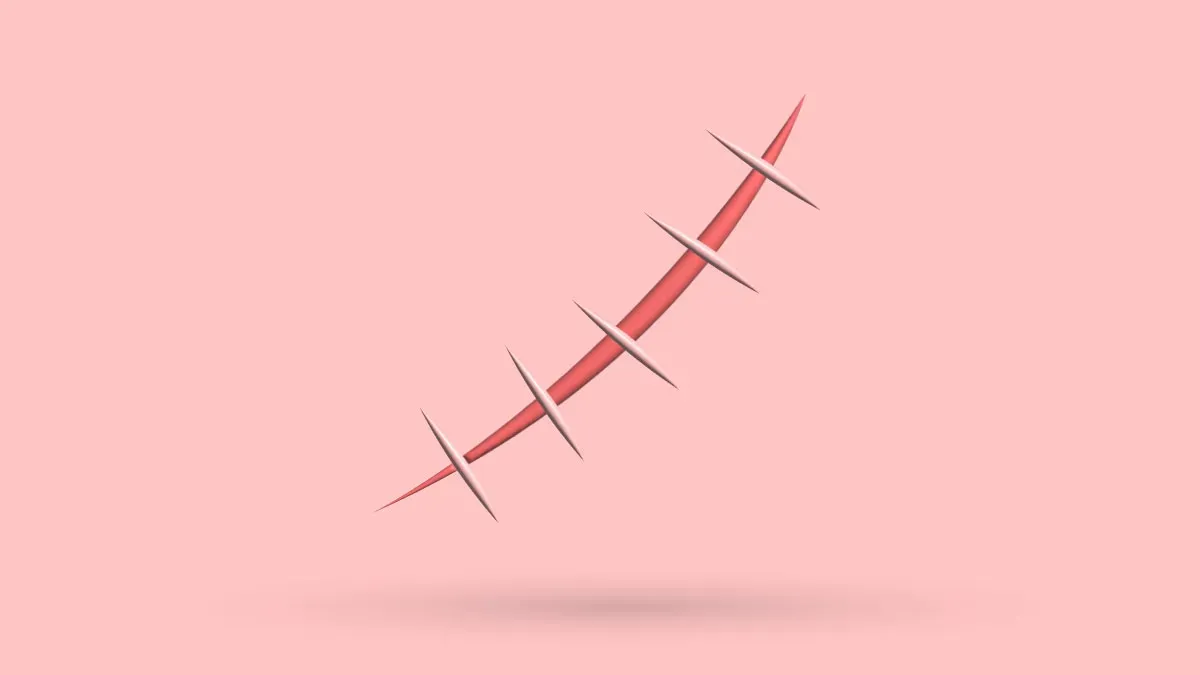
A Nuss repair leaves a small scar on each side of the chest, and a Ravitch leaves one longer scar across the front; neither disappears, but both usually fade over the following months. The steps with the best support are following your hospital’s wound sheet, not smoking, protecting the healed scar from the sun and asking about silicone gel or sheets once the wound has closed.
When the Nuss bar comes out, the surgeon usually goes back in through the same side cuts. Below: where each scar sits, what studies found about them, five scar care steps checked against research, what doesn’t help, and when a scar needs a doctor. I’m not a doctor and I haven’t had pectus surgery; your hospital’s wound instructions come first.
Where the scars are
| Operation | Where the cut is | What to expect |
|---|---|---|
| Nuss | One small cut on each side of the chest. Texas Children’s puts the camera in through a 5 mm cut | Two short side scars. How it’s done is in my guide to the Nuss procedure |
| Nuss bar removal | Usually the same side cuts | Usually no new scars. More in Nuss bar removal |
| Ravitch (open repair) | One cut across the front of the chest. The Pectus Clinic in London describes a single transverse cut, occasionally extending under the breast area, placed as discreetly as possible | One longer front scar. The Pectus Clinic calls it the main trade-off of open surgery |
The Pectus Clinic calls the Ravitch the main surgical option for pectus carinatum, the outward chest, when it isn’t suited to bracing. Surgery isn’t where carinatum treatment starts: for most, bracing comes first. See pectus carinatum brace treatment. For how the two operations compare overall, see my guide to pectus excavatum surgery.
What studies found about pectus scars
The studies are small and measure scars in different ways:
| Study | Who | What it found |
|---|---|---|
| Johns Hopkins, 1998 to 2011 | 98 adults after Nuss, 39 answered a survey | 7 were dissatisfied with the overall result. Their most common complaints were severe pain after surgery and the scars |
| Leeds, UK, 2006 to 2010 | 11 Nuss patients, one surgeon | All were satisfied with the scar |
| Konya, Turkey, 2004 to 2011 | 77 Ravitch repairs, ages 10 to 29 | 27% had a hypertrophic (thick, raised) scar over the breastbone |
| Berlin, 1997 to 2007 | 71 modified Ravitch repairs, followed about 5 years | 96% of scars were rated cosmetically well healed on a standard scar scale |
So the side scars of the Nuss bother some people, and a front Ravitch scar can thicken. The Pectus Clinic lists a scar that heals less neatly than hoped, wide, thickened or rarely keloid, among its uncommon risks. A keloid is a scar that grows beyond the edges of the original cut.
How a scar changes over time
| When | What’s happening | What to do |
|---|---|---|
| First 1 to 2 weeks | The wound is closing | Follow your hospital’s sheet. Children’s Hospital of Philadelphia (CHOP) uses dissolvable stitches, and at University of Rochester Medical Center the paper strips come off by themselves as you bathe or shower. Watch for the warning signs below |
| Once the wound has fully closed | The scar is new and pink | Protect it from the sun, and ask about silicone gel or sheets (steps 3 and 4) |
| The following months | Pink and firm at first, then fading, per the Pectus Clinic | Keep up sun protection. Show a doctor any scar that keeps getting thicker or more raised |
5 tips for pectus scar care
1. Follow your hospital’s wound sheet
Your hospital’s instructions beat any general advice, including this page. Ask before putting anything on a surgical wound, and don’t pick at strips or scabs. The American Academy of Dermatology (AAD) suggests keeping minor wounds moist with petroleum jelly to help them heal with a smaller scar, but that advice is written for cuts and scrapes, so check with your team for a surgical cut.
2. Don’t smoke
A 2012 review compared smokers and non-smokers in 140 studies covering 479,150 patients across surgical specialties. Smokers had about twice the odds of delayed healing or a wound opening, and former smokers also had more healing problems than people who’d never smoked. Stopping around the time of surgery reduced wound infections. That review covered surgery in general, not pectus repair. More in my guide to smoking and pectus excavatum.
3. Protect the healed scar from the sun
The AAD says to apply sunscreen once the wound has healed, broad-spectrum SPF 30 or higher, reapplied often, because sun protection may reduce red or brown discoloration and help the scar fade faster. Side scars sit where a T-shirt sleeve or swimsuit may not cover them.
4. Ask about silicone gel or sheets once the wound has closed
Silicone is the best-studied scar product, but the evidence is weak. A 2013 Cochrane review of 20 trials and 873 people found silicone gel sheeting may lower the chance of a thick, raised scar in people prone to them, and improved thickness and color in existing ones. The authors called the trials poor quality and highly open to bias. My view: it’s low risk, so it’s worth asking your surgeon whether and when to start. The AAD mentions silicone gel sheets too, for larger scrapes, burns and persistent redness.
5. Move the way your hospital says, not less
Old advice to stay still after pectus surgery is out of date. After the Nuss, Texas Children’s expects patients to walk to the bathroom with help within hours of surgery, and CHOP has patients out of bed to a chair the next day. The limits that do apply, such as no twisting, bending or heavy lifting for the first weeks, are there to keep the bar in place while it settles. I couldn’t find a study linking movement after pectus surgery to wider scars.
What doesn’t help
- Vitamin E. In a small double-blind trial of 15 patients after skin surgery, vitamin E rubbed on the scar either made no difference or made it look worse in 90% of cases, and 33% of patients got a contact rash from it.
- Diet and weight claims. I couldn’t find a study linking diet or body weight to scar appearance after pectus surgery. Eating enough still matters for recovery in general.
When a scar needs a doctor
While the wound is healing, call your surgical team for any of these, from CHOP’s call list:
- fever above 101.5 °F (38.6 °C)
- more redness or swelling at the cuts
- any drainage from the cuts
After it has healed, these are signs of the thickened or keloid scarring described above. In my view they’re worth showing your surgeon or a dermatologist:
- the scar keeps getting thicker or more raised after the first months
- it spreads beyond the edges of the original cut
If you’re worried about how a scar looks, the AAD suggests seeing a board-certified dermatologist.
If a scar is affecting how you feel about your chest, that’s common and worth taking seriously. My guide to self-confidence with pectus covers that side.
Where to go from here
- You’re weighing surgery and the scar is part of the worry. Ask each center where its cuts go and to show you healed examples. If you’d like to try without surgery first, where your chest allows, my free non-surgical pectus excavatum plan is one place to start.
- You’re not sure how severe your chest is. Take my free 1-minute quiz for a sense of where your chest stands and which route fits.
Sources
- What to Expect: The Nuss Procedure. Texas Children’s Hospital. 2021 [cited 2026 Oct 30]. Read it
- Modified Ravitch Operation. Pectus Clinic, London. [cited 2026 Oct 30]. Read it
- Sacco Casamassima MG, et al. Ann Thorac Surg. 2016;101(4):1338-45. Read it
- Barua A, et al. J Surg Tech Case Rep. 2012;4(2):86-8. Read it
- Oncel M, et al. Cardiovasc J Afr. 2013;24(8):318-21. Read it
- Funk JF, Gross C, Placzek R. Langenbecks Arch Surg. 2011;396(8):1213-20. Read it
- Nuss Procedure. Children’s Hospital of Philadelphia. [cited 2026 Oct 30]. Read it
- Nuss Surgery. University of Rochester Medical Center, Golisano Children’s Hospital. [cited 2026 Oct 30]. Read it
- Minimize a scar: Proper wound care tips from dermatologists. American Academy of Dermatology. [cited 2026 Oct 30]. Read it
- Sørensen LT. Arch Surg. 2012;147(4):373-83. Read it
- O’Brien L, Jones DJ. Silicone gel sheeting for preventing and treating hypertrophic and keloid scars. Cochrane Database Syst Rev. 2013;(9):CD003826. Read it
- Baumann LS, Spencer J. Dermatol Surg. 1999;25(4):311-5. Read it
Surgery moved the sternum. What decides how you look and feel a year out is the posture, breathing and loading you rebuild around it.
- Staged from week one to bar removal
- Breathing work that restores capacity
- What to lift, and when it is safe to

This article is for educational purposes only and does not constitute medical advice. Always consult a qualified healthcare professional before starting any treatment plan. View full disclaimer →