Contents · 13 sections
If you’ve looked up what pectus excavatum surgery costs, you’ve probably seen numbers as far apart as $17,000 and $67,000. They measure different things. The lower ones, $17,462 for a Nuss and $18,670 for a Ravitch, are what a first hospital stay cost US hospitals for patients aged 12 to 21, in data from 2016 to 2020. The higher ones are billed charges, the hospital’s list price. What you pay depends on whether your insurer accepts the operation as medically necessary, and on your plan’s deductible and out-of-pocket limit. A Nuss also means a second operation, and a second bill, when the bar comes out two to three years later.
I was diagnosed with pectus excavatum at 15 and declined surgery. I corrected it over about three years of daily vacuum bell use and structured training, and the change was visible and measurable, but not complete. I’m not a doctor, and surgery is the right call for many people, so every medical and money point here comes from a named source.
Costs in brief come first, then who qualifies, the operations, recovery, sport, risks, results and the non-surgical option.
How much does pectus excavatum surgery cost?
US figures measure three different things: what a first hospital stay cost the hospital (about $17,000 to $19,000 for a Nuss or Ravitch at ages 12 to 21), what hospitals billed (median charges near $57,000 to $67,000), and what you pay, which depends on your plan. One large insurer covers repair only with a Haller index above 3.25 plus objective heart, lung or exercise findings, and a Nuss means a second operation later to take the bar out.
I keep the full breakdown in my Nuss procedure cost guide: hospital price-list line items, insurer rules and appeals, bar removal, cryoablation and prices outside the US.
Pigeon chest surgery cost
Pectus carinatum, or pigeon chest, is the opposite shape: the breastbone pushes out. I couldn’t find a verified US price for carinatum surgery, only coverage rules. Aetna calls carinatum surgery and bracing cosmetic, and NHS England excludes carinatum.
Bracing usually comes first. The 2024 Pectus Care Guidelines, a consensus from cardiothoracic, pediatric surgery, orthopedic and Marfan societies, make it the first-line option, and one Canadian center reported success in 90% of braced patients (217 of 241) between 2011 and 2021. Most failures came from not wearing the brace. More in pectus carinatum brace therapy.
Outside the US
NHS England funds pectus surgery for very few people, and elsewhere it’s mostly private care. What I could verify country by country is in the cost guide.
Who is a candidate for surgery?
Most sunken chests are mild and well tolerated, according to the 2024 Pectus Care Guidelines. Only a small number limit the body physically.
The guidelines give the strongest recommendation for surgery when:
- the Haller index is above 3.25 and tests show the heart is being compressed
- there’s a dangerous heart rhythm problem
- there’s fainting or near-fainting
Trouble swallowing gets a weaker recommendation. There’s also good evidence, the guidelines say, that people affected psychologically benefit, with a psychological assessment first. No study has set a level of distress that justifies an operation.
The Haller index is a ratio from a CT scan: the chest’s width divided by the gap between the back of the breastbone and the spine. It has no units. Above 3.25 is a common threshold for a surgical opinion. It isn’t an emergency, and it doesn’t decide surgery on its own.
Expect some mix of a CT or MRI scan, ECG, echocardiogram, lung function tests and an exercise test beforehand, the same results insurers ask for.
MedlinePlus, the US government’s health encyclopedia, says the operation is mostly done at 12 to 16 and not before 6. CHKD says usually not before 10, and its median patient is 15. If you’re still working out how severe your chest is, start with what pectus excavatum is, including the red flags that mean seeing a doctor first.
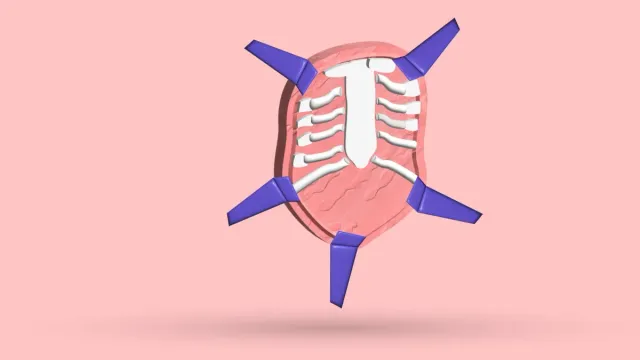
Nuss vs Ravitch
| Nuss procedure | Ravitch procedure | |
|---|---|---|
| Type | Minimally invasive | Open repair |
| How it’s done | Small cuts on each side. Guided by a camera, the surgeon places one or more curved steel bars under the breastbone to push it forward | A cut across the front of the chest. The surgeon removes overgrown cartilage, brings the breastbone forward and holds it with a plate and screws or a small bar |
| Hardware out | After about 2 to 3 years | After 6 to 12 months |
| Median hospital stay (US, ages 12 to 21) | 3 days | 4 days |
| Share of US repairs (ages 12 to 21, 2016 to 2020) | 86% | 14% |
The Nuss is by far the more common. Children’s Hospital of Philadelphia uses the Ravitch for selected severe or complex chests and for people who aren’t candidates for a Nuss. The guidelines rate the two as similarly effective.
On complications, it depends on age. In children, a pooled analysis of 13 studies found no difference, though the US data on 12 to 21 year olds recorded more problems in the first stay after Ravitch: a chest drain in 5.1% against 2.2%, and bleeding in 2.4% against 0.6%. In adults, the guidelines say Ravitch has a slightly lower complication rate, mainly because fewer need another operation for a moved bar. They add that adults should have open repair only once their bones have fully matured.
A Cochrane review found no randomised trial to say which is best. Each has its own deep guide: the Nuss procedure and the Ravitch procedure.
Other operations you’ll hear about
Pectus Up. A newer operation for sunken chests only. The guidelines call it under development and evaluation, with little safety data so far. More in my guide to Pectus Up surgery.
Custom silicone implants. An implant designed from your CT scan fills the dip. It doesn’t move the breastbone or take pressure off the heart and lungs, so it changes how the chest looks, not how it works. Per the guidelines, it goes in under the chest muscles and you go home on day one or two. The main problem is seroma, a pocket of fluid that often needs draining. The developer’s own series of 401 implants reported a seroma in every case. In a small independent series of 7 adults, one implant came out after a seroma led to an infected collection of blood. More in plastic surgery and implants for pectus excavatum.
Magnetic mini-mover. A magnet implanted on the breastbone was pulled outward by a magnetic brace worn for about two years. In the FDA-sponsored trial of 15 children aged 8 to 14, the implant’s cables broke in 7. Of 13 followed up, the Haller index fell in 5, stayed the same in 2 and rose in 6. The trial has closed, and I found no sign of it being offered outside one.
Sandwich technique. Built for pigeon chest and for chests sunken in one area and pushed out in another. Bars inside the chest lift the sunken parts while a bar outside the ribs, under the muscle, presses the raised parts down. A three-center series reported 24 patients over eight years. It isn’t standard for a plain sunken chest.
Cryoablation. Not a repair, but pain control added to a Nuss. The surgeon freezes the nerves between the ribs at about minus 70 °C so the chest goes numb while it heals. The guidelines say the nerves regrow over about 2 to 6 months, and that cryoablation has largely replaced epidurals. In US children’s hospitals from 2016 to 2023, Nuss patients who had it went home sooner (2.0 days against 2.8) and had fewer complications (8% against 12%), at a higher cost. It may be harder on adults: in a small study of 43 patients, 3 of 13 people over 21 developed nerve pain against none of 30 younger ones, and numbness lasted about 10.8 months against 3.4. More in cryoablation after the Nuss procedure.
Recovery: the first weeks and months
Hospital stays are in the table above. Cleveland Clinic says that with cryoablation most patients go home the day after surgery and students are usually back at school in two to three weeks.
The guidelines describe the usual pattern:
- walking straight away
- as little upper-body activity as possible for about 6 weeks
- back to school or work at about 4 to 6 weeks
- full upper-body activity after about 3 months
Expect pain. CHKD says plainly that the Nuss, though minimally invasive, can be painful.
Home rules differ by hospital. The Logan Health post-op handout from Montana lists oxycodone for about a week with a laxative routine, and for the first 3 months no lifting over 15 to 20 lb, no twisting and no driving. It also asks patients to wear a medical alert bracelet, because CPR needs more force with a steel bar in the chest. See what to buy before you go home, and the Nuss guide above for recovery week by week.
Why you may not feel like eating
Opioid painkillers slow how fast your stomach empties. A review of opioid effects on the gut lists nausea after meals, feeling full early, and constipation. That review covers opioids in general, not pectus surgery, but my reading is that it’s a likely reason appetite drops while you take them. Logan Health pairs the opioid with a laxative, and asks families to call if there’s weight loss or vomiting that won’t stop.
When can you play contact sports again?
There’s no single rule. Hospitals set their own:
- A UCSF study of 114 patients, using extra stabilizers and cryoablation, set no restrictions at all, sports included, and saw no bars move. That’s one technique, not a norm.
- Logan Health allows all sports without limits at 3 months.
- UPMC Children’s Hospital of Pittsburgh allows noncontact sports at 3 months and contact sports at 6 months.
- Children’s Hospital of Philadelphia bans contact sports for the first 4 weeks and may keep football, wrestling and pole vaulting off the list while the bar is in.
- The guidelines note that some centers warn against hard blows to the chest, like kickboxing, for the whole 3 years the bar is in.
These are examples, not a survey. Your surgeon’s plan is the one that applies. Ask about your sport by name, sparring included, and ask again after the bar comes out. I’ve compared what four centers say about boxing and wrestling after the Nuss separately.
Risks and complications, with real rates
According to the guidelines, the most common complication is a pneumothorax, air trapped between the lung and the chest wall, in up to 20% of patients. The bar moves out of place in about 1%, and the risk of death is about 0.03%, or roughly 3 in 10,000. The guidelines also quote series reviewed by NICE, the UK’s health technology body, with much wider ranges: pneumothorax in 3% to 55% and bar or stabilizer displacement in 2% to 10%.
Other studies:
- 11 centers, 327 patients. No deaths. Of the 182 with complete follow-up, 18% had a later complication, including a bar that moved in 7%.
- 15 studies, 5,978 patients. A meta-analysis found an overall complication rate of 19.87%.
- 167 patients aged 5 to 40 in Graz, Austria. Major complications in 4.2%, including one perforated heart. The surgeons called them rare but preventable, and linked them to the learning curve.
- 49 centers, 13,352 patients. Significant complications around surgery in 7.7%, with fewer at busier centers. The best results came at about 73 or more cases a year.
The percentages don’t line up because the studies count different complications, in different patients and years. My reading: serious harm is rare, smaller problems are common, and the team’s experience matters. Ask any center how many repairs it does a year. If you’re still choosing, I keep a list of pectus excavatum surgeons by country.
Pain control has its own risk. The guidelines note that an epidural carries a risk of spinal cord injury. If you’re worried about the bar shifting, I’ve written about bar movement after the Nuss procedure.
Bar removal
The guidelines say Nuss bars should come out after about 3 years, and advise against leaving one in for life. Among 153 people surveyed at Children’s Mercy Kansas City, the median time with the bar was 2.9 years.
Serious bleeding is rare. In a series of 1,628 removals at CHKD, blood loss passed 150 mL in 0.43% and 2 liters in 0.12%, with no heart injuries and no deaths. The authors still call it potentially life threatening, and say removal belongs where the team can open the chest straight away if needed. Ask whether yours can. More in pectus bar removal.
Results and recurrence
Results are good. In 1,215 Nuss patients at CHKD, 95.8% had a good or excellent result when the bar came out, and 1.4% needed another operation because the dip came back.
For the longer term, Children’s Mercy surveyed patients a median of 9.6 years after repair: 96.7% were satisfied and 2% had needed another procedure, but 30.7% noticed the chest moving back in somewhat. Only 26% answered, so treat these as rough.
Surgeons who redo failed repairs list the usual reasons the dip returns: bars taken out too early, repair at a very young age, a bar that moved, and connective tissue disorders such as Marfan syndrome. More in preventing recurrence after surgery.
Surgery as an adult vs a teenager
Adults can have a good repair. It’s just harder.
- More complications with age. In US hospital data on 360 Nuss patients from 2016 to 2018, any complication was recorded in 30.6% of 12 to 17 year olds, 45.2% of 18 to 29 year olds and 62.1% of those 30 and over. That count comes from billing codes, so it includes minor problems. The 15-study meta-analysis in the risks section put older patients at about 1.66 times the odds.
- Success stays high. In a Mayo Clinic Arizona series of 361 adults, a modified Nuss succeeded in 88.7% of people aged 30 and over and 96.5% of those aged 18 to 29.
- Most get a satisfactory result. In a Johns Hopkins series of 98 adults, 94.4% had a satisfactory result after the bar came out, and 4.1% needed another operation for a moved bar. Their main complaints were severe pain after surgery and the surgical scars.
Two earlier findings also apply: Ravitch has slightly fewer complications in adults, and the nerve pain and longer numbness after cryoablation showed up in older patients. For a severe chest with symptoms, adult surgery is still a legitimate choice. For the longer view, see pectus excavatum later in life.
Is the Nuss procedure cosmetic surgery?
The most common reason for the operation is to improve how the chest looks, according to MedlinePlus. That isn’t vanity. The guidelines say there’s good evidence that people affected psychologically benefit from repair, and they recommend a psychological assessment for that group. How you feel about your chest is a real effect of the condition. More on how pectus excavatum affects mental health.
When an insurer says “cosmetic”, it’s deciding whether it will pay, not whether the operation matters to you. Either way, it’s a lot to go through: steel bars for two to three years, months of limits and a second operation to take them out.
Surgery or non-surgical first? A fair comparison
On the evidence here, surgery is the more predictable way to change a chest’s shape: 95.8% good or excellent in the high-volume Nuss series above. The bell figures below use a different measure in different patients, so it isn’t a head-to-head comparison. The one study that did compare them, and how the two can be combined, are in my vacuum bell vs surgery comparison.
The guidelines call the bell a safe conservative treatment. In 278 patients at one Virginia center, 11% reached an excellent correction and 15.5% later had surgery. An earlier series of 115 at the same center found 20%. The people who did best were younger, had a shallower dip and wore the bell more hours. A bell costs less than an operation. It isn’t painless, since bruising and soreness happen, and it isn’t fast: expect months to years. The full evidence is in vacuum bell therapy.
My opinion, and it’s only that: if your chest is mild and you have no symptoms, it’s worth trying non-surgical first. That’s the route I chose. If your chest is severe and symptomatic, or non-surgical work hasn’t moved it, surgery is a legitimate choice and not a failure.
Pick the line that fits you:
- You have red flags or a severe chest with symptoms. See a pediatric or thoracic surgeon who treats chest wall conditions.
- You’re leaning toward surgery. Get your insurer’s written policy, and ask the center its yearly volume, its sport rules and the bar-removal price.
- Your chest is mild and you want to try without surgery first. Take my free 1-minute quiz for a sense of where your chest stands and which route fits. Every non-surgical route is on the pectus excavatum treatment without surgery page.
Sources
- Dunning J, et al. Pectus Care Guidelines. Eur J Cardiothorac Surg. 2024;66(1):ezae166. Read it
- Emil S, et al. Eur J Pediatr Surg. 2026;36(5):378-84. Read it
- Pectus excavatum repair. MedlinePlus. Reviewed 2025 Jan 27 [cited 2026 Oct 20]. Read it
- Ravitch Procedure. Children’s Hospital of Philadelphia. [cited 2026 Oct 20]. Read it
- Kanagaratnam A, et al. Ann Cardiothorac Surg. 2016;5(5):409-21. Read it
- de Oliveira Carvalho PE, et al. Cochrane Database Syst Rev. 2014;CD008889. Read it
- Chavoin JP, et al. Plast Reconstr Surg. 2016;137(5):860e-71e. Read it
- Geisler D, et al. JPRAS Open. 2026;52:514-21. Read it
- Graves CE, et al. J Pediatr Surg. 2017;52(6):913-9. Read it
- Garcia-Martinez L, et al. J Pediatr Surg. 2025;60(12):162568. Read it
- Zobel MJ, et al. Pediatr Surg Int. 2020;36(3):317-24. Read it
- Pectus Excavatum. Cleveland Clinic. Updated 2023 Aug 11 [cited 2026 Oct 20]. Read it
- Post-operative Nuss guidelines. Logan Health Children’s Specialists. 2023 Sep [cited 2026 Oct 20]. Read it
- Camilleri M, et al. Clin Gastroenterol Hepatol. 2017;15(9):1338-49. Read it
- Melhado C, et al. Pediatr Surg Int. 2024;40(1):232. Read it
- Nuss Procedure. UPMC Children’s Hospital of Pittsburgh. [cited 2026 Oct 20]. Read it
- Nuss Procedure. Children’s Hospital of Philadelphia. [cited 2026 Oct 20]. Read it
- Kelly RE Jr, et al. J Am Coll Surg. 2013;217(6):1080-9. Read it
- Coughlin AC, et al. Pediatr Surg Int. 2022;38(3):365-75. Read it
- Castellani C, et al. Pediatr Surg Int. 2008;24(6):659-66. Read it
- Daemen JHT, et al. J Thorac Dis. 2024;16(9):6081-93. Read it
- Cohen NS, et al. J Laparoendosc Adv Surg Tech A. 2018;28(11):1393-6. Read it
- Kelly RE, et al. Ann Surg. 2010;252(6):1072-81. Read it
- Cruz-Centeno N, et al. Eur J Pediatr Surg. 2024;34(4):333-7. Read it
- Jaroszewski DE, et al. J Vis Surg. 2016;2:74. Read it
- Jaroszewski DE, et al. Ann Thorac Surg. 2016;102(3):993-1003. Read it
- Sacco Casamassima MG, et al. Ann Thorac Surg. 2016;101(4):1338-45. Read it
- Aughtman S, et al. J Pediatr Surg. 2025;60(3):162020. Read it
- Huerta CT, et al. J Surg Res. 2024;303:381-9. Read it
- Mack SJ, et al. J Thorac Dis. 2022;14(4):952-61. Read it
- Clinical Policy Bulletin 0272 (pectus excavatum and pectus carinatum). Aetna. Last reviewed 2026 Apr 17 [cited 2026 Oct 20]. Read it
The prep work before a repair: the breathing capacity and back strength that make the first week after surgery survivable and the result hold.
- Breathing capacity built before the bar
- Back and postural work for recovery
- What to have ready before the date

This article is for educational purposes only and does not constitute medical advice. Always consult a qualified healthcare professional before starting any treatment plan. View full disclaimer →