Contents · 12 sections
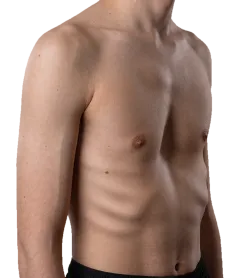
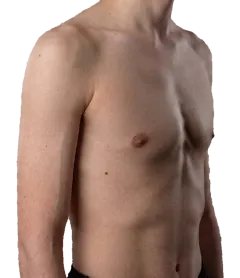
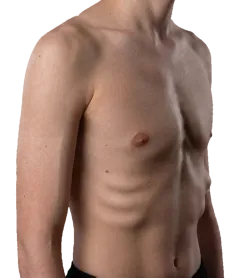
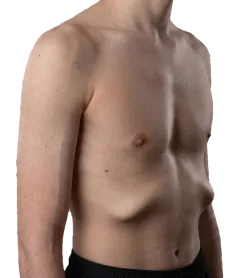
You have a dent in your chest, and you smoke, vape or use weed, or someone at home does. The question underneath is simple: does it make pectus excavatum worse?
Nobody knows. I couldn’t find a single study testing whether cigarettes, vapes or cannabis change the dent itself. Their effect on your lungs and stamina is well studied, and that matters more when your chest already takes some of your lungs’ room. Pectus research and smoking research also meet in one place: collapsed lung. And if you’re heading for surgery, your surgical team will want you to stop early.
I was diagnosed with pectus excavatum at 15 and corrected it without surgery over about three years. The change was visible and measurable, but not complete. I’ve never smoked or vaped, and I’m not a doctor. Every medical point below comes with the study or health body behind it, and I’ll say when the evidence is thin or doesn’t come from people with pectus.
Below: the dent, lungs, fitness, vaping, weed, collapsed lung, symptoms to check, surgery, second-hand smoke and quitting help.
Does smoking affect pectus?
On the dent itself, there’s no evidence either way. A search of PubMed, a large database of medical research, in October 2026 turned up no study of it. That’s a gap in the research, not proof that it’s harmless.
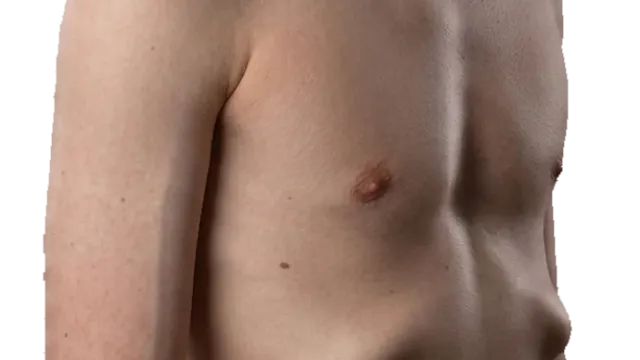
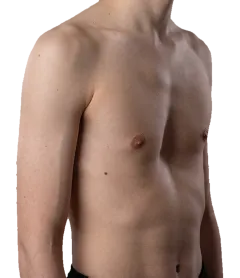
The cause of the dent is better understood. It most likely comes from uneven growth of the cartilage that joins your ribs to your breastbone, according to one NHS hospital’s pectus leaflet. That’s a cartilage problem, not weak bone, as my guide to what pectus excavatum is explains.
What pectus can do to the lungs is also known. In a study of young people aged 6 to 21 who had been referred for pectus surgery at 11 North American centres, lung test results got worse as the Haller index went up. The Haller index is a scan-based ratio of how wide your chest is to how far your breastbone sits from your spine at the deepest point, so a higher number means a deeper dent. In that group, 14.5% had a restrictive pattern, meaning their lungs held less air than expected. Fewer than 2% had an obstructive pattern, where air struggles to get out.
My reading, which is an interpretation and not a study finding: if your chest already takes some of your lungs’ room, losing more breathing capacity to smoke costs you more than it would cost someone with a flat chest. My guide to shortness of breath with pectus covers the chest side of that.
What smoke does to your lungs
When you breathe in smoke, gases dissolve into your airways and tiny particles settle all the way down to the air sacs, where oxygen passes into your blood. The 2010 US Surgeon General’s report describes smoking damaging the respiratory system at every level. That includes the cilia, tiny hair-like structures that sweep mucus and dust out of your airways.
Smoking causes as many as 8 in 10 deaths from COPD, the long-term lung disease that makes breathing hard, according to CDC. The same CDC page says smoking and second-hand smoke during childhood and the teenage years can slow how the lungs grow and develop.
Smoking, vaping and fitness
Cigarette smoke contains carbon monoxide, which latches onto your red blood cells in place of oxygen. Less oxygen reaches your muscles, endurance drops and smokers’ resting heart rate runs higher, as Cleveland Clinic explains.
The vaping evidence is newer and smaller, but it points the same way. In one study, 26 young adults who vaped regularly, average age about 24, reached a lower peak oxygen uptake than 16 similar non-users. That’s the most oxygen your body can use during hard exercise.
In another, 20 young adults who vaped and had never smoked had normal lung tests at rest but lower peak oxygen uptake and more breathlessness during exercise than 20 non-users. Both studies are small, neither involved people with pectus, and both measured people at one point in time, so they show a link, not proof that vaping caused the difference.
If you’re trying to improve your lung capacity, smoke and vapour work against what you’re training for.
Vaping with pectus excavatum
In the 2025 US National Youth Tobacco Survey, 5.2% of middle and high school students said they currently vaped. Nicotine can harm the parts of a teenager’s brain that handle attention, learning, mood and impulse control, according to CDC’s page on youth and e-cigarettes.
Vaping also has its own serious lung injury, called EVALI (e-cigarette or vaping use-associated lung injury). By 18 February 2020, CDC had counted 2,807 people in the US outbreak who were hospitalised or died, 68 of them deaths. CDC found vitamin E acetate strongly linked to it, and THC vapes, especially from informal sources, linked to most cases. That isn’t a guide to which vapes are fine. CDC’s position is that youths and young adults should never use e-cigarettes, and adults who don’t already use tobacco shouldn’t start.
The only published case I found that involves both pectus and vaping is a poster from a US hospital group. A 20-year-old man with pectus excavatum had a cardiac arrest: his heart fell into a chaotic rhythm and stopped pumping properly. He vaped daily, had smoked one to two packs of cigarettes a day from 17 to 19, and used marijuana now and then. The authors say heart rhythm problems in pectus alone are relatively rare, and that pectus plus vaping “may” raise the risk, with more research needed. That’s one person, with heavy smoking in the mix, so it can’t tell you what vaping does to a pectus chest. My page on pectus and the heart covers the heart side.
Does weed affect pectus excavatum?
Same answer as for smoking: I couldn’t find a study on whether weed, marijuana or cannabis changes the dent. Its effect on the lungs is better known.
Smoking cannabis can harm lung tissue, and people who smoke it have a higher risk of bronchitis, coughing and mucus. Those usually improve after stopping, and whether it causes lung cancer is still being studied, according to CDC on cannabis and lung health.
A 2024 review of the research adds airway inflammation and poorer asthma control, which matters if you have asthma as well as pectus. It also lists smoking cannabis as a risk factor for bullous lung disease, large air pockets in the lungs, and for collapsed lung. The same review found no link with COPD.
Vaping THC doesn’t spare the lungs either: THC vapes were linked to most EVALI cases. Cannabis also turns up in the collapsed-lung research below, and in what your anaesthetist needs to know before surgery.
If you’re a teenager, there’s also your brain to think about. CDC says the brain keeps developing until about age 25 and that cannabis in the teen years may affect memory, learning and attention. About 3 in 10 people who use cannabis have cannabis use disorder, and the risk is higher for people who start young.
Collapsed lung: where pectus and smoking meet
A collapsed lung, or pneumothorax, happens when air leaks into the space between your lung and your chest wall, and part of the lung deflates. Blebs, small air blisters on the surface of the lung, are linked to it.
Here, unusually, there’s pectus-specific data. Among 514 people having the Nuss procedure in Taiwan between 2005 and 2016, 26.5% had blebs. Those with blebs had deeper dents on average (a Haller index of 4.2 against 3.43) and about 10 times the risk of a collapsed lung compared with those without. In a smaller Korean study, 8 of 139 pectus patients had also had a collapsed lung, and 7 of the 8 were young men. The Taiwanese patients were all having surgery, so they aren’t typical of everyone with pectus, and neither study’s summary reports who smoked.
Smoking is a well-documented risk factor in the general population. A 1987 Swedish study of 138 people with a first collapsed lung found that smoking raised the risk about 9 times in women and 22 times in men, and the more people smoked, the higher the risk. A more recent Danish study of 416 patients aged 40 or under, seen between 2009 and 2016, found that men who smoked tobacco daily had about five times the odds of a first collapsed lung. Men who smoked both cannabis and tobacco had about nine times the odds. Both figures are against people who had never smoked.
For vaping, there are only case reports so far. A 2025 review brought together 16 published patients with a vaping-linked collapsed lung. They were mostly young, underweight men, and smoking cigarettes or cannabis alongside vaping was common. A separate report describes a healthy 15-year-old whose lungs collapsed on both sides after about six months of vaping cannabis concentrate.
What I couldn’t find is a study of the combination: people with pectus who smoke or vape, followed to see whether the two risks add up. Young men turn up in both sets of findings, but whether the risks stack is a guess, not a result.
Coughs and symptoms to get checked
Collapsed lung is more common in men, smokers and people with lung disease, according to an NHS hospital leaflet on pneumothorax. Its signs include chest pain, shortness of breath and a dry cough.
Coughing is how your airways clear themselves. The NHS advice on coughs is clear:
- See a doctor if a cough lasts more than 3 weeks.
- Get urgent medical help if you have chest pain or trouble breathing, or you’re coughing up blood. Don’t wait to see if it settles.
A smoker’s cough eases in the months after quitting, as the timeline further down shows.
Smoking and pectus surgery: healing and timing
Smoking delays healing. Smokers have a higher risk of complications after surgery, including heart and lung problems, infections and slower wound healing, according to the World Health Organization. A 2012 analysis of 140 studies covering 479,150 patients across all kinds of surgery found that smokers had more delayed healing, wound breakdown and infections than non-smokers, and that programs to help people quit cut infections.
Neither comes from pectus surgery. I couldn’t find a study on smoking and Nuss or Ravitch outcomes, so these are findings from surgery in general.
The useful part is timing. WHO says quitting about 4 weeks or more before surgery lowers the risk of complications, and each extra smoke-free week after that improves outcomes by 19%. A 2011 review found that quitting within 8 weeks of surgery didn’t raise complications. Its authors advise stopping as early as possible, but say quitting at any time before surgery is fine.
Pectus teams ask for the same. The NHS pectus leaflet above tells smokers to give up as early as possible before the operation, with help from its chest surgery nurses, your GP or a local stop-smoking service.
Your anaesthetist (anesthesiologist in the US), the doctor who keeps you asleep and manages pain during the operation, needs to know about cannabis too. The American Society of Anesthesiologists says cannabis may change the anaesthesia you need, regular users may have more pain and nausea afterwards, and you may be asked to stop smoking it one or more days before.
If you smoke, vape or use weed and have pectus surgery coming up:
- Stop as early as you can, ideally 4 weeks or more before. If you have less time, stop anyway.
- Tell your surgeon and anaesthetist exactly what you use: cigarettes, vapes, cannabis, how much and how often. They can only plan around what they know.
- Follow your own hospital’s instructions. Rules vary between hospitals.
My pectus surgery overview and Nuss procedure guide cover the operations themselves. If you want a structured plan for the weeks before, my pre-surgery program covers breathing, conditioning and getting ready for the hospital.
Second-hand smoke
You don’t have to smoke for smoke to reach your lungs. CDC says there is no safe level of second-hand smoke, and in children it can cause lung and airway infections, ear infections and asthma attacks. As above, second-hand smoke in childhood and the teen years can also slow lung growth.
Other people’s smoke gives me a headache, a dry throat, a tight chest, red eyes or a cough. That’s my experience, not evidence.
Since there’s no safe level, keep smoke out of the places you spend the most time: start with a smoke-free home and car, and avoid smoky rooms where you can. If you’re pregnant or planning to be, ask your midwife or doctor about stop-smoking support, and my page on pectus excavatum and pregnancy covers the chest side.
Getting help to quit
I’ve never smoked, so I can’t tell you what quitting feels like. Here’s what happens when you stop, and where to get help.
According to CDC on the benefits of quitting, nicotine leaves your blood within 24 hours, carbon monoxide drops to a non-smoker’s level within several days, and coughing and shortness of breath ease over 1 to 12 months.
If you’re a teenager, Smokefree Teen, run by the US government, has a quit plan, the quitSTART app and SmokefreeTXT for Teens, a text program, with help for vaping as well as smoking. A parent, school nurse or doctor can help too.
Adults can start with their doctor. In the UK, that’s your GP or a local stop-smoking service.
You may have heard that vaping helps people quit. The NHS, writing for adults who already smoke and switch completely, says vaping isn’t completely risk-free but carries a small fraction of the risk of smoking. It also says the long-term risks aren’t clear yet, vaping isn’t recommended for non-smokers, and vapes can’t be sold to under-18s. CDC says youths and young adults should never use e-cigarettes and adults who don’t use tobacco shouldn’t start. If you don’t smoke, don’t vape.
A few practical habits help. Notice your triggers, the times and places you reach for a cigarette or a vape, and plan what you’ll do instead. A short walk or a few flights of stairs can take the edge off a craving. If smoking was how you dealt with stress, slow breathing exercises give you something else to reach for. And if stress about your chest is part of it, my page on pectus and anxiety may help.
Where this leaves you
- If you don’t smoke, vape or use weed, nothing in this research argues for starting.
- If you do, the evidence is about your lungs, stamina, collapsed-lung risk and surgery recovery, not the dent.
- If you’re having surgery, stop as early as you can and tell your team everything you use.
- If you get chest pain or trouble breathing, get urgent help. A cough that lasts more than 3 weeks needs a doctor.
How much of this applies to you depends partly on how severe your pectus is, because the lung-test and lung-blister findings above went with deeper dents. Not sure how severe yours is? My free 1-minute quiz gives you a sense of where you stand and which route fits your case.
Sources
- Pectus: The Condition and its Treatment (patient leaflet, v9). Norfolk and Norwich University Hospitals NHS Foundation Trust. Approved 2023 Sep 11. Read it
- Lawson ML, et al. J Pediatr. 2011;159(2):256-261. Read it
- US Department of Health and Human Services. How Tobacco Smoke Causes Disease: A Report of the Surgeon General. Chapter: Pulmonary Diseases. 2010. Read it
- Cigarettes and COPD. Centers for Disease Control and Prevention. 2024 May 15. Read it
- Smoking and Physical Activity. Cleveland Clinic. Updated 2021 Jul 27. Read it
- Simovic T, et al. J Appl Physiol. 2024;137(3):569-580. Read it
- Chest. 2026;169(6):1616-1627. doi:10.1016/j.chest.2025.12.024. Read it
- National Youth Tobacco Survey: 2025 findings. US Food and Drug Administration, Center for Tobacco Products. [cited 2026 Oct 19]. Read it
- Youth and E-Cigarettes. Centers for Disease Control and Prevention. 2024 Oct 17. Read it
- Outbreak of Lung Injury Associated with the Use of E-Cigarette, or Vaping, Products. Centers for Disease Control and Prevention (archived). Updated 2020 Feb 25. Read it
- Gala A, Van N, et al. A Vaping Nightmare: Sudden Death Provoked by Vaping in the Setting of Pectus Excavatum. HCA Healthcare North Texas Research Forum. 2025. Read it
- Cannabis and Lung Health. Centers for Disease Control and Prevention. 2024 Feb 15. Read it
- Khoj L, et al. Respir Med. 2024;221:107494. Read it
- Cannabis and Teens. Centers for Disease Control and Prevention. 2024 Feb 15. Read it
- Huang HK, et al. World J Surg. 2020;44(6):2035-2041. Read it
- Lee J, et al. Front Surg. 2023;10:1245049. Read it
- Bense L, et al. Chest. 1987;92(6):1009-1012. Read it
- Hedevang Olesen W, et al. Eur J Cardiothorac Surg. 2017;52(4):679-685. Read it
- Al-Taj M, et al. Medicina. 2025;61(3):537. Read it
- Olgin GK, et al. Pediatrics. 2024;154(5):e2024067278. Read it
- Pneumothorax (collapsed lung) patient information. University Hospitals Plymouth NHS Trust. 2025 Feb. Read it
- Smoking greatly increases risk of complications after surgery. World Health Organization. 2020 Jan 20. Read it
- Sørensen LT. Arch Surg. 2012;147(4):373-383. Read it
- Myers K, et al. Arch Intern Med. 2011;171(11):983-989. Read it
- Cannabis and Surgery. American Society of Anesthesiologists, Made for This Moment. Medically reviewed 2023 Aug 8. Read it
- Cough. NHS. Reviewed 2023 Dec 8. Read it
- Health Problems Caused by Secondhand Smoke. Centers for Disease Control and Prevention. 2025 Jan 31. Read it
- Benefits of Quitting. Centers for Disease Control and Prevention. 2024 May 15. Read it
- Smokefree Teen. National Cancer Institute, US Department of Health and Human Services. [cited 2026 Oct 19]. Read it
- Using e-cigarettes to stop smoking. NHS. Reviewed 2026 Jul 15. Read it
Everything I know about correcting a chest without surgery, in one book - exercises, posture, breathing, flared ribs and vacuum bell work.
- 1,127 pages across 93 chapters
- 741 scientific references
- Instant download, lifetime access

This article is for educational purposes only and does not constitute medical advice. Always consult a qualified healthcare professional before starting any treatment plan. View full disclaimer →