Contents · 10 sections
If you have a sunken chest, bedtime can come with a nagging question. Is the way you lie pushing your chest in? Should you be on your back, on a harder mattress, maybe on the floor?
I couldn’t find a single study that tests whether your sleeping position or your mattress causes pectus excavatum, changes it or makes it worse. That’s an absence of evidence, not proof that position doesn’t matter. What the research points to instead is how your rib cartilage grows. So choose the position you sleep well in.
There are two situations where setup really does matter: when you wear a vacuum bell or a brace at night, and in the first weeks after chest surgery. This page covers both, plus how to set up each position, what the mattress trials found, and which sleep problems are worth a doctor’s visit.
I was diagnosed with pectus excavatum at 15 and corrected it without surgery over about three years. The change was visible and measurable, but not complete. I’m not a doctor. Everything below is built on published research and hospital guidance, and I’ll tell you where that research is thin.
Can your sleeping position change pectus excavatum?
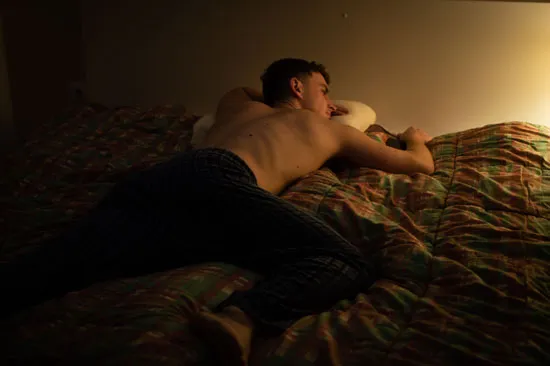
Pectus excavatum is caused by abnormal growth of the rib cartilage where the ribs attach to the breastbone, according to Scotland’s national chest wall service. In most cases it shows up after a growth spurt, and it tends to get worse during growth spurts. Doctors don’t know exactly what starts it, and it can run in families.
None of those known drivers is something you do in bed, and I couldn’t find a study showing that any position fixes, protects or worsens the chest. If you’re worried that lying on your front presses the dip deeper, I couldn’t find a study that tested that either, in either direction.
Posture is a separate question. Studies of teenagers with pectus do find posture problems, such as a more rounded upper back, rounded shoulders and the head sitting forward. But those studies show that the two tend to go together, not that one causes the other. They didn’t look at sleep, and they don’t show that the way you lie causes any of it. I go through what they found in my guide to pectus posture.
So pick the position you sleep best in and set it up so you’re comfortable. Then read the sections below that apply to you.
What research does say about sleep and pectus excavatum
There’s no study on position, but there are a few on how well people with pectus sleep. They’re small, and the two on sleep quality both come from Taiwan, so read them as early signals rather than settled facts.
Sleep quality. In a 2019 pilot study, researchers compared 54 adults with pectus excavatum (21 outpatients and 33 having the Nuss operation) with 30 adults without it. The pectus group slept worse and reported a lower quality of life. Their poorer sleep was linked to psychological factors, not to how severe the chest was. Six months after surgery, the Nuss group’s sleep score had improved from 7 to 4 on the Pittsburgh Sleep Quality Index, a questionnaire where a higher score means worse sleep.
A 2020 study of 28 adults measured sleep before and six months after the Nuss procedure, including overnight sleep-lab tests. The median sleep score went from 7 to 5, and the share of people sleeping poorly fell from 64% to 36%. They spent more of the night in REM sleep (15.6% before, 20.4% after). Daytime sleepiness didn’t change. There was no comparison group, so the study can’t separate the effect of surgery from anything else that changed in those six months.
The finding I’d hold on to is the psychological one. If your chest weighs on your mind at night, that’s worth working on directly, and I’ve written about pectus excavatum and anxiety.
Snoring and sleep apnea. In a pilot study of 31 adults waiting for Nuss surgery, every one of them reported snoring. Eight of them (25.8%), all men, had obstructive sleep apnea (OSA), where your breathing stops and starts while you sleep. The authors call OSA a possible aggravating factor in pectus and say further studies are needed. For now, it’s a hypothesis. I cover what it means for you in sleep apnea and pectus excavatum.
How to set up each position
Back or side are both reasonable places to start. Stomach sleeping is the one position the guidance I found advises against, and the reasons given are your neck and lower back, not your chest.
Royal Papworth Hospital’s physiotherapy leaflet, the one I quote in the surgery section below, has a short part on good sleeping posture. It says to sleep on your side or back, not your front, because lying on your front can aggravate a sway back and makes you turn your head to one side. Mayo Clinic’s guide to sleeping positions that reduce back pain gives the setups in the table below. It’s written for people with back pain, not pectus, so treat it as a comfort guide.
| Position | How to set it up | Watch for |
|---|---|---|
| On your back | A pillow under your knees. A small rolled towel under your waist if you want extra support. A head pillow that keeps your neck in line with your chest and back. | The practical choice with a vacuum bell, and the position hospitals ask for after surgery. |
| On your side | Knees drawn up slightly, a pillow between them. A head pillow that keeps your neck level. | A rib that sticks out and presses into the mattress. Try the other side or adjust the knee pillow. |
| On your stomach | If you’d rather not switch, a pillow under your hips and lower stomach. | Hospital and Mayo guidance discourage it for your neck and lower back. No study shows it harms the chest. |
On your back
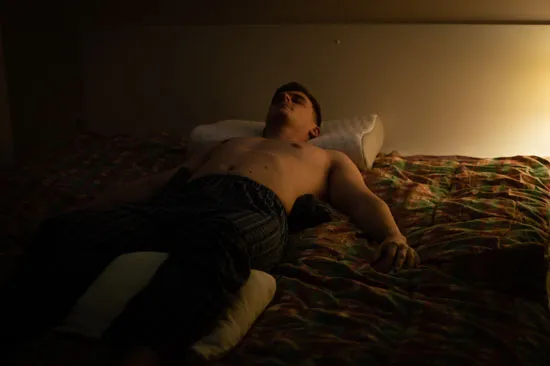
This is the setup in the photo: head on a pillow, another pillow under the knees. If you’ll be sleeping with a vacuum bell, or you have surgery coming up, this is the position you’re likely to use, so it’s worth finding a version of it you’re comfortable with now.
On your side
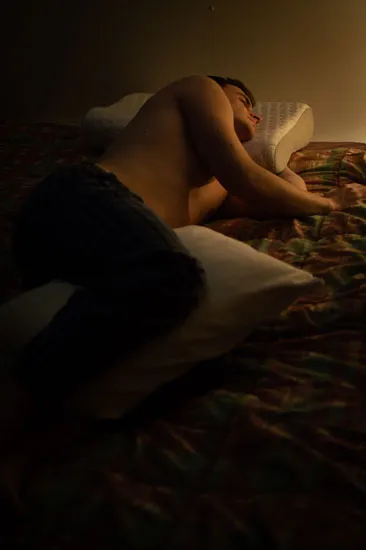
Bend your knees a little and keep a pillow between them, as in the photo. If you have flared ribs and lying on one side presses on a rib that sticks out, try the other side or move the pillow until it stops bothering you. I couldn’t find anything showing side sleeping harms the ribs, so treat it as a comfort problem and adjust.
On your stomach
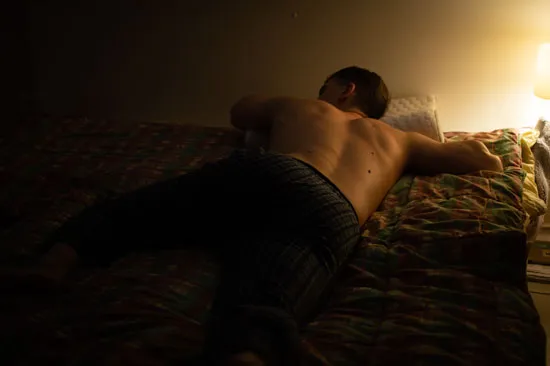
If lying on your front is how you fall asleep, I couldn’t find any evidence that you’re damaging your chest. The concern in the guidance is your neck, which has to turn to one side, and your lower back. Mayo suggests trying another position first and, if that doesn’t work, putting a pillow under your hips and lower stomach.
Sleep positions are habits, and habits can change. If you want to switch, change one thing at a time, a pillow or a position, and give it about a week before you judge it. That’s a practical rule, not something a study tested.
Mattress, pillow or the floor?
For mattresses, the closest evidence comes from adults with and without back pain, not from people with pectus. In a randomised trial of 313 adults with long-term low back pain, the group given a medium-firm mattress had less pain lying in bed and less disability after 90 days than the group given a firm one, and less pain on getting up over the course of the study. On the European firmness scale the trial used, which runs from 1 (firmest) to 10 (softest), the medium-firm mattresses scored 5.6 and the firm ones 2.3. So medium-firm here means near the middle, not hard.
A review of 24 controlled trials in adults with and without back pain came to a similar answer: mattresses described as medium-firm and custom-inflated (adjusted by the sleeper) came out ahead for comfort, sleep quality and spinal alignment.
None of those trials included people with pectus. They’re still the closest evidence there is, and they point away from the idea that harder is better.
The floor. I couldn’t find any study of floor sleeping in pectus excavatum. A floor is firmer than the medium-firm surfaces that did well in the trials, so I don’t see a reason to choose it for your chest. If you like it, that’s your call. Just don’t expect it to change the shape of your chest.
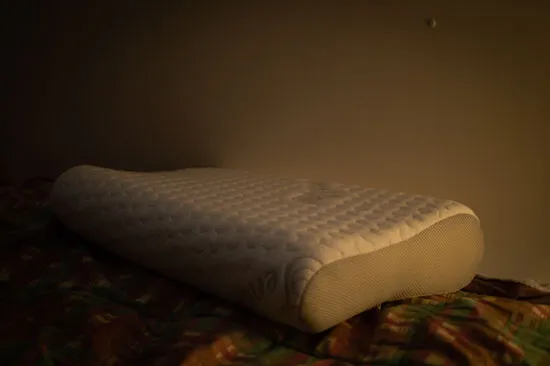
Your pillow. Pick a height that keeps your head in line with your spine. Too high and your chin gets pushed toward your chest on your back. Too low and your head drops toward the mattress on your side. Royal Papworth’s leaflet says the same thing about height, and Mayo says the pillow is there to keep your neck aligned. Get the height right before you worry about the type.
Sleeping with a vacuum bell
A vacuum bell is a suction cup that sits over the sunken part of your chest and pulls it outward. It’s the at-home device used for pectus excavatum, and it’s where one study does look at what you do at night.
A 2025 study from Amsterdam looked back at 259 children and teenagers under 18 who used a vacuum bell between 2008 and 2021. Those who wore it more hours a day, for a longer treatment period, and overnight had higher success rates. Of the 165 who finished treatment, 52.1% counted as a success by the study’s measure. Complications occurred in 22.8% of patients, and the authors describe them as minor. Their conclusion is that overnight use “should be encouraged”.
Know the limits. This was a retrospective study, meaning the researchers reviewed records after the fact, so it shows an association, not proof that wearing the bell overnight caused the better results. It covered under-18s at one centre. It can’t tell us whether the same applies to adults.
I used to wear my vacuum bell overnight. I don’t anymore.
If you want to try it, lying on your back keeps your weight off the bell, which sits on the front of your chest. That’s practical sense, not a study finding. Keep the pressure comfortable rather than as strong as you can stand. My vacuum bell guide covers building up wear time and pressure before you attempt a full night.
Sleeping in a brace
If you have pectus excavatum and nothing else going on with your chest, you can skip this section. Compression braces press inward on a chest that sticks out (pectus carinatum) or on lower ribs that flare out. They aren’t used for a sunken chest. For that, the device is the vacuum bell. Some people have a sunken chest and flared ribs together, and that’s where a rib flare brace can come in.
On sleeping in one, Children’s Mercy Kansas City’s pectus center gives its brace patients clear instructions. Wear the brace ideally 23 out of 24 hours, and try to sleep in it. Extra pillows or an egg-crate mattress may make that more comfortable. They also ask patients to check their skin for pressure. The sheet doesn’t name a brace type, so confirm the schedule with whoever fitted yours.
If you wear a rib flare brace, my rib flare brace guide covers wearing it at night.
The first weeks after surgery
The Nuss procedure corrects a sunken chest by placing a curved metal bar behind the breastbone to push it outward. For the first weeks afterwards, how you lie really does matter. The reason is the bar, not your chest shape. Royal Papworth Hospital’s leaflet says its precautions, including the sleeping ones, are there to make sure the bar or plate put in during surgery stays in place.
The three hospitals I compared agree on the basics. They differ on how long.
| Hospital | Side and stomach | Raised upper body |
|---|---|---|
| Royal Papworth Hospital, England (patient leaflet) | Avoid sleeping on your side or stomach for six weeks. | You can sleep at any angle on your back, as long as you’re not slouched. |
| UF Health, US (discharge sheet) | Don’t roll onto either side for the first month at home. | Sleeping partly sitting up in a recliner may be more comfortable for the first 2 to 4 weeks. |
| SickKids, Canada (for teens) | Don’t lie on your stomach or side unless your team says otherwise, and avoid rolling until your first follow-up visit. | Sleep on your back with your upper body raised on a wedge or pillows. |
Six weeks, the first month, until your first check-up. Read the table as a picture of how much the advice varies, not as a schedule. One more caveat: the Royal Papworth leaflet was printed in February 2024 with a review date of February 2026, which has now passed. Your surgeon knows how your bar was placed, so follow their instructions over anything online, including this page.
A wedge pillow or a recliner makes it easier to sleep on your back with your upper body raised. My list of postoperative supplies for home covers those.
When to see a doctor about your sleep
Some signs need a doctor, not a new pillow:
- Chest pain.
- Trouble breathing at night.
- Palpitations, meaning a racing, pounding or irregular heartbeat.
- Loud snoring, someone noticing that you stop breathing in your sleep, or feeling sleepy through the day.
The last group can point to sleep apnea, which came up in the snoring study above. A doctor can check for it with a sleep study. For the others, my pages on shortness of breath and pectus excavatum pain explain what’s known. They’re not a substitute for getting checked.
What actually changes the chest
Not your bed, as far as any study I found shows. What can change a sunken chest depends on your age, how deep it is and what you want from it, and the honest timeline is months and years, not weeks. Mine took about three years, and it still isn’t complete.
If you want to know where you stand, my free 1-minute quiz gives you a sense of how severe your chest is and which route fits your case. Then sleep however you sleep best.
Sources
- What is pectus excavatum? Scottish National Chest Wall Service, NHS Scotland. [cited 2026 Oct 19]. Read it
- Cheng YL, et al. J Thorac Cardiovasc Surg. 2019;157(2):769-780.e1. Read it
- Yang MC, et al. World J Surg. 2020;44(4):1316-1322. Read it
- Cheng YL, et al. Tzu Chi Med J. 2018;30(4):233-237. Read it
- Mayo Clinic Staff. Sleeping positions that reduce back pain. Mayo Clinic. [cited 2026 Oct 19]. Read it
- Kovacs FM, et al. Lancet. 2003;362(9396):1599-1604. Read it
- Radwan A, et al. Sleep Health. 2015;1(4):257-267. Read it
- van Braak H, et al. J Pediatr Surg. 2025;60(2):161891. Read it
- Pectus Brace Wear Recommendations. Children’s Mercy Kansas City, Center for Pectus Excavatum and Carinatum. Reviewed 2026 May 26. Read it
- Physiotherapy information after pectus surgery (PI 155, v2). Royal Papworth Hospital NHS Foundation Trust. Printed 2024 Feb; review date 2026 Feb. Read it
- Pectus excavatum - discharge. UF Health. Updated 2025 Jun 6. Read it
- Nuss bar procedure: Physiotherapy and pain management. AboutKidsHealth, SickKids. Updated 2025 Mar 13. Read it
Not a list of exercises. Sixteen weeks of programmed posture, breathing and mobility work, in the order that actually shifts a chest.
- 16 weeks, gym and home versions
- Programmed sets, reps and progressions
- The lifts to avoid while you correct

This article is for educational purposes only and does not constitute medical advice. Always consult a qualified healthcare professional before starting any treatment plan. View full disclaimer →