Contents · 11 sections
Search for a rib flare brace and you get a $19.99 rib belt, posture braces, corsets and a London clinic package at £3,529, all turning up for the same lower ribs. They don’t press on the same place.
Here’s the honest starting point. I couldn’t find a single published study that measured results from any rib flare brace, strap, bandage, binder, corset or posture corrector (PubMed and Europe PMC, October 2026). What exists is clinic practice. Specialist clinics say flare responds more in a growing, flexible chest, with the device worn daily for months alongside exercise, and that adults get less from it.
A disclosure first: I make and sell a rib flare brace ($299), and I’m not a doctor. Mine gets the same questions as every other option. Below: whether you need one, what each type presses on and costs, the hours, the side effects and who should see a doctor first.
Do rib flare braces work?
I couldn’t find anyone who has measured it. My searches paired rib flare terms with brace, strap, bandage, binder, compression and corset, and turned up only surgical papers. What clinics publish is their own practice. The most detailed version comes from the Pectus Clinic, a surgeon-led chest wall clinic in London run by Mr Ian Hunt. It says it manages rib flare without surgery in most patients: exercise first, a custom strap for mild to moderate flare, and a brace for more prominent flare or when the strap isn’t enough. It says the brace works better in younger patients with flexible cartilage, and that in adults with calcified cartilage the potential for correction is more limited.
Marco Scarci, a UK thoracic surgeon, writes (updated June 2026) that a brace or strap can improve the contour in teenagers with flexible chests, but outcomes vary, some recurrence is possible if you stop too early, and adults with rigid chest walls may see less change. Neither page publishes outcome numbers for rib flare.
The closest published evidence is indirect. In Brazil, the Haje group treats pectus excavatum, a sunken breastbone, with a custom brace whose front pads rest on the lower rib edges, combined with exercise, in growing children and teenagers (a 2021 report on 115 patients). They report results for the dip, not the flare. Compression bracing for pectus carinatum, where the breastbone sticks out, is better studied: a 2020 review of 16 articles found it well tolerated in young people with a flexible chest and called for stronger trials. One of its two authors, Ian Hunt, runs the Pectus Clinic.
My interpretation: growing cartilage responds to steady pressure in carinatum, so it’s plausible that a flared rib edge does too. Plausible isn’t tested. If anyone quotes you a success rate for a rib flare brace, ask where it comes from.
Do you need a brace at all?
Maybe not. The Pectus Clinic’s rib flare page says mild flare without symptoms can be watched, and that many cases in adolescence stabilise without treatment. London Orthotic Consultancy, a UK brace provider, also says not every rib flare needs treatment.
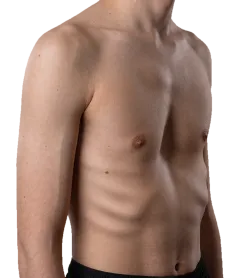
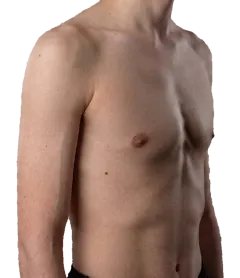
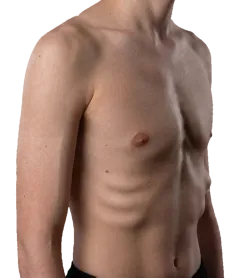
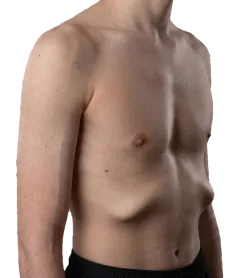
The kind of flare matters too. If your lower ribs settle flat when you breathe all the way out, the flare is mostly positional: a ribcage held in the breathed-in position. My guide to flared ribs has the two quick checks that sort this out, and the rib flare exercises cover the breathing and core work the Pectus Clinic calls essential in all its rib flare programmes. My view: a brace is a question for structural flare, meaning ribs that still stick out at full exhale.
Types of rib flare brace
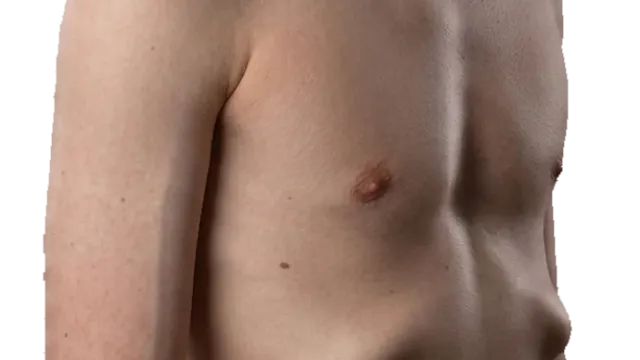
The types differ in where they press and whether anyone checks your progress. A dedicated flare brace or strap puts pads on the costal margin, the lower edge of your ribcage formed by roughly ribs 6 to 10. A carinatum brace presses on the breastbone. Rib belts and binders squeeze all the way round, a corset squeezes the waist and lower ribs, and a posture corrector pulls the shoulders back.
Custom rib flare braces
A custom rib flare brace is made for your chest and puts pads on the flared rib edge. Clinics use it for more prominent or stiffer flare. With all three I found, the price includes fittings and reviews or check-ins.
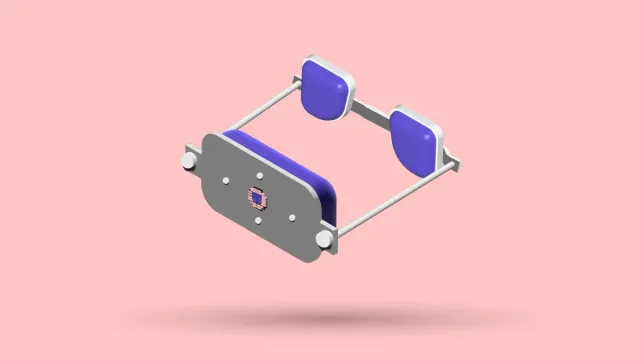
At the Pectus Clinic in London, the brace has padded side plates joined by an adjustable bar, pressing inward from the sides. London Orthotic Consultancy in the UK makes a slimline brace with removable 3D-printed foam pads on aluminium bars, pressing on the lower edge of the rib cage. Dakota Brace in the US sells the Rider Brace, a rib-flare-only brace built from a 3D body scan.
Clinic straps and bandages
A strap or bandage is a soft band round the lower ribs with padding over the flare, the lighter option tried before a brace. The Pectus Clinic calls its custom strap its first-choice device for most patients: a 3.5-inch latex-free band with foam inserts over the most prominent rib edge, reversed on alternate days to work both sides. The clinic says skin problems are uncommon with its rib flare brace because the contact pressure is lower.
Prof. Mustafa Yüksel, who reviews medical content on this site, founded PektusKlinik in Istanbul, and his clinic treats rib flare with a bandage. The clinic’s bandage page says it used to treat rib flare surgically and now reports flare “completely treated” within 6 to 12 months with the bandage. That’s the clinic describing its own results. I couldn’t find them published.
Off-the-shelf rib flare braces
An off-the-shelf brace is sold for rib flare but sized from a chart rather than made for you. The one I found is the LA Rib Flaring Brace from pectusbrace.com in Van Nuys, California, in sizes S to XL. The trade-off is fit: you measure yourself, and support comes by email rather than at a fitting. No results are published for it either.
Rib belts
A rib belt is an elastic wrap sold for rib injuries, and it squeezes all the way round instead of targeting the flare. BraceAbility’s belt lists bruised, cracked and fractured ribs among its uses, plus “flare pain recovery” without saying what kind of flare. Marco Scarci warns that rib belts can worsen rib flaring, and pectusbrace.com’s FAQ says they can sometimes make it worse. Neither cites a study, and I couldn’t find one either way.
Binders
A binder wraps the waist or chest all the way round, so it squeezes everything rather than the flare in particular. Dakota Brace’s blog says rib binders press from all sides and can push flared ribs further forward. That’s a brace maker’s claim, and I couldn’t find a flare study either way. What lab studies have measured (see side effects below) is that a tight band round the lower ribs restricts how far they expand as you breathe in.
Corsets and waist trainers
Does a corset help rib flare? I couldn’t find a study of corsets or waist trainers for it. Years of tight-lacing could reshape the ribcage, but not as a treatment: the Royal College of Surgeons of England library describes corsets restricting breathing and deforming the rib cage with long-term wear. With no evidence for flare, I had nothing fair to compare corsets on, so they’re not in the price table.
Posture correctors
Does a posture corrector help rib flare? I couldn’t find a study showing it does. It pulls your shoulders back and supports your upper back, not the lower rib edge. Neo G’s dorsolumbar support, sold for rounded shoulders and posture, says on its product page to avoid wearing it for prolonged periods, such as while sleeping. Several rib flare protocols ask for overnight wear. FormaChest’s support brace is also a posture brace and makes no rib flare claim. If posture is part of your picture, see pectus and posture.
Why a carinatum brace isn’t a rib flare brace
A pectus carinatum brace presses on the breastbone from the front, and that can lift the lower rib edge. The Pectus Clinic has carinatum patients wear its rib strap alongside the brace to counteract exactly that. It isn’t inevitable: a 2024 series of 140 children and teenagers in Rome looked for costal flaring as a brace complication and found none. Dakota Brace’s blog says carinatum braces can worsen flare. If you have both conditions, see pectus carinatum brace therapy and my carinatum brace comparison, and ask whoever fits the brace to check your ribs.
Providers also disagree on which way to push. The Pectus Clinic’s rib flare brace is “directed laterally rather than anteriorly”, from the sides. Dakota Brace says a well-designed flare brace provides “only front-to-back pressure”. London Orthotic Consultancy describes pressure on the lower edge of the rib cage. No study compares them, so I can’t tell you which is right.
What rib flare braces cost in 2026
Prices run from $19.99 for a rib belt to £3,529 for an adult clinic package in London. Every row comes from the seller’s own page, checked 25 October 2026, in its currency. No seller publishes outcome data, so this compares what you get, not what works. “Not found” means I looked and couldn’t find it.
| Type | Seller (country) | Price | Fitting | What’s included | Shipping, returns, warranty |
|---|---|---|---|---|---|
| Custom strap | Pectus Clinic (UK) | Included in the £2,699 bracing programme where clinically indicated; £295 consultation extra | Custom; foam inserts over the most prominent rib edge | Exercise programme, fittings, reviews at weeks 12, 26 and 42, repairs | Fitted in clinic; £700 deposit; refund terms not found |
| Custom semi-rigid brace | Pectus Clinic (UK) | £2,699 standalone, or £995 added to a programme; £295 consultation extra | Custom, from a body scan | As above; the review schedule restarts when it’s added | As above |
| Custom slimline brace | London Orthotic Consultancy (UK) | £219 consultation; package £3,067 under 18, £3,529 adults | Bespoke, 3D chest scan | Scan, brace, fitting, up to two years of reviews, online strength and flexibility classes, repairs | Not found |
| Custom remote brace | Dakota Brace, Rider Brace (US) | Not stated consistently on its page; $75 off with a free consultation | Custom, from a 3D body scan; virtual fitting | Design, 3D printing, straps, virtual fitting, clinician check-ins | Shipping calculated at checkout; no returns on custom items once design or fitting starts; free adjustment or remake within 60 days for design errors; 2-year brace warranty, 1-year straps |
| Sized brace | pectusbrace.com, LA Rib Flaring Brace (US) | $495 | S to XL from a size chart | Brace, wearing instructions, email guidance for up to 180 days (12 replies) | Free to the continental US and Canada; returns within 30 days with a $35 fee unused or $95 used; none after 30 days |
| Bandage | PektusKlinik (Turkey) | Not published | Not described | Not found | Not found |
| Rib belt | BraceAbility, Female Rib Belt and Chest Compression Wrap (US) | $19.99 on sale, $22.99 regular | One size, chest up to 58 in | The belt | Free shipping over $35; 30-day returns if unused in original packaging, original shipping not refunded; no warranty shown |
| Posture brace | Neo G, Dorsolumbar Support REF 130 (UK/US) | $94.99 | Sized by waist, S to XXL | The brace | US standard shipping $6; 30-day money-back guarantee; no warranty shown |
| Posture brace | FormaChest, Support Brace | $107, sold out in both sizes | Two sizes | The brace and instructions | Free worldwide shipping; 90-day money-back guarantee |
| Rib flare brace (mine, I make and sell it) | mrpectus (North Macedonia) | $299 one time | Made from your measurements | Adjustable compression, wear guide and schedule | Free worldwide tracked shipping; returns within 30 days of arrival, needn’t be unused, you pay tracked return postage, damage reported within 7 days; 12-month warranty against manufacturing defects |
The clinic prices include people: scans, fittings and reviews over months, which device-only prices don’t. Return terms vary a lot too, from no returns on a custom brace once design starts to 30 days with fees on a sized one. Read them before you pay.
How many hours a day, and for how long
There is no agreed number. Each provider states its own:
- Pectus Clinic strap: 8 to 12 hours a day, typically for 12 months, with exercises.
- Pectus Clinic brace: 8 to 12 hours, mainly overnight, every night for about the first year, then alternate nights, finishing at around 12 to 18 months.
- PektusKlinik bandage: 24 hours a day for 6 to 12 months on the clinic page, while Prof. Yüksel told me at least eight hours a day when we spoke. Those don’t match, so follow what you’re told at your own assessment.
- pectusbrace.com: full-time, then part-time, usually 12 to 18 months in total (from its carinatum FAQ, which says rib flare protocols are the same).
- The Haje brace: 23 hours a day, with 18 as the minimum. That’s for pectus excavatum, not flare.
The clinics pair the device with exercise. My rule: be honest about the hours you can keep up every day before you pick a device. Building up to them is its own how-to; for my brace it’s in the rib flare brace guide that comes with it.
Side effects and safety
The side effects on record for pads on the lower ribs are skin irritation and soreness. I couldn’t find skin data for any rib flare device, so the closest numbers come from the Haje pectus excavatum brace, which also presses on the lower rib edges. In growing patients in Brazil, rashes, superficial skin injuries or temporary darkening under the pads affected about 5% of the 115 patients with a localised dip in the report above and about 4% of 84 with a broad one (a second 2021 report). Discomfort or temporary pain affected 15% and 12%, and eased when the pressure was lowered. The authors recommend a T-shirt under the brace, good hygiene and the right pad size.
Breathing is the other cost of squeezing the ribs. In a 1980 lab study of 14 people, an inextensible binder round the lower rib cage restricted how far those ribs expanded and reduced the air reaching the bottom of the lungs. In a 2014 study of 20 healthy men in Montreal, chest wall strapping that cut vital capacity by about 22% made breathlessness during exercise worse. Those were deliberately tight straps, not a rib flare brace. My interpretation: when you tighten a brace, more isn’t automatically better.
In a 2017 online survey of 1,800 adults who bind their chest for gender expression, over 97% reported at least one of 28 negative outcomes they put down to binding. That’s a different purpose and kind of compression, so it isn’t a rib flare figure, but long hours of squeezing the chest aren’t free.
Stop and get checked if a brace causes pain, numbness, broken skin or breathlessness. The rule for my own brace applies to any of them: on pain or any adverse effect, stop wearing it straight away and see a healthcare professional.
When to see a doctor first
See a doctor before you start any device, brace or exercise program if any of these apply to you:
- chest pain
- fainting or nearly fainting
- breathlessness at rest or with light effort
- palpitations or an irregular heartbeat
- a diagnosed heart or lung condition
- Marfan syndrome or Ehlers-Danlos syndrome, or a doctor has raised either
- previous chest surgery
- a Haller index above 3.25 together with symptoms
- symptoms that nobody has checked yet
None of these means you’ll need surgery. They mean someone should look at your heart and lungs before you go further. An index above 3.25 is a common referral threshold, not an emergency.
For rib flare, add these:
- Pain along the lower ribs, or clicking, catching or sharp pain at the rib tips. That can be slipping rib syndrome, where one of ribs 8 to 10 moves more than it should. A 2021 clinical review describes pain at the lower front ribs with arm use, coughing, laughing or leaning over, diagnosed with a hooking test and ultrasound. My rule: don’t press a pad onto pain nobody has looked at.
- A clearly uneven ribcage, a visible curve in your spine, or uneven shoulders or hips. One-sided flare can come with scoliosis. See scoliosis and pectus.
Call 911 (999 in the UK) or your local emergency number now if you have any of these. Don’t drive yourself.
- palpitations that won’t stop
- palpitations with chest pain, shortness of breath, feeling faint or fainting
- sudden chest pain or pressure that doesn’t go away
- chest pain that spreads to your arm, neck, jaw or back
- chest pain with sweating, feeling sick, light-headedness or breathlessness
That list follows the NHS advice on chest pain and palpitations, as in my heart problems guide.
How to choose a rib flare brace
No option has results to compare, so choose on criteria you can check, and apply them to every brace, mine included.
- Is it flare? A dip or a bump needs different devices. For a sunken chest, see pectus excavatum braces.
- Are you still growing, and does your chest give when you press it? Clinics expect more from a young, flexible chest, and less from a stiff adult one.
- Where does it press? On the lower rib edge, not on the breastbone and not all the way round.
- Can you adjust the pressure? In the Haje series, discomfort eased when the pressure was lowered.
- How is it fitted? A 3D scan, your own measurements or a size chart.
- Who checks your progress? Clinic reviews at set weeks, remote check-ins, email support or nobody.
- What’s the total cost? Add consultations, scans and follow-ups to the device price.
- What if it doesn’t suit you? Check the returns window, conditions and warranty.
- Can you wear it for the hours it asks? Overnight only and nearly 24 hours a day are very different lives.
My rule: if you’re unsure about the first two, settle those before you spend anything.
My rib flare brace, on the same questions
I make this one and sell it, so weigh what follows with that in mind.
- Is it flare? It’s for flared lower ribs, not a dip or a carinatum bump.
- Where it presses: the product page shows the pads; the compression is adjustable.
- Fitting: made from your measurements and built to order in 2 to 3 days.
- Who checks progress: it comes with a wear guide and schedule. No clinician follows your progress.
- Cost: $299 one time, with free worldwide tracked shipping.
- Returns and warranty: 30 days from arrival, used or not, and a 12-month warranty against manufacturing defects (full terms in the table).
- Results: no published outcome data, like every other option here.
I was diagnosed with pectus excavatum at 15 and corrected it without surgery over about three years of daily vacuum bell use and structured training. The change was visible and measurable, but not complete. I had rib flare too, on the left side, and I wore a brace for it and trained in it. I’m not a doctor. If it meets your criteria, it’s on my rib flare brace page.
What to do next
Not sure your flare is structural? Start with the quick checks in the flared ribs guide linked above. For a plan before any device, the free rib flare plan lays out the phases. If you’d like a read on your own case, the free one-minute quiz asks a few questions and points you to a next step.
Whatever you choose, think in months, not weeks. Every protocol on this page does.
Sources
- Chest Wall Bracing. Pectus Clinic. [cited 2026 Oct 25]. Read it
- Rib Flare. Pectus Clinic. [cited 2026 Oct 25]. Read it
- Scarci M. Rib Flaring Treatment: Causes, Prevention and When Surgery Is Needed. Updated 2026 Jun [cited 2026 Oct 25]. Read it
- How to Fix Rib Flare: Causes, Symptoms, and Treatment. Dakota Brace. 2022 Aug 16 [cited 2026 Oct 25]. Read it
- Rider Brace. Dakota Brace. [cited 2026 Oct 25]. Read it
- Refund Policy. Dakota Brace. [cited 2026 Oct 25]. Read it
- Rib Flaring Treatment. London Orthotic Consultancy. [cited 2026 Oct 25]. Read it
- LA Rib Flaring Brace. pectusbrace.com. [cited 2026 Oct 25]. Read it
- Terms and Conditions. pectusbrace.com. [cited 2026 Oct 25]. Read it
- FAQs. pectusbrace.com. [cited 2026 Oct 25]. Read it
- Bandage Treatment. PektusKlinik. [cited 2026 Oct 25]. Read it
- Female Rib Belt and Chest Compression Wrap. BraceAbility. [cited 2026 Oct 25]. Read it
- Dorsolumbar Support Brace REF 130. Neo G. [cited 2026 Oct 25]. Read it
- Chest Support Brace for Posture and Thoracic Alignment. FormaChest. [cited 2026 Oct 25]. Read it
- Haje DP, et al. Acta Ortop Bras. 2021;29(3):143-8. Read it
- Haje DP, et al. Acta Ortop Bras. 2021;29(4):197-202. Read it
- Hunt I, Patel AJ. Thorac Cardiovasc Surg. 2020;68(1):72-9. Read it
- Frediani S, et al. Front Pediatr. 2024;12:1321633. Read it
- Forkert L. J Appl Physiol Respir Environ Exerc Physiol. 1980;49(4):655-62. Read it
- Mendonca CT, et al. J Appl Physiol. 2014;116(5):570-81. Read it
- Peitzmeier S, et al. Cult Health Sex. 2017;19(1):64-75. Read it
- Foley Davelaar CM. Curr Sports Med Rep. 2021;20(3):164-8. Read it
- Effects of the corset. Royal College of Surgeons of England Library. 2017 Feb 17 [cited 2026 Oct 25]. Read it
- Chest pain. NHS. [cited 2026 Oct 25]. Read it
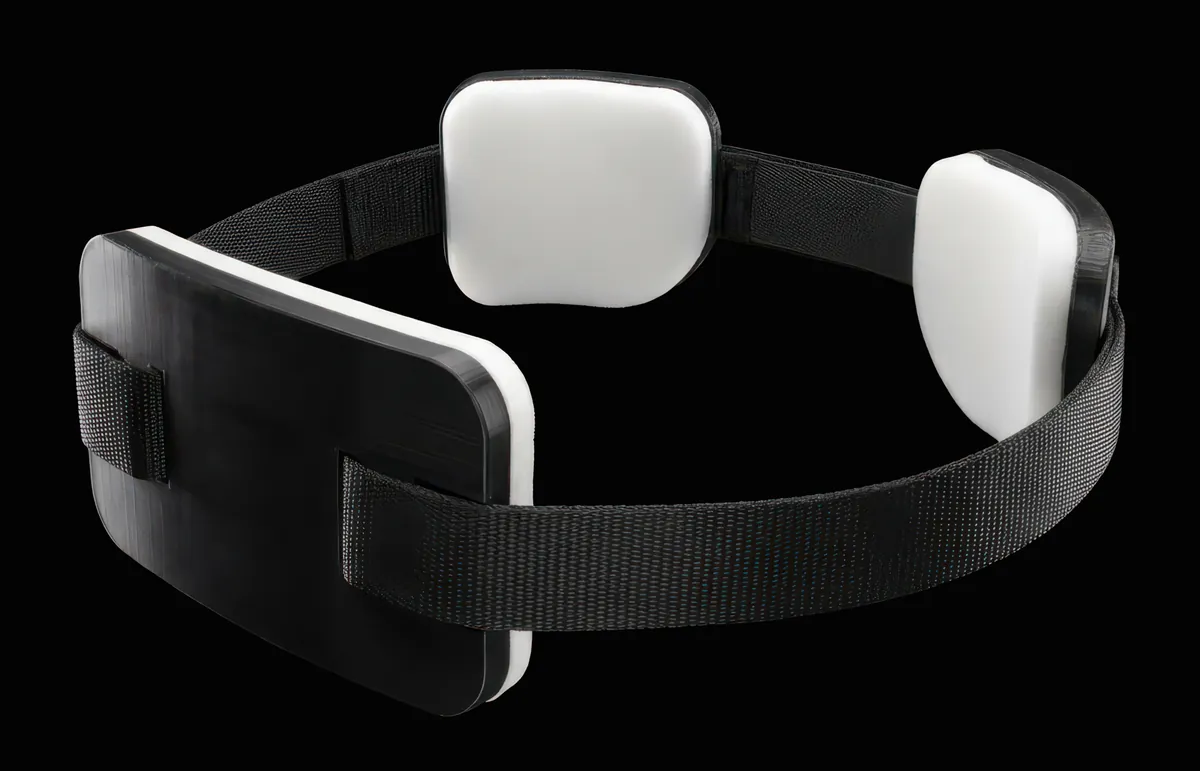
If a brace fits your case, this is the one I make and sell. It's built from your measurements, the compression is adjustable, and it comes with a wear guide and schedule.
- Built from your measurements
- Adjustable compression
- Wear guide and schedule included

This article is for educational purposes only and does not constitute medical advice. Always consult a qualified healthcare professional before starting any treatment plan. View full disclaimer →