Contents · 11 sections
Search for a pectus excavatum brace and you get posture straps that pull your shoulders back, a lace-up belt for your lower chest and clinic packages costing thousands, all sold as if they did the same job.
Here’s the short version. One research group in Brazil has published long-term results for a custom brace that presses on the lower ribs, used with daily breath-held exercise, in children and teenagers who were still growing and kept to it. For anything off the shelf, I couldn’t find a single published result for pectus excavatum. That makes off-the-shelf braces unknown, not useless, but it’s a big unknown to spend money on.
A disclosure: I sell a vacuum bell and a rib flare brace, not an excavatum brace, and I judge mine on the same questions as every other brace below. I was diagnosed with pectus excavatum at 15, declined surgery and corrected it over about three years of daily vacuum bell use and structured training. The change was visible and measurable, but not complete. I’m not a doctor, so every clinical point here has a named source.
Can a brace fix pectus excavatum?
It can improve some chests, under narrow conditions, and nearly all the evidence comes from one place: the Haje group, the orthopedic doctors at Centro Clínico Orthopectus in Brasília who developed the method. They report a good result in about half of growing patients using their custom brace plus exercise, and more in those who wore it regularly.
Their 2021 paper on the localized type says nobody else has published on excavatum bracing with exercise. Nor could I find anyone in PubMed, as of October 2026.
Outside that group, the view is cooler. Medscape’s treatment article by Andre Hebra, MD, updated in August 2024, says good results are “unlikely to be achieved with external bracing techniques” in severe pectus excavatum.
The 2024 Pectus Care Guidelines name the vacuum bell as the conservative option for excavatum and bracing for carinatum. I couldn’t find a recommendation on excavatum bracing in them, for or against.
My reading: the evidence covers one kind of brace, used one way, in one kind of patient. New to the condition itself? Start with what pectus excavatum is.
How an excavatum brace works
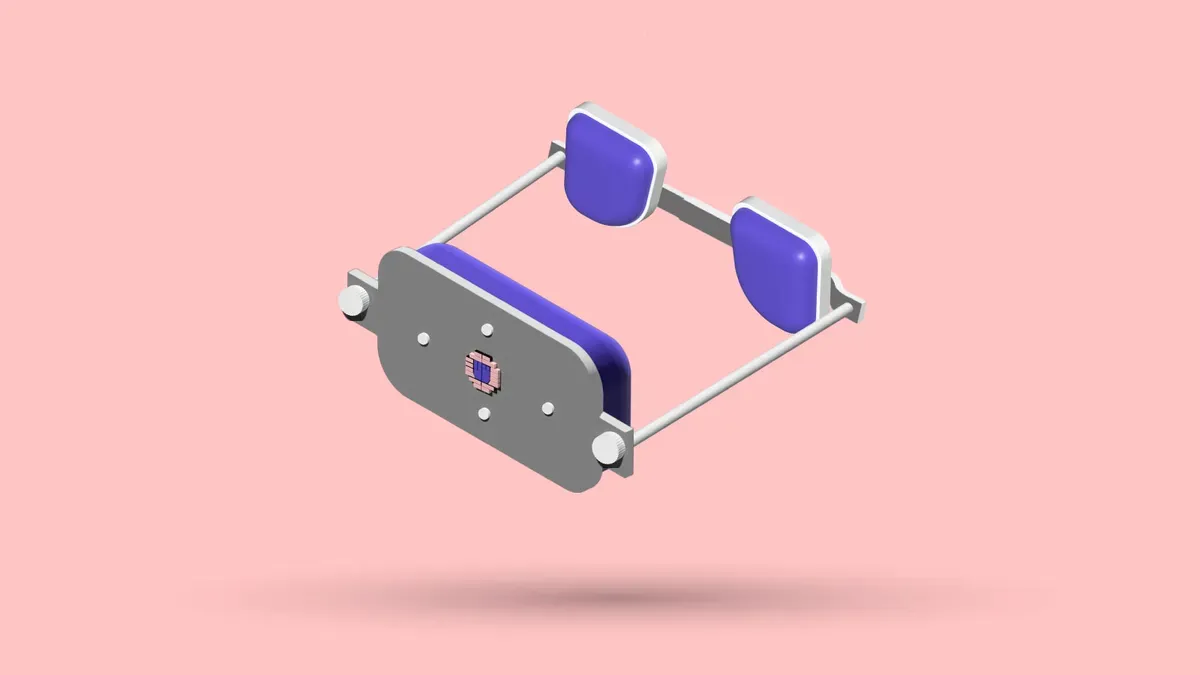
An excavatum brace doesn’t push on the dip, because there’s nothing to push on. The Haje brace has two padded plates in front on the costal margins, the lower edges of the ribcage on each side of the dip, plus one pad on the back. Patients set the pressure “at a comfortable level”.
Then comes the half people skip: exercise in the brace while holding a full breath in. Their 32-year review says corrective remodeling of excavatum only happens when the squeeze on the rib edges adds to the pressure inside the chest that the exercise creates.
Why would that lift the breastbone? The authors put it down to pressure acting “at a distance”, and say they believe Wolff’s law (bone reshapes under the loads placed on it) and the diaphragm play a part. That’s their explanation, not a measurement.
A carinatum brace presses straight on the bump instead, which Medscape gives as the reason carinatum is more likely to improve with bracing.
What is the dynamic remodeling method?
The dynamic remodeling method, or DR method, is the Haje group’s treatment for a growing chest: a custom brace on the lower ribs, exercise in the brace while holding a full breath, most of the day for two years or more, and medical follow-up until growth ends. It comes from Centro Clínico Orthopectus in Brasília. Its 2021 results, good in 58% (localized type) and 48% (broad type), are broken down in the next section.
The brace
DCC stands for dynamic chest compressor: the DCC 1 for carinatum, the DCC 2 for excavatum, and since the end of 2015 the adjustable ADCC as the clinic’s brace of choice. Each one is built for one chest from a plaster cast, caliper measurements or a scan. Screw rods set the compression, and in the 2021 papers, tightening stops once the rib edges no longer flare out.
The exercises
The localized paper lists the routine. It’s done in the brace at least five times a week, holding a maximum breath in:
- raising the arms out to the side and back against resistance
- trunk extension lying face down
- push-ups and sit-ups
- the crucifix exercise
- blowing up a balloon for 10 minutes
The 2009 review adds swimming, without the brace. That’s the Haje protocol, not mine; my pectus excavatum exercises guide covers training more broadly.
How long you wear it
- Hours. 23 a day, at least 18, until the chest reaches its maximum correction. It comes off for water activities and contact sports.
- Nights. The 2009 review describes six to 12 months of continuous wear for excavatum, even during sleep.
- Months. At least 24 before weaning off begins.
- The finish line. Skeletal maturity, the point when the bones stop growing.
Who runs it
The clinic’s method page says a DCC brace “by itself is useless unless it is made correctly”, worn the right hours for each stage and paired with the exercises. The clinic assesses flexibility first, calls the method a medical procedure, does “not recommend non-medical professionals to be in charge”, and supervises patients abroad by email only after a first visit. I couldn’t find a published price.
In their broad-type paper, the authors put this route first for growing patients and keep surgery for those who can’t adapt to the brace or don’t improve, and for severe chests with psychological distress.
My interpretation: the dynamic remodeling method is a medical program, not a product. A brace that looks similar gets you the hardware without the program behind the results.
What the research shows
Two 2021 papers report the method’s long-term results, one per type. The localized type is a dip limited to the middle of the chest at nipple level. The broad type runs above and below the nipple line. “Good” means the first two authors, also the treating doctors, graded the change as good from photos.
| Localized type | Broad type | |
|---|---|---|
| Patients analyzed | 115, selected from 6,072 chest wall records (1977 to 2017) | 84 of 573 identified |
| Mean age at start | 12.8 (5.4 to 17.2) | 13.3 (4.8 to 17.8) |
| Follow-up | Over 36 months, and at least a year after growth ended | At least a year, through skeletal maturity |
| Good result, everyone | 58% (66 patients) | 48% (40 patients) |
| By severity: mild, moderate, severe | 57%, 61%, 36% | 72%, 47%, 33% |
| Regular brace plus regular exercise | 62% | 70% |
| Flexible chest plus regular brace | 83% | No effect of flexibility |
| Irregular brace | 38%, even with regular exercise | 29%, whatever the exercise |
Severity matters: only about a third of severe chests got a good result. So does wear, and it was hard: in the localized group, only 63% wore the brace regularly and 49% exercised regularly. Subgroup sizes behind the 83%, 62% and 70% aren’t published, so those are less certain than 58% and 48%.
Does chest flexibility matter?
Not on its own. A flexible chest is one whose dip gives when pressed. In the localized group, 55% of flexible and 61% of rigid chests got a good result, with no statistical difference (p = 0.27). In the broad group, flexibility made no difference (p = 0.63), even combined with regular wear. It helped only together with regular brace wear in the localized type, the 83% row.
Haje’s test is done by the doctor, pressing the lower ribcage while the patient bears down on a held breath, or watching a young child blow up a balloon. The home compression test in my flared ribs guide gives only a rough feel.
Without treatment, and after stopping
Among growing patients who declined treatment and later came back, 20 of 28 with the localized type were worse after a mean of 18 months, as were 7 of 9 with the broad type. Only those who returned were counted, and worsening chests are likelier to come back, so this isn’t a rate for untreated pectus.
Nobody who completed treatment in the localized group relapsed. In the broad group, 5 patients relapsed after stopping early.
How strong is this evidence?
Not strong, and the authors’ own rating says so. Every excavatum result comes from the method’s originators, in retrospective studies built from old records, graded from photos by the treating doctors. The authors rate their evidence Level V, expert opinion, the lowest grade. Selection was heavy: the broad paper analyzed 84 of 573 people identified, about 15%, after excluding those untreated, followed too briefly, using a bell, quitting or not returning. All were children, with no trial and no comparison with a vacuum bell.
The 2021 paper says adding a vacuum bell brought extra improvement, citing the group’s own earlier work, which makes it a lead until someone else tests it.
My view: this is serious long-term work, honest about how hard regular wear is, but it can’t tell you what a brace will do for your chest.
Pectus excavatum brace for adults
The adult numbers are small and not encouraging. The Haje group’s 32-year review (4,012 patients, 1977 to 2009, mostly carinatum) offered the method to 175 adults, only those “extremely bothered” by their chest, after explaining the difficulties.
Of those, 85 came back for follow-up, and 27% had improved moderately or better, across all chest types, after about a year on average. Among adults with excavatum, 6 of 43 improved moderately or better: 5 of 27 with the localized type and 1 of 16 with the broad type.
Follow-up was short, so these don’t match the 2021 tables. London Orthotic Consultancy, a UK provider, says younger people often have more flexible chests, “although adults may also be suitable”. That’s a provider’s opinion, with no numbers.
I couldn’t find an adult excavatum brace study since 2009. My interpretation: as an adult, a brace is a long shot for the dip itself.
Types of pectus excavatum brace
Prices checked 20 October 2026, in the seller’s currency. “None published” means I couldn’t find any, not that it doesn’t work.
| Type | Presses on | Price | Outcome data for pectus excavatum |
|---|---|---|---|
| Posture brace (Neo G REF 130) | Back and shoulders | $94.99 | None published |
| Compression shirt or binder | The whole torso, evenly | Varies | None published |
| Lace-up belt (LaceIT PE) | All the way round the lower chest | $350 (archived maker page, August 2025) | None published |
| Custom excavatum brace (Orthopectus DCC 2 or ADCC) | Two pads on the lower ribs, one on the back | No price found | One group’s case series |
| Rib flaring brace (London Orthotic Consultancy) | The lower ribs, with a vacuum bell for the dip | £1,024 extra, if needed | None published |
| Rib flare brace (mrpectus, mine) | The lower ribs, with adjustable compression | $299 | None published |
| Magnetic Mini-Mover (research trial, needs surgery) | Pulls on a magnet implanted on the breastbone | Not for sale | FDA-sponsored trial, 15 children aged 8 to 14: the Haller index (a scan severity score) fell in 5 of 13, rose in 6; implant cable broke in 7 of 15 |
Posture braces and Neo G
Neo G doesn’t claim to treat pectus. Its REF 130 support is indicated for early thoracic kyphosis (upper back rounding), rounded shoulders and posture, and its instructions say to “avoid wearing for prolonged periods (e.g. whilst sleeping)”. The excavatum protocol asks for 18 hours or more.
Posture does differ in pectus. A 2024 study found more upper back rounding in 22 people with pectus excavatum than in 21 without. Prof. Mustafa Yüksel, who reviews medical content on this site, co-authored a 2026 study of 268 adolescents aged 10 to 18 with pectus excavatum or carinatum: 90.3% had forward head posture and 81.7% rounded shoulders.
Better posture didn’t mean a shallower chest, though. In a 2026 trial in adolescents, posture-focused exercise plus the bell (19 patients) beat the bell alone (16) on posture and quality of life, not chest depth.
My interpretation: a posture brace may change how you stand, and so how your chest looks. I couldn’t find a study showing it changes the dip. More in pectus posture.
Compression shirts and binders
A compression shirt or binder squeezes the whole torso instead of pressing on the costal margins, and a tight band around the ribs can make a full breath harder. I couldn’t find a study of compression garments or posture correctors in pectus in PubMed (October 2026). I’d treat one as clothing, not treatment.
LaceIT
The LaceIT PE, from Advanced Orthotic Designs in Florida, is a mesh foam belt you lace tight, with separate pulls for the top and bottom. Archived copies of the maker’s website, saved between 2022 and 2025, listed it at $350 with free US shipping, said it adds pressure all the way round “to reduce rib flaring”, and left wear time to your physician.
On 20 October 2026, laceitpe.com showed only a parking page, and I couldn’t open the Amazon listings that still turn up in search. Nor could I find published results for it in pectus excavatum. The maker aims it at flare, squeezing all the way round rather than through two pads on the rib edges.
Rib flare braces, including mine
Some clinics treat the dip and rib flare (a lower ribcage edge that sticks out) separately. London Orthotic Consultancy builds its excavatum packages around a vacuum bell (£3,067 under 18, £3,529 for adults) and adds a rib flaring brace where needed, worn 16 to 23 hours a day at first. The surgeon-led Pectus Clinic also treats the dip with the bell and adds a custom rib flare brace where clinically indicated. That split is clinic practice; I couldn’t find an independent study of it. The types of rib flare brace and their prices are compared in my rib flare braces guide.
Mine, on the same questions. The mrpectus Rib Flare Brace is made from your measurements and presses on the lower ribs with adjustable compression. It’s $299 one time, with a wear guide and schedule, a 12-month warranty against manufacturing defects, a 30-day money-back guarantee and free worldwide tracked shipping. It’s a flare brace: there’s no outcome data for it in pectus excavatum, I don’t claim it changes the dip, and no clinician follows your progress. I had rib flare too, on the left side, and I wore a brace for it and trained in it.
Brace vs vacuum bell vs surgery
The bell has more independent data than the brace, plus a guideline recommendation. I couldn’t find a study comparing the two head to head.
| Custom excavatum brace | Vacuum bell | Surgery (Nuss) | |
|---|---|---|---|
| Acts on | The lower ribs; any lift of the breastbone is indirect | Lifts the breastbone with suction | Pushes the breastbone out with a metal bar |
| Evidence | One group’s retrospective case series, self-rated Level V | Series from several centers; Class IIa in the 2024 guidelines | Large multicenter series |
| Suits | Growing children with mild or moderate dips | Less marked dips and younger patients (guideline) | Severe chests too; children, teens and adults, with more complications in adults |
| Results | “Good” (photo-graded by the treating doctors) in 58% of 115 localized and 48% of 84 broad | “Excellent” (a dip of about half a centimeter or less) in 20% of 115; “success” (looked good to patient, parents and surgeon) in 52.1% of 165 under-18 completers in Amsterdam | See my surgery guide |
| Daily commitment | 23 hours (at least 18) | Varies by protocol, roughly 1 to 8 hours | None once recovered |
| How long | 24 months or more, to the end of growth | Typically one to three years | The bar usually stays about two years (Medscape) |
| Main risks | Skin problems, discomfort, overcorrection | Minor, mainly skin, in the Amsterdam series | Significant complications in 7.7% of 13,352 patients at 49 centers |
| Cost | No price found | Mine is $399 | $17,462 hospital cost for a first Nuss stay, US, ages 12 to 21, 2016 to 2020; not your bill |
Each study defines a good result its own way, so the percentages don’t compare directly. The full bell evidence, including who shouldn’t use one, is in vacuum bell therapy. For surgery, see pectus excavatum surgery and the Nuss procedure.
Side effects and safety
A brace pressing on the ribs most of the day brings skin trouble and soreness. The two 2021 papers report rashes, superficial injuries or temporary darkening of the skin in about 5% (localized) and 4% (broad). Discomfort or brief pain affected 15% and 12% respectively, easing when the pressure was lowered.
The 2009 review counts differently, reporting some skin irritation under the pads “in all patients using the orthosis properly”. Same group, different definition.
To keep skin problems down, the Haje group uses a T-shirt under the brace, good hygiene, controlled pressure and the right pad size and brace width.
My rule for any brace or bell: if pain or any other bad effect starts, discontinue immediately and consult a healthcare professional. More in pectus excavatum pain.
Overcorrection
Overcorrection means the chest is pushed past flat, so a dip starts to become a bump. It isn’t only a carinatum problem: it showed up, mildly, in 3 of 115 localized and 2 of 84 broad patients. The localized cases were managed with less wear or a second, carinatum-style brace. In a 2006 series, 17 of 738 braced children and teenagers followed for at least a year were overcorrected, 2 of them with excavatum. The authors’ conclusion: careful medical follow-up is necessary. My view: a brace with nobody watching your chest is a gamble.
Is a brace right for you?
Who might be a candidate
My rule, based on who the published results come from. A brace for the dip is worth discussing with a doctor if all of these fit:
- you’re still growing
- your dip is mild to moderate
- you can wear it 18 or more hours a day for two years or more
- someone qualified will track your progress, including overcorrection
- you’ll do the exercises in the brace
If they don’t, the evidence above doesn’t cover you.
Questions to ask before you buy
- Does it press on the lower ribs, rather than on your back and shoulders?
- Is it built for your chest, or sized like a belt?
- Who checks your progress, and who catches overcorrection?
- How many hours a day, for how long, and how does it taper off?
- What does it cost in total, and what happens if it doesn’t fit?
See a doctor first
See a doctor before you start any device, brace or exercise program if any of these apply to you:
- chest pain
- fainting or nearly fainting
- breathlessness at rest or with light effort
- palpitations or an irregular heartbeat
- a diagnosed heart or lung condition
- Marfan syndrome or Ehlers-Danlos syndrome, or a doctor has raised either
- previous chest surgery
- a Haller index above 3.25 together with symptoms
- symptoms that nobody has checked yet
None of these means you’ll need surgery. They mean someone should look at your heart and lungs before you go further. An index above 3.25 is a common referral threshold, not an emergency.
What to do next
- A growing child or teen with a mild to moderate dip. Ask a chest wall specialist whether a supervised brace or a vacuum bell fits.
- An adult with a dip. Expect little from a brace for the dip itself. Read the bell evidence first, and if you choose a bell, mine is built to your measurements.
- Flare that sticks out with the dip. Start with the flared ribs guide.
- A severe dip, or symptoms. See a doctor first.
- Not sure where you stand. Take my free 1-minute quiz to see how significant your chest is and which route fits.
Whatever you try, measure your chest monthly the same way each time. Structural change is measured in months and years, and the published brace protocol runs two years or more.
Sources
- Haje DP, Haje SA, Volpon JB, et al. Acta Ortop Bras. 2021;29(3):143-8. Read it
- Haje DP, Haje SA, Volpon JB, et al. Acta Ortop Bras. 2021;29(4):197-202. Read it
- Haje SA, Haje DP. Rev Bras Ortop. 2009;44(3):191-8. Read it
- Haje SA, Haje DP. Int Orthop. 2006;30(4):262-7. Read it
- Hebra A. Pectus Excavatum Treatment and Management. Medscape. Updated 2024 Aug 12 [cited 2026 Oct 20]. Read it
- Dunning J, et al. Pectus Care Guidelines. Eur J Cardiothorac Surg. 2024;66(1):ezae166. Read it
- Pectus Brace: The Dynamic Remodeling Method. Centro Clínico Orthopectus. [cited 2026 Oct 20]. Read it
- Mete O, et al. Pediatr Surg Int. 2024;40(1):178. Read it
- Kahraman Esen H, Yüksel M. Med Sci Monit. 2026;32:e952511. Read it Co-authored by Prof. Mustafa Yüksel.
- Kandemir B, et al. Prosthet Orthot Int. 2026. Read it
- 130 Dorsolumbar Support Brace. Neo G. [cited 2026 Oct 20]. Read it
- LaceIT PE. Advanced Orthotic Designs. Archived 2025 Aug 28 [cited 2026 Oct 20]. Read it
- Pectus excavatum bracing treatment. London Orthotic Consultancy. [cited 2026 Oct 20]. Read it
- Bracing. Pectus Clinic. [cited 2026 Oct 20]. Read it
- Graves CE, et al. J Pediatr Surg. 2017;52(6):913-9. Read it
- Obermeyer RJ, et al. J Pediatr Surg. 2018;53(6):1221-5. Read it
- van Braak H, et al. J Pediatr Surg. 2025;60(2):161891. Read it
- Daemen JHT, et al. J Thorac Dis. 2024;16(9):6081-93. Read it
- Huerta CT, et al. J Surg Res. 2024;303:381-9. Read it
Not a list of exercises. Sixteen weeks of programmed posture, breathing and mobility work, in the order that actually shifts a chest.
- 16 weeks, gym and home versions
- Programmed sets, reps and progressions
- The lifts to avoid while you correct

This article is for educational purposes only and does not constitute medical advice. Always consult a qualified healthcare professional before starting any treatment plan. View full disclaimer →