Contents · 12 sections
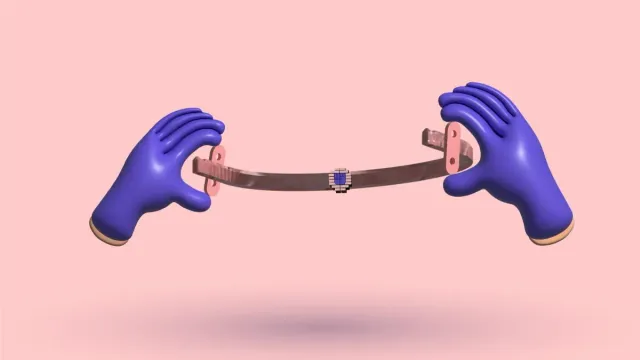
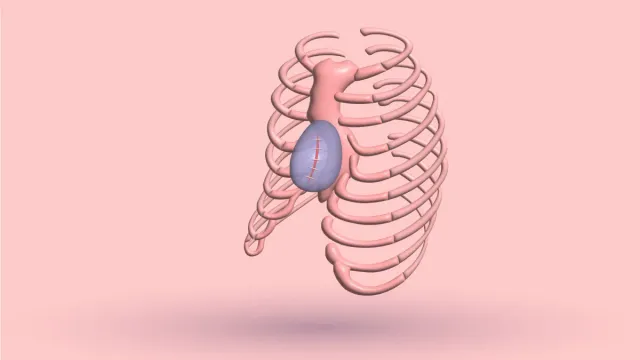
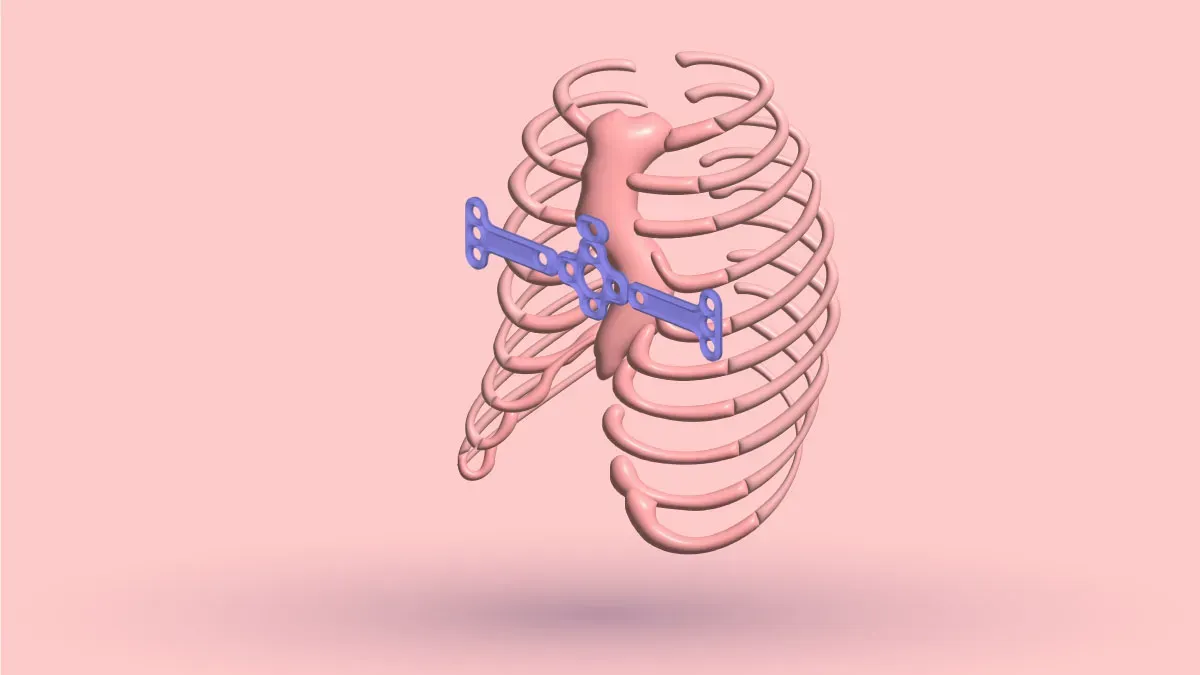
Pectus Up is an operation for a sunken chest that lifts the breastbone from outside the rib cage: a steel plate is placed under the chest muscles through one cut on the front of the chest, and the breastbone is pulled up to the plate and fixed there, without entering the chest cavity. The 2024 Pectus Care Guidelines call it a novel operation still under development and evaluation, with little safety or long-term data so far.
Worried about symptoms right now? Skip to when to see a doctor.
I’m not a doctor and I didn’t have surgery, so every medical point below comes from a named study, guideline or the maker’s own pages, and where nobody has measured something, I say so.
How Pectus Up works
Pectus Up, also called taulinoplasty, was developed by a pediatric surgery team at Parc Taulí hospital in Sabadell, Spain, with the Spanish company Ventura Medical Technologies. The maker’s FAQ dates the first operation to 2012.
In the developers’ first paper, the operation works like a lever:
- One cut. A cut of about 3 to 4 cm goes across the front of the chest, over the deepest point of the dip. The maker puts the usual scar at about 3 to 5 cm.
- A screw into the breastbone. A special screw is anchored into the breastbone at its deepest point.
- Pulling it up. A screw-and-nut tool pulls the breastbone forward, step by step.
- Fixing it to the plate. A curved plate rests on the highest points of the rib cage on each side, and the breastbone is fixed to it with screws. Teams such as the one in Rome slide the plate through a tunnel under the chest muscles and add stitches to reinforce it.
Nothing passes behind the breastbone or near the heart and lungs. That’s the main difference from the Nuss procedure, where curved bars go inside the chest, behind the breastbone, and push it out.
Pectus Up moves the breastbone with metal hardware. That’s different from a silicone implant, which fills the dip and moves nothing. If that’s what you’re looking for, see pectus excavatum implants.
Who it may suit, and who it doesn’t
The 2024 Pectus Care Guidelines, a multi-society consensus, say Pectus Up is only for pectus excavatum, not for a breastbone that sticks out. The maker says:
- adolescence, about 12 to 16, is the usual age, with a minimum of 8 in children
- there’s no upper age limit, though operations at 50 to 60 are exceptional, and bone quality is checked in older patients
- suitability is judged on a CT scan of the breastbone and bone density
- it isn’t for people who can’t follow the instructions afterwards, or who have bone or healing problems
On uneven chests, the sources disagree. The maker’s FAQ says mild and complex cases, including uneven chests and a rotated breastbone, can be corrected “with a high success rate”. The developers’ 2016 paper said that very uneven chests, and long, deep “Grand Canyon” chests, should not be considered candidates. A Rome team has since used two plates for broad or long dips in 3 boys. For an uneven chest, the guidelines’ strongest recommendation goes to the Ravitch procedure.
How deep your chest is gets measured with the Haller index on a CT scan.
What the published studies show
I found six reports of Pectus Up patients in the medical literature. All are small, and most come from the hospital that developed it or from early adopters.
| Study | Patients | What was measured | Result |
|---|---|---|---|
| Developers, Sabadell, Spain, published 2016 | 18, aged 6 to 24 | Haller index; follow-up 18 to 32 months | Haller index from 5.16 to 3.19 on average. One small seroma (fluid pocket). Plate loosened in 2 older patients at 6 to 7 weeks and was re-tightened |
| Same hospital, compared with the Nuss, published 2021 | 23 Pectus Up, 26 Nuss, median age 14 | Complications, stay, pain medicine, Haller index | No difference in complications. Shorter operation, stay and pain medicine with Pectus Up. Haller index 4.17 to 3.7 at a median 5.5 months |
| Rome, Italy, 2022 | 35 | Complications | Large seroma in 5 of 11 with the standard technique. After the team switched to an up-and-down cut, it reported no seromas. No plates moved |
| Rome, double plate, published 2024 | 3 boys aged 15 | Complications | Home on day 3, no complications reported |
| Coimbra, Portugal, 2022 to 2024 | 13, with a modified technique that also partly cuts the rib cartilage | Complications, pain, satisfaction; median follow-up 20 months | 84.6% home on day 2. One metal allergy, one infection with the wound opening; both plates stayed in. Mean pain 3.7 out of 10 in the first year, satisfaction 8.6 out of 10 |
| Monterrey, Mexico, published 2020 | 1, aged 16 | Case report | Good result reported |
Adding them up, that’s 94 patients, my count, and some may overlap between reports from the same hospitals. The maker says more than 500 operations have been done. The guidelines, published in 2024, describe it as done in only small numbers of patients.
The comparison with the Nuss is one study, from the hospital that developed Pectus Up, not randomized, with a short follow-up. The median Haller index after Pectus Up in that study, 3.7, was still above 3.25, a common threshold for a surgical opinion. That doesn’t mean the result looked poor, only that it was measured early and in few people.
An independent review by European pectus surgeons called the early results encouraging and noted that more centers use it. I couldn’t find any results from more than five years after surgery, or any study of whether the dip comes back after the plate comes out.
Risks and side effects
The maker lists these side effects, without rates:
- the plate loosening or shifting
- a reaction or allergy to the metal
- unusual pain or discomfort
- wound irritation or infection
- seroma, a pocket of fluid under the wound
The studies above put some numbers on them, in small groups: loosening in 2 of 18, a large seroma in 5 of 11 with one technique, one metal allergy and one infection in 13. The maker says the plate is medical stainless steel, and the Coimbra team skin-tests patients for a reaction to stainless steel before surgery.
The maker’s FAQ says the operation “does not involve serious risks”. With fewer than 100 patients reported, nobody can yet say how often rare, serious problems happen. That’s the gap the guidelines point to.
Recovery and plate removal
The maker’s FAQ gives this recovery plan. Your surgeon’s plan comes first.
| When | What the maker says |
|---|---|
| About 2 days | Average hospital stay |
| First week | Rest |
| 2 to 3 weeks | Back to school or desk work |
| First month | Sleep on your back, no twisting, lifting or backpacks |
| 3 months | Most sport, depending on the sport |
| 6 months | High-risk sport and sport with sudden torso movements, such as golf, tennis or bench exercises |
When does the plate come out? The sources disagree:
- The maker says it can be removed from 2 years after surgery in adults, and that in growing children the timing is up to the surgeon.
- The guidelines say “This plate is permanent”.
- The developers removed 5 plates in their first series, using the same approach as Nuss bar removal.
So ask your surgeon directly whether your plate is meant to come out, when, and who will do it if you live far from the hospital. How Nuss bars come out is in pectus bar removal.
The scar is a single cut on the front of the chest. For caring for it, see pectus surgery scars.
Pectus Up vs Nuss, Ravitch and implants
| Pectus Up | Nuss | Ravitch | Silicone implant | |
|---|---|---|---|---|
| What moves | The breastbone, pulled up to a plate outside the ribs | The breastbone, pushed out by bars inside the chest | The breastbone, after the deformed cartilage is removed | Nothing; the dip is filled |
| Enters the chest cavity | No | Yes, camera-guided | Open operation on the chest wall | No |
| Cut | One, on the front of the chest | Small cuts on each side | Across the front of the chest | One, on the front of the chest |
| Hospital stay | About 2 days (maker) | Median 3 days, US, ages 12 to 21 | Median 4 days, same data | 1 to 2 days |
| Hardware | Out from 2 years (maker) or permanent (guidelines) | Bars out after about 2 to 3 years | Bar or struts out at about 6 to 12 months, if used | Stays in |
| Evidence base | Fewer than 100 published patients | Tens of thousands, national databases | Thousands, national databases | A 401-implant series from the developers |
Sources for the Nuss, Ravitch and implant columns are in my pectus excavatum surgery guide, which also covers cost, who qualifies and other operations.
My view: on today’s evidence, Pectus Up can’t be called better or worse than the Nuss. There’s one small comparison, and the safety record is short. That isn’t the same as saying it’s unsafe.
Where it’s offered, and the US
The maker’s surgeon list, checked on 30 October 2026, names surgeons in 19 countries: Australia, Chile, Colombia, Costa Rica, Ecuador, Greece, Ireland, Italy, Lithuania, Malta, Mexico, Morocco, New Zealand, Peru, Portugal, Slovakia, Spain, the United Arab Emirates and the UK. The United States isn’t on it.
I searched the FDA’s public device clearance database on the same date and found no clearance for Pectus Up. That isn’t proof it can never be done in the US, for example in a trial, but I couldn’t find a US surgeon offering it. Some hospitals not on the maker’s list also report doing it, so the list isn’t complete. For named surgeons, see my list of pectus surgeons by country.
What it costs
I couldn’t find a published price for Pectus Up from a hospital, insurer or study. Ask for a written quote that includes plate removal. US costs for the Nuss and Ravitch are in my surgery guide above.
When to see a doctor
See a doctor before you start any device, brace or exercise program if any of these apply to you:
- chest pain
- fainting or nearly fainting
- breathlessness at rest or with light effort
- palpitations or an irregular heartbeat
- a diagnosed heart or lung condition
- Marfan syndrome or Ehlers-Danlos syndrome, or a doctor has raised either
- previous chest surgery
- a Haller index above 3.25 together with symptoms
- symptoms that nobody has checked yet
None of these means you’ll need surgery. They mean someone should look at your heart and lungs before you go further. An index above 3.25 is a common referral threshold, not an emergency.
Call 911 (999 in the UK) or your local emergency number now if you have any of these. Don’t drive yourself.
- palpitations that won’t stop
- palpitations with chest pain, shortness of breath, feeling faint or fainting
- sudden chest pain or pressure that doesn’t go away
- chest pain that spreads to your arm, neck, jaw or back
- chest pain with sweating, feeling sick, light-headedness or breathlessness
That list follows the NHS advice on chest pain.
Questions to ask a Pectus Up surgeon
- How many Pectus Up operations have you done, and over how many years?
- How often have your plates loosened, and what did you do about it?
- How often do you see seroma or infection?
- Is my chest suitable, given how deep and how even it is?
- Will you test me for metal allergy first?
- Is the plate meant to come out? When, and at what cost?
- What happens if it loosens after I’ve gone home, especially if I live far away?
- Why Pectus Up for me rather than the Nuss or Ravitch?
Where to go from here
- You have red flags or a severe chest with symptoms. See a pediatric or thoracic surgeon who treats chest wall conditions, and ask about all the options, not only one.
- You’d rather avoid surgery. The evidence for the non-surgical route is in vacuum bell therapy, and my free non-surgical pectus excavatum plan is a place to start. I make and sell my own vacuum bells, so weigh my view on them with that in mind. Every route is on the pectus excavatum treatment without surgery page.
- You’re not sure how severe your chest is. Take my free 1-minute quiz for a sense of where your chest stands and which route fits.
Sources
- Pectus Up frequently asked questions. Ventura Medical Technologies. [cited 2026 Oct 30]. Read it
- Bardají C, Cassou L. Ann Cardiothorac Surg. 2016;5(5):519-22. Read it
- Frediani S, et al. Front Pediatr. 2024;12:1399202. Read it
- Núñez García B, et al. J Laparoendosc Adv Surg Tech A. 2021;31(12):1402-7. Read it
- Frediani S, et al. Front Surg. 2023;10:1343515. Read it
- Graça LL, et al. Port J Card Thorac Vasc Surg. 2026;32(4):25-31. Read it
- Marcos-Ramírez ER, et al. Cir Cir. 2020;88(Suppl 2):56-9. Read it
- Haecker FM, Krebs TF, Kleitsch KU. Children (Basel). 2022;9(4):478. Read it
- Dunning J, et al. Pectus Care Guidelines. Eur J Cardiothorac Surg. 2024;66(1):ezae166. Read it
- Profesionales Pectus Up (surgeon list). Ventura Medical Technologies. [cited 2026 Oct 30]. Read it
- 510(k) premarket notification database. US Food and Drug Administration. [searched 2026 Oct 30]. Read it
- Chest pain. NHS. [cited 2026 Oct 30]. Read it
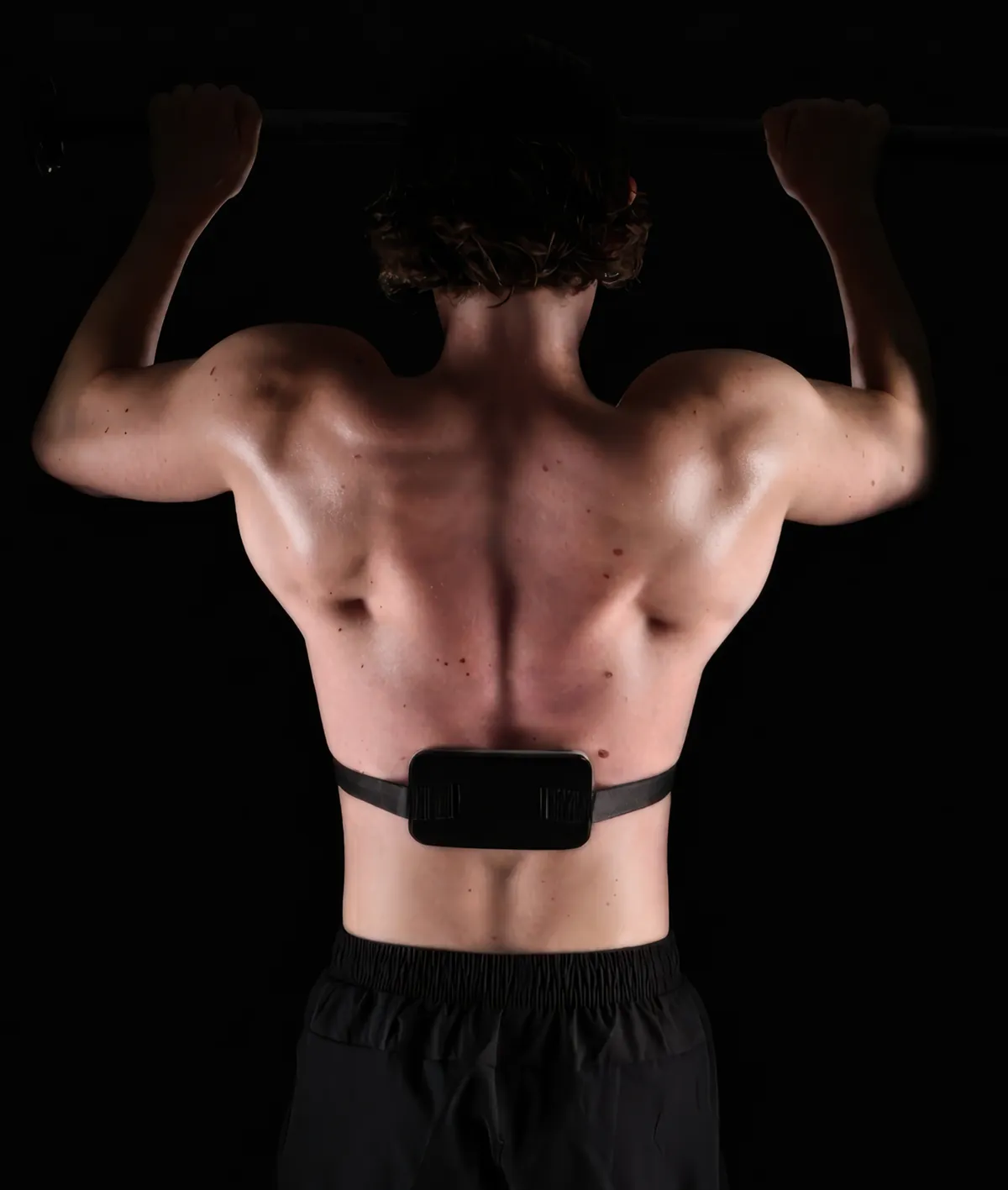
The prep work before a repair: the breathing capacity and back strength that make the first week after surgery survivable and the result hold.
- Breathing capacity built before the bar
- Back and postural work for recovery
- What to have ready before the date

This article is for educational purposes only and does not constitute medical advice. Always consult a qualified healthcare professional before starting any treatment plan. View full disclaimer →