Contents · 13 sections
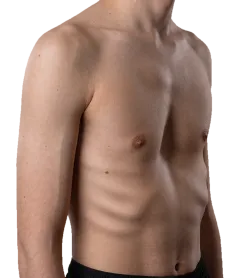
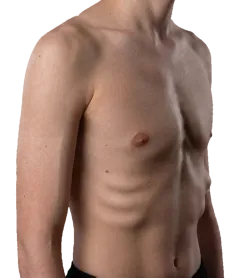
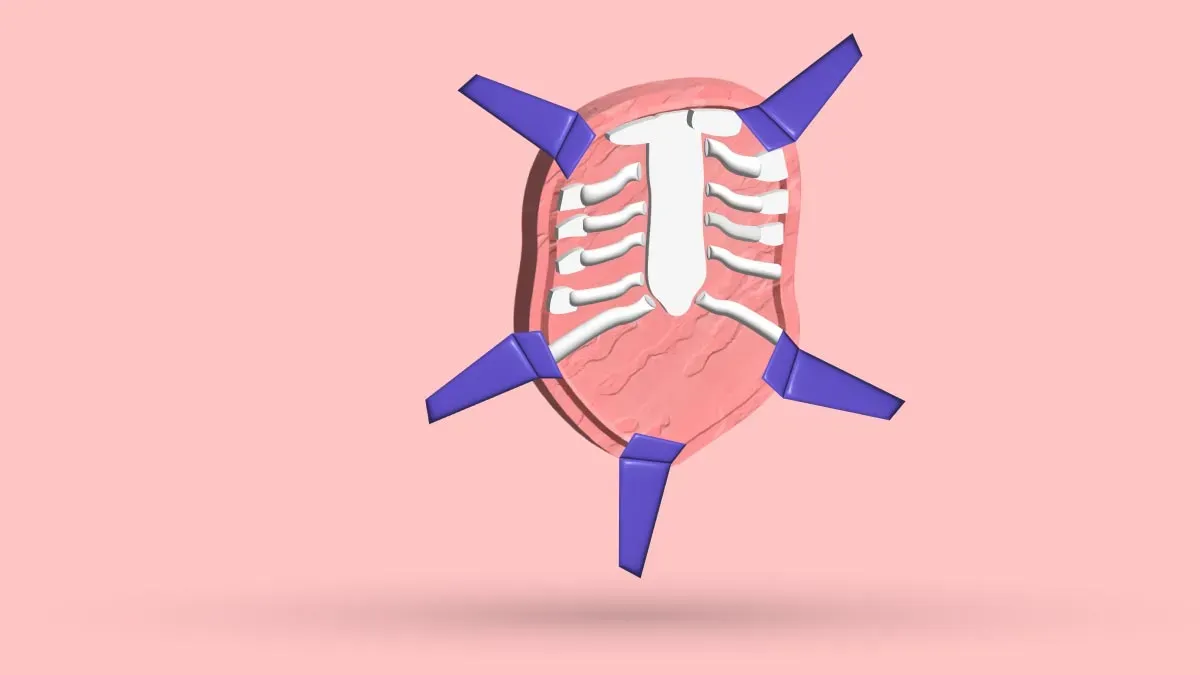
The Ravitch procedure is open surgery for pectus excavatum: through a cut on the front of the chest, the surgeon removes the overgrown rib cartilage, brings the breastbone forward and usually holds it with a small bar or struts that come out after about 6 to 12 months. In US data on 12 to 21 year olds, the median hospital stay was 4 days, and strenuous activity is off for several months while the cartilage grows back.
Worried about symptoms right now? Skip to when to see a doctor.
I’m not a doctor and I didn’t have surgery, so every medical point below comes from a named study or hospital, and where nobody has measured something, I say so.
What the Ravitch procedure is
Mark Ravitch, an American surgeon, published his operation for a sunken chest in 1949. It was the usual repair for decades before the minimally invasive Nuss procedure arrived. Surgeons now mostly use modified versions, for example with smaller cuts, so you’ll also see the name “modified Ravitch”.
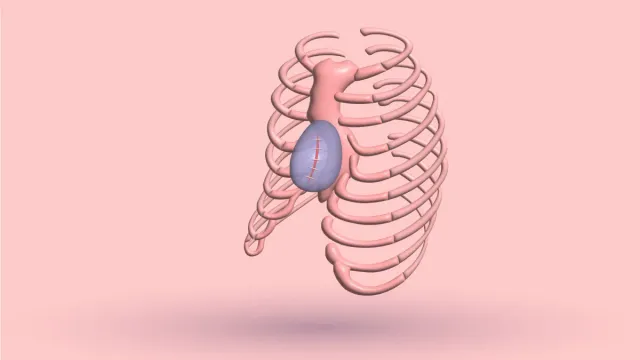
The idea behind it: in pectus excavatum the rib cartilage, the flexible part that joins the ribs to the breastbone, is deformed and holds the breastbone in. The Ravitch removes that cartilage but leaves its thin outer lining, the perichondrium, so new cartilage grows back in a better position.
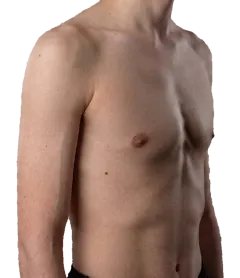
The Ravitch is also used for pectus carinatum, where the breastbone sticks out, when bracing hasn’t worked. This page is about the sunken chest. For the protruding one, start with pectus carinatum brace therapy.
How it’s done, step by step
Details vary by surgeon. A typical modified Ravitch, as described by Children’s Hospital of Philadelphia (CHOP), UCSF and a 30-year UCLA series, goes like this:
- The cut. Under general anesthesia, the surgeon makes a cut across the front of the chest and moves the chest muscles aside. UCSF puts the operation at about three hours.
- Removing the cartilage. The deformed cartilage on each side is taken out, leaving its lining behind so it can regrow.
- Lifting the breastbone. The surgeon cuts a small wedge across the front of the breastbone so it can be tilted forward into a flatter position.
- Holding it there. A small bar, metal struts or a plate goes under or across the breastbone to hold it while the new cartilage forms.
- Closing. The muscles are brought back together over the repair. CHOP says a small drain may be left in to stop fluid collecting.
For women, the cut can be hidden in the folds under the breasts. An Istanbul team described this in 12 female patients from 1991, using two 4 to 5 cm cuts. More on options for women in pectus excavatum in women, and on caring for the cut in pectus surgery scars.
Who it’s used for now
Most sunken chests are repaired with the Nuss. In US data on 10,053 repairs in people aged 12 to 21 from 2016 to 2020, 86% were Nuss and 14% Ravitch, and 60% of the hospitals that reported did only the Nuss.
The Ravitch still has a clear place. According to the 2024 Pectus Care Guidelines, a multi-society consensus, it suits:
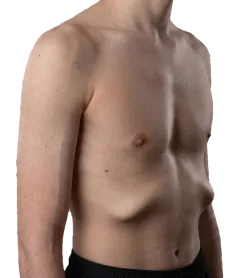
- Uneven (asymmetric) chests. This is the guidelines’ strongest recommendation for the Ravitch and its variations.
- People who don’t want a second operation to take a bar out.
- Pectus carinatum that bracing can’t correct.
CHOP uses it for a sunken chest when someone isn’t a candidate for the Nuss, and for severe or complex pigeon chests.
Age matters. The guidelines say adults should have open repair only once their bones are fully mature. The reason is a rare but serious complication called acquired asphyxiating thoracic dystrophy, or acquired Jeune’s syndrome: a chest that stays stiff and small after open repair done too early and too aggressively. Johns Hopkins reported 19 people who needed major reconstruction for it between 1996 and 2011.
Before any operation, expect a CT scan to measure your Haller index, plus heart and lung tests.
Ravitch vs Nuss
| Ravitch | Nuss | |
|---|---|---|
| Type | Open repair through a cut on the front of the chest | Minimally invasive, small cuts at the sides, camera-guided |
| What it does | Removes deformed cartilage and repositions the breastbone | Pushes the breastbone forward with curved steel bars |
| Share of US repairs (ages 12 to 21, 2016 to 2020) | 14% | 86% |
| Median hospital stay, same data | 4 days | 3 days |
| Median stay, US adults (2015 to 2018) | 5 days | 3 days |
| Median operating time, US adults | 250 minutes | 122 minutes |
| Hardware | Bar or struts out at about 6 to 12 months; some techniques use none | Bars out after about 2 to 3 years |
| Pain | Similar, per the guidelines | Similar, per the guidelines |
| Uneven chests | The guidelines’ strongest recommendation | Possible, with variations |
The adult figures come from a US national surgical database of 168 adults; the difference in stay there wasn’t statistically significant. A pooled analysis of 19 studies with 1,731 patients also found the Nuss quicker, with less blood loss, but a similar hospital stay.
On effectiveness, the guidelines rate the two as similar in risk and benefit and say the choice should come from a discussion between you and your surgeon. Complications depend on age, covered in the risks section below. My full comparison, with who qualifies and other operations, is in my pectus excavatum surgery guide.
Hospital stay and pain control
CHOP keeps children in hospital for 3 to 5 days and says the stay is set mainly by how well pain is controlled. Pain medicine goes through a drip at first, then tablets once you’re eating.
The guidelines rate the pain after a Ravitch as similar to the Nuss. Teams usually combine several methods:
- Epidural. A thin tube near the spine delivers numbing medicine for a few days. The guidelines note a risk of spinal cord injury.
- Nerve blocks. Numbing medicine injected around the nerves of the chest wall.
- Cryoablation. Freezing the nerves under the ribs so the chest stays numb while it heals. It’s mostly studied in the Nuss, but Aetna’s policy, reviewed in April 2026, calls it medically necessary for pain after a Nuss or a Ravitch.
Ask before surgery which of these your team uses, and what the plan is for coming off painkillers at home.
Recovery and getting the bar out
Hospitals set their own rules, and I couldn’t find a Ravitch recovery schedule that two centers agree on. What the sources say:
| When | What to expect | Source |
|---|---|---|
| 3 to 5 days | Home, once pain is controlled on tablets | CHOP |
| 2 to 4 weeks | First clinic check | CHOP, UCSF |
| Several months | No strenuous activity or sport while the cartilage grows back | CHOP |
| About 6 to 12 months | Bar or struts removed, if your repair used them | CHOP (about 6 months), UCSF (about a year), Cleveland Clinic (6 to 12 months) |
UCSF describes strut removal as an outpatient operation of about an hour, so you go home the same day. That’s much sooner than a Nuss bar, which stays in for years. More on removal in pectus bar removal.
Not every Ravitch leaves metal to remove. In a Birmingham, UK series, 166 of 243 modified Ravitch repairs used no bar, while an Egyptian series of 13 patients left a titanium plate in permanently. Ask which your surgeon uses.
Risks and complications
Serious problems are uncommon, but the open operation has its own pattern of risks.
| Who was studied | What was found |
|---|---|
| 10,053 US patients aged 12 to 21, 2016 to 2020 | More problems in the first stay after Ravitch than Nuss: chest drain 5.1% vs 2.2%, bleeding 2.4% vs 0.6%, air leak 0.9% vs 0.3%, breathing failure 1.0% vs 0.3% |
| 1,767 patients aged 12 and over, US thoracic surgeons’ database, 2010 to 2018 | Open-repair patients were sicker to begin with. They had more transfusions (7% vs 2%) and readmissions (8% vs 5%), but after adjusting for their health, no more complications overall |
| 69 patients (44 sunken, 25 pigeon chest), one Ohio children’s hospital, published 2004 | Wound infection 1.4%, fluid pocket (seroma) 7.2% |
| 375 patients at UCLA, 1969 to 1999 | No deaths. Thick (hypertrophic) scars in 35, partly collapsed lung in 12, fluid around the lung in 13, inflammation around the heart in 3 |
By age, a pooled analysis of 13 studies found no difference between the two operations in children, while in adults the Nuss had more complications overall, though few adult studies reported it. The guidelines agree that adults have slightly fewer complications with the Ravitch, mainly because fewer need another operation for a moved bar. A systematic review of 44 studies found adults needed another operation after 3.3% of Ravitch repairs, 5.3% of Nuss repairs and 18.8% of implant operations.
The risk of acquired Jeune’s syndrome, covered above, is why timing matters so much with open repair.
Results and recurrence
Older single-center series report good results. At UCLA, more than 97% of 375 patients had a very good or excellent result, with a mean follow-up of 12.6 years, and the dip came back in 5. In the Ohio series, the median satisfaction score was 4 out of 5 nearly five years after repair.
Recurrence depends on how it’s counted. Across studies of both operations, recurrence has been reported in 2% to 37% of patients. In Birmingham, 10% of 297 patients had a recurrence over an average of 8.6 years, and people who’d had a complication were more likely to see the dip return. At Johns Hopkins, among 290 adults, recurrence didn’t differ between Nuss and Ravitch.
Surgeons who redo failed open repairs list these causes:
- not enough of the deformed cartilage removed
- the cartilage lining not preserved, so it can’t regrow properly
- the new cartilage failing to heal to the breastbone
- infection or fluid collections
- the support removed too early
- repair at too young an age
Most of these are about technique, which is one reason to ask a center how many open repairs it does. What you can do yourself is in preventing recurrence after surgery.
What it costs
In the same US data, a first Ravitch stay cost hospitals $18,670, against $17,462 for a Nuss (ages 12 to 21, 2016 to 2020). That’s the hospital’s cost, not your bill. Surgeon fees, insurance rules and prices outside the US are in my Ravitch procedure cost section.
When to see a doctor
See a doctor before you start any device, brace or exercise program if any of these apply to you:
- chest pain
- fainting or nearly fainting
- breathlessness at rest or with light effort
- palpitations or an irregular heartbeat
- a diagnosed heart or lung condition
- Marfan syndrome or Ehlers-Danlos syndrome, or a doctor has raised either
- previous chest surgery
- a Haller index above 3.25 together with symptoms
- symptoms that nobody has checked yet
None of these means you’ll need surgery. They mean someone should look at your heart and lungs before you go further. An index above 3.25 is a common referral threshold, not an emergency.
Call 911 (999 in the UK) or your local emergency number now if you have any of these. Don’t drive yourself.
- palpitations that won’t stop
- palpitations with chest pain, shortness of breath, feeling faint or fainting
- sudden chest pain or pressure that doesn’t go away
- chest pain that spreads to your arm, neck, jaw or back
- chest pain with sweating, feeling sick, light-headedness or breathlessness
That list follows the NHS advice on chest pain.
After a Ravitch, follow your own hospital’s list of warning signs. I couldn’t find a Ravitch-specific list from the hospitals above. After the Nuss, CHOP asks families to call for a fever above 101.5 °F (38.6 °C), more redness or swelling at the cuts, any drainage, or new or worse chest pain, and the same signs are worth a call after open repair. UCSF notes that a firm ridge under a healing Ravitch cut is normal and can last several months.
Questions to ask your surgeon
- Why the Ravitch for my chest rather than the Nuss?
- Will you use a bar, struts, a plate or nothing? If metal, when does it come out, and is that a separate bill?
- Where will the cut be, and how long?
- Are my bones mature enough for open repair?
- Which pain control will I have, and how will I come off painkillers at home?
- Which activities and sports are off, and for how long?
- How many open repairs do you do a year, and how often do you see the dip come back?
If you’re still choosing a center, I keep a list of pectus surgeons by country.
Where to go from here
- You have red flags, or a severe, uneven chest with symptoms. See a pediatric or thoracic surgeon who treats chest wall conditions.
- You’re comparing surgery with non-surgical options. My vacuum bell vs surgery comparison sets the evidence side by side.
- Your chest is mild and you want to try without surgery first. Take my free 1-minute quiz for a sense of where your chest stands, or start with my free non-surgical pectus excavatum plan. Every non-surgical route is on the pectus excavatum treatment without surgery page. I make and sell my own vacuum bells and braces, so weigh my view on them with that in mind.
Sources
- Ravitch MM. Ann Surg. 1949;129(4):429-44. Read it
- Ravitch Procedure. Children’s Hospital of Philadelphia. [cited 2026 Oct 30]. Read it
- Pectus Excavatum. UCSF Benioff Children’s Hospitals. [cited 2026 Oct 30]. Read it
- Fonkalsrud EW, Dunn JC, Atkinson JB. Ann Surg. 2000;231(3):443-8. Read it
- Okay T, et al. Interact Cardiovasc Thorac Surg. 2004;3(1):95-8. Read it
- Huerta CT, et al. J Surg Res. 2024;303:381-9. Read it
- Dunning J, et al. Pectus Care Guidelines. Eur J Cardiothorac Surg. 2024;66(1):ezae166. Read it
- Sacco Casamassima MG, et al. J Pediatr Surg. 2014;49(1):55-60. Read it
- Brungardt JG, Chizek PW, Schropp KP. J Thorac Dis. 2021;13(3):1396-402. Read it
- Mao YZ, Tang S, Li S. J Pediatr Surg. 2017;52(10):1545-52. Read it
- Clinical Policy Bulletin 0297 (cryoanalgesia). Aetna. Last reviewed 2026 Apr 14 [cited 2026 Oct 30]. Read it
- Pectus Excavatum. Cleveland Clinic. Updated 2023 Aug 11 [cited 2026 Oct 30]. Read it
- Tikka T, et al. Interact Cardiovasc Thorac Surg. 2016;23(6):908-13. Read it
- Farag GA, et al. Med J Islam Repub Iran. 2024;38:95. Read it
- Jawitz OK, et al. Surgery. 2021;169(6):1493-9. Read it
- Davis JT, Weinstein S. Ann Thorac Surg. 2004;78(2):421-6. Read it
- Kanagaratnam A, et al. Ann Cardiothorac Surg. 2016;5(5):409-21. Read it
- Johnson WR, Fedor D, Singhal S. J Cardiothorac Surg. 2014;9:25. Read it
- Jaroszewski DE, et al. J Vis Surg. 2016;2:74. Read it
- Toci GR, et al. Ann Thorac Surg. 2020;110(1):272-5. Read it
- Chest pain. NHS. [cited 2026 Oct 30]. Read it
- Nuss Procedure. Children’s Hospital of Philadelphia. [cited 2026 Oct 31]. Read it
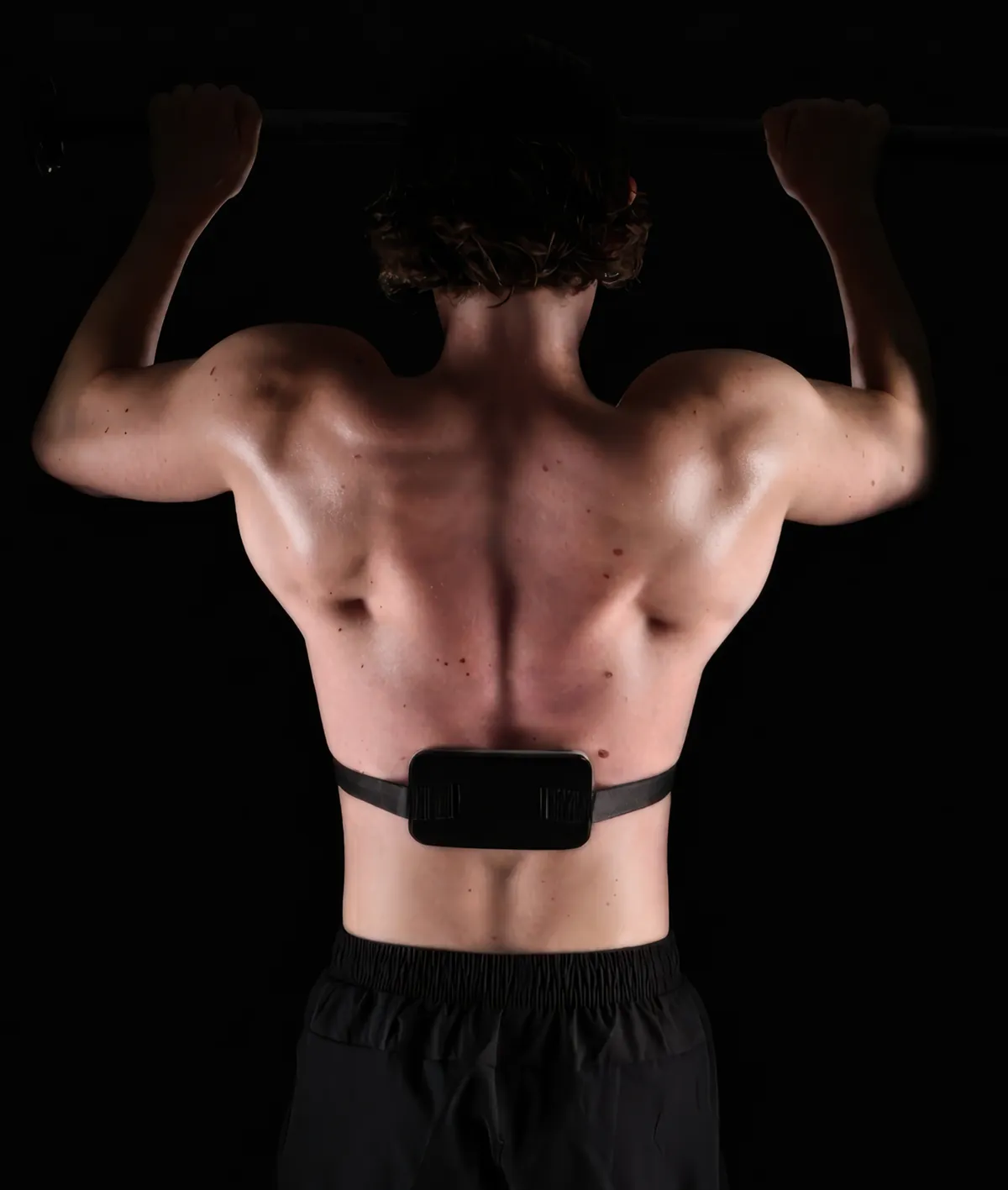
The prep work before a repair: the breathing capacity and back strength that make the first week after surgery survivable and the result hold.
- Breathing capacity built before the bar
- Back and postural work for recovery
- What to have ready before the date
This article is for educational purposes only and does not constitute medical advice. Always consult a qualified healthcare professional before starting any treatment plan. View full disclaimer →