Contents · 10 sections
No sports guideline says you can’t fight with a sunken chest. Nobody has studied what punches, kicks or knees do to one, so nobody can promise it’s harmless or prove it’s dangerous. Stamina can suffer for some people, and the research points mostly at the heart, not the lungs. A few people should see a doctor before they spar. And if you’ve had surgery, when you go back to contact is your surgeon’s call, not mine. As for fighters who have it, it’s fewer than the lists claim: on record, one UFC fighter, Edmen Shahbazyan, has it reported by one sports outlet.
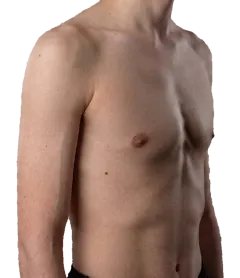
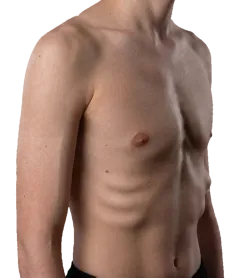
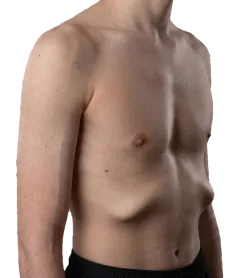
If you have pectus excavatum and you want to box, do MMA or wrestle, there’s usually one picture in your head. Someone’s fist, shin or knee landing right in the dip.
I was diagnosed with pectus excavatum at 15 and corrected it without surgery over about three years. I’m not a doctor. I’m a Level 5 certified personal trainer, and I’ve coached people who do combat sports. Further down, I go through each fighter the lists name and what’s actually on record.
Is it safe to box, do MMA or wrestle with pectus excavatum?
For most people, there’s no rule against it. A 2025 review in sports cardiology, by Małek, Lemańska and Śpiewak, points out that there are no guidelines written for athletes with pectus excavatum. The main European and American sports cardiology documents don’t mention it.
For people who haven’t had surgery, one hospital’s advice leans toward staying active. Children’s Mercy Kansas City says people with pectus excavatum can keep doing the activities they enjoy. Some symptoms may get worse with exercise, but the hospital says the activity itself isn’t a health risk. Keep the limits in mind, though. That page is written for children and families, and it’s about activity in general, not getting punched for a living.
AnatomikModeling, a company that makes custom chest implants, takes a similar line: no sports contraindication except in very severe cases with proven effects on the heart and lungs. That’s one company’s view, and it sells implants, so I wouldn’t lean on it alone.
So my starting point is yes, you can train. What changes that answer is how severe your chest is and whether you have symptoms.
Who should see a doctor before sparring
Sparring means live rounds where your partner is really trying to hit you or take you down. Technique work means drilling, pads, bag work and controlled practice where nobody is landing hard shots on you.
These are the cases where I send people to a doctor before anything else. If one fits you, get checked before you spar or compete:
- You get symptoms when you exert yourself. Breathlessness that’s out of proportion to the effort, chest pain, palpitations (a racing, pounding or skipping heartbeat), or feeling close to fainting.
- Your chest is severe and you have symptoms. The Haller index is a number from a chest scan that compares how wide your chest is with how deep the dip goes. The higher it is, the more severe the chest. Above 3.25 with symptoms is my line for seeing a doctor first.
- You have a known heart or lung condition.
- You have, or might have, Marfan syndrome or Ehlers-Danlos syndrome. These are connective tissue conditions, and Marfan syndrome is linked to pectus excavatum.
- You’ve had chest surgery before.
The heart part of that list comes from the same 2025 review. A sunken chest can press on the heart, which can reduce how well it fills and how much blood it pumps during hard exercise. Pectus excavatum is also linked to mitral valve prolapse (a heart valve that doesn’t close cleanly), irregular heart rhythms and Marfan syndrome. I’ve written more about pectus excavatum and the heart.
A check like this may include an ECG (a recording of your heart’s electrical activity), an echocardiogram (an ultrasound of the heart), and sometimes an exercise test where you work hard on a bike or treadmill while your heart and breathing are measured. Your doctor decides which ones you need.
There’s an upside here too. The review notes that pectus excavatum can produce findings that look like serious heart disease, and says screening should take it into account so athletes aren’t misdiagnosed or ruled out of sport for no reason. A sunken chest shouldn’t get you ruled out by mistake.
That matters if you plan to compete. A seven-year review of MMA bouts in Calgary found that 5.4% were cancelled during the pre-fight medical period. One fighter was pulled over an abnormal ECG and suspended until a cardiologist had seen them. That study had nothing to do with pectus excavatum. If you’ve had heart tests, my advice is to bring the results to your pre-fight medical, so whoever reads your ECG knows about your chest.
If nothing on the list fits you, the starting point above applies. Train, and pay attention to how your body responds.
What happens if you get hit in the dip?
This is the question everyone asks, and the honest answer is that nobody knows. I couldn’t find a single study on punches, kicks or knees to a sunken chest, and no clinical guidance either way. Not that it’s safe. Not that it’s dangerous.
You’ll read online that a punch can’t push your breastbone (sternum) further in. I couldn’t find evidence for that, or against it, so don’t train as if it’s settled.
Ground fighting has its own version of the worry. In BJJ and wrestling you won’t get punched in the chest the way you would in boxing, but you can end up with someone’s knee on your chest or ribs, or their full weight across them. The same answer applies. It hasn’t been studied.
Here’s what I’d do with that uncertainty:
- If you’re in the see-a-doctor group above, stick to technique work until a doctor has seen you.
- If a blow is followed by chest pain, palpitations, breathlessness or dizziness, stop training and get checked. Don’t finish the round to prove a point.
- If your chest hurts in general, not only after contact, mention it to your doctor.
Will pectus excavatum hurt your stamina?
It can. The 2025 review says athletes with pectus excavatum may report lower fitness, especially in endurance sports and mixed sports with bursts of very hard work. Boxing, MMA and wrestling fit that description well.
The cause isn’t what most people assume. In a study by Małek and colleagues, cited in that review, easy tiring was linked to how the heart performed, not to breathing. Lower lung volumes at rest show up mostly in severe cases, and some people with a severe chest do get breathless because the chest physically restricts the lungs. So if you have a mild or moderate chest, “my lungs are squashed” probably isn’t the whole story.
When is breathlessness a red flag rather than poor conditioning? When it comes with chest pain, palpitations or near-fainting, or when it’s far worse than the effort explains. That’s a reason to see a doctor, not a reason to run more hills. There’s more on this in my guide to pectus excavatum and shortness of breath.
If you don’t have red flags, this is where my opinion as a trainer comes in. Not every bad round is your chest. Nerves, tension, holding your breath and poor pacing can wreck anyone’s cardio, chest or no chest. Build your conditioning the way any fighter would, then judge your chest.
Which UFC fighters and boxers have pectus excavatum?
Fewer than the lists say. Most fighter lists online are built from photos. A dip in someone’s chest at a weigh-in is not a diagnosis, and I’d rather give you three names with a source than a long list without one. One of the three, Kofi Kingston, has said himself that he doesn’t have it.
| Name | Sport | What’s public | How firm |
|---|---|---|---|
| Edmen Shahbazyan | MMA (UFC middleweight) | EssentiallySports wrote in October 2025 that his chest is pectus excavatum, which fans may have noticed at weigh-ins. The only source it cites is a website of photos. | Reported by one sports outlet. I couldn’t find him talking about it himself. |
| Kofi Kingston | WWE pro wrestling | He says he doesn’t have it. In a tweet on 16 August 2019, reported by WrestleTalk, he wrote that a lot of people think he has pectus excavatum and that it’s “not true”: his breastbone isn’t concave, and his chest muscles attach closer to its sides than usual. Distractify had called his chest pectus excavatum a month earlier. | His own words: he doesn’t have it. He’s in this table because so many lists say he does. WWE is scripted entertainment, not a combat sport. |
| Cody Miller | Swimming (US Olympian) | Wikipedia notes his pectus excavatum is severe enough to limit his lung capacity. The 2025 sports cardiology review calls him the most famous athlete with the condition. | Well documented. He’s a swimmer, not a fighter. |
Cody Miller is on this list for a reason. At the 2016 Olympics he won gold in the 4×100 m medley relay and bronze in the 100 m breaststroke, with pectus excavatum severe enough to limit his lung capacity. He’s the clearest example I know of an athlete competing at the very top with it.
You’ll see other fighters named on photo lists and fan forums. I couldn’t find any of them saying they have it, or a reputable report saying so. That doesn’t mean they don’t have it. It means I can’t tell you they do. If you’re curious about famous people with a sunken chest more broadly, I keep a separate list of celebrities with pectus excavatum.
Boxing and wrestling after the Nuss procedure
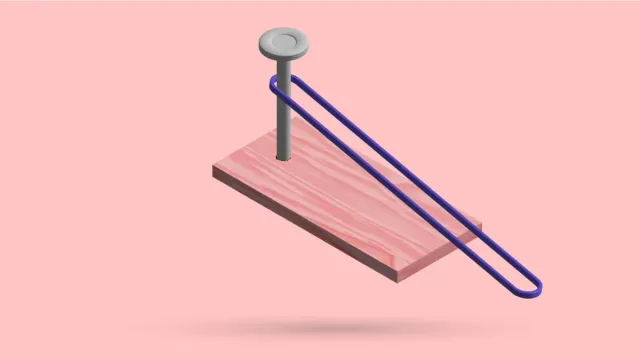
In the Nuss procedure, a surgeon places one or more curved metal bars behind the breastbone to push it out, and the bars stay in for a few years. A bar can shift or flip, and hospitals set activity schedules partly to avoid that. I’ve written about bar movement after Nuss if you want the detail.
How long you have to wait depends on where you had surgery. Here’s how four centers describe it:
| Center | What they say about contact sports |
|---|---|
| Aarhus, Denmark (short-bar technique) | No sports for the first 6 weeks, and no heavy contact sports while the bars are in. Bars come out about 3 years later. |
| Children’s Hospital of Philadelphia | No contact sports for the first 4 weeks. There may be ongoing restrictions, such as no football, wrestling or pole vaulting, for the whole time the bar is in. The bar usually stays about 3 years. |
| UPMC Children’s Hospital of Pittsburgh | Noncontact sports at 3 months, contact sports at 6 months. Sticking to the schedule helps avoid complications such as the bar flipping. The bar comes out at 3 years. |
| Children’s Mercy Kansas City | No strenuous activity for 2 weeks, then normal activity including sports, easing into heavy lifting and contact sports. The page doesn’t say which operation this applies to. |
So one center has you easing back into contact after a few weeks, and another may keep you out of wrestling until the bar comes out. These are different surgical teams with different protocols. The one that applies to you is your surgeon’s, so ask them directly about sparring, grappling and competition, not just “sports”. Once the bar is removed, ask the same question again.
If you had a custom silicone implant instead, the company that makes them, AnatomikModeling, says sports can resume gradually after 3 months, but to wait a year before boxing or other contact sports. That’s one company’s protocol for its own procedure.
Lifting for fighters: strength over size
This section is my opinion as a trainer, not research.
If you have pectus excavatum, it’s tempting to train like a bodybuilder and chase a bigger chest. For a fighter, I think that’s usually the wrong goal. You compete in a weight class. Adding size can push you up into the next one, against bigger opponents, without making you a better fighter. Your coach may still want you to gain weight to fill out your class, and that’s a different conversation from chasing a bigger chest.
What I’d do instead is lift for strength and power:
- lower reps with heavier loads
- compound lifts such as squats, deadlifts, presses and rows
- modest total volume, so lifting doesn’t eat into your fight training
- enough rest between sets to move the weight fast and well
My usual starting point is two or three compound lifts per session, in about 30 minutes. That’s where I’d begin, not a rule. If you’re new to the gym, my pectus excavatum exercises are a good base. If you currently train bodybuilding-style, expect to cut back once you add serious fight training.
That’s because recovery is limited. I don’t think you can go all-out in the gym and all-out on the mats and recover from both. Something has to give, and in a fight camp it should be the lifting. Scale it down as camp ramps up and build it back afterward.
Also be realistic about injuries. Combat sports carry a real chance of getting hurt, and an injury can take you out of all your training for a while, lifting included. I wouldn’t avoid them over it. Just plan your weeks around the training you care about most.
Feeling self-conscious in the ring
Fighting puts your chest on display. Weigh-ins, face-offs and every round without a shirt. If you’ve spent years hiding your chest, that can feel like a lot.
It’s normal to feel that way, and it’s worth dealing with rather than avoiding. If it’s affecting more than the gym, I’ve written about pectus excavatum and anxiety. In training you can wear a rash guard or a shirt where your gym allows it.
My view is that people watching a fight remember what you did in it. How you moved and whether you kept going. Your chest is a small part of that picture. Don’t let it decide whether you step in.
Where to start
If anything on the see-a-doctor list fits you, including past chest surgery, see your doctor or surgeon before you spar. Tell them you want to box, do MMA or wrestle, and ask about contact specifically.
If nothing fits, start with technique classes, build your conditioning, and add sparring when your coach thinks you’re ready.
If you want to work on the chest itself, start by finding out how severe it is. My free 1-minute quiz gives you a sense of where your chest stands and which non-surgical route fits your case. Be ready for an honest timeline. Structural change is measured in months and years. Mine took about three years, and the result was visible and measurable, but not complete.
Sources
- Małek Ł, Lemańska A, Śpiewak M. Pectus Excavatum: A Frequent but Often Neglected Entity in Sports Cardiology. Diagnostics (Basel). 2025;15(23):2956. Read it
- Pectus Excavatum. Children’s Mercy Kansas City. [cited 2026 Oct 19]. Read it
- Pectus Excavatum, Sport and bodybuilding. AnatomikModeling. [cited 2026 Oct 19]. Read it
- Curran-Sills G. Safety in Mixed Martial Arts: a 7-Year Review of Cancelled MMA Bouts in Calgary, Alberta, During the Pre-bout Medical Examination Period. Sports Med Open. 2018;4:6. Read it
- Unnithan JR. What Happened to Edmen Shahbazyan’s Chest? All We Know About His Medical Condition. EssentiallySports. 2025 Oct 3. Read it
- Gatollari M. What Happened to Kofi Kingston’s Chest? Distractify. Updated 2019 Jul 23. Read it
- Datson A. Kofi Kingston Explains Why His Pectoral Muscles Look Unusual. WrestleTalk. 2019 Aug 18. Read it
- Cody Miller. Wikipedia. [cited 2026 Oct 19]. Read it
- Pilegaard HK. Single centre experience on short bar technique for pectus excavatum. Ann Cardiothorac Surg. 2016;5(5):450-5. Read it
- Nuss Procedure. Children’s Hospital of Philadelphia. [cited 2026 Oct 19]. Read it
- Nuss Procedure. UPMC Children’s Hospital of Pittsburgh. [cited 2026 Oct 19]. Read it
Not a list of exercises. Sixteen weeks of programmed posture, breathing and mobility work, in the order that actually shifts a chest.
- 16 weeks, gym and home versions
- Programmed sets, reps and progressions
- The lifts to avoid while you correct

This article is for educational purposes only and does not constitute medical advice. Always consult a qualified healthcare professional before starting any treatment plan. View full disclaimer →