Contents · 11 sections
You’re slim, your ribs show, and the dip in the middle of your chest feels like the first thing anyone sees. Everyone says the same thing: just eat more. Would that make the dent less obvious?
It can make it look less sharp. Gaining weight adds soft tissue over the chest, and that can soften the edges of the dip. It doesn’t move your breastbone, and it doesn’t change the scan number doctors use to grade it. Muscle frames the dip from either side but can’t fill it. Below are the studies, what nobody has measured, and a safe plan for your age.
Losing weight without trying, or worried about how you eat? Skip to when to see a doctor.
I was diagnosed with pectus excavatum at 15 and corrected it without surgery over about three years. The change was visible and measurable, but not complete. When I started training, in a home gym, I was underweight by BMI and my posture was poor. I’m a Level 5 certified personal trainer, not a doctor, so every medical point below comes from a named study or health service, and where nobody has studied something, I say so.
Does gaining weight change pectus excavatum?
It changes how your chest looks, not the bone underneath.
Doctors grade pectus with the Haller index: on a chest scan, the inside width of the chest divided by the distance from the back of the breastbone to the front of the spine. Both distances sit inside the rib cage, so fat or muscle can’t change the number. A ruler at home rests on skin, muscle and fat (how to measure pectus excavatum), so your weight can change the reading while the breastbone stays put.
Fat softens the edges, not the bone
A CT study from Portugal found that in people with pectus, the thickness of soft tissue over the ribs depended on age, sex and BMI (body mass index: weight in kilograms divided by height in meters squared).
That layer decides how closely the skin follows the bone. A US children’s hospital reviewed the CT scans of 94 children and teens with pectus, median age 15, measuring how far the skin dipped below a straight edge laid across the chest. With a 2 cm cut-off, that depth matched the Haller index grading in 93% of those with a BMI under 18.5, against 80% of the rest. In someone heavier, more soft tissue can soften how the dip looks, and the surface follows the bone less closely. That’s one group of young patients, so treat it as a pattern.
My interpretation: if you’re underweight, adding some fat can leave the edges of the dip less sharp. The dip itself stays. Fat grafts and implants do this on purpose, as a cosmetic fill.
I couldn’t find a study that measured how deep the dent looks before and after someone gains weight or muscle. So nobody can tell you how much difference to expect.
Muscle frames the dip but can’t fill it
Your main chest muscle, the pectoralis major, attaches along the front of the breastbone and the upper rib cartilages and runs out to your upper arm. It grows on either side of the midline, not across it. So more muscle frames the dip without filling it. Framing still changes your outline (see how to hide pectus excavatum).
You’ll also read that bigger pecs make the dip look deeper. I couldn’t find a study that tested that. In my view as a trainer, building only the chest can make the edges of the dip look sharper, which is one more reason to train your whole body.
Can too much fat make it look worse?
More food isn’t automatically better. In a Norwegian trial of 39 elite athletes aged about 19, those put on a calorie-surplus meal plan for 8 to 12 weeks gained more weight than those who ate as they liked (3.9% against 1.5% of body weight) and more fat (15% against 3%), but no more lean mass. The NHS also says not to rely on chocolate, cakes and sugary drinks.
My interpretation: a belly that sits forward draws the eye down the chest toward the dip (see pectus excavatum pot belly). If your lower ribs stick out as well, that’s rib flare.
For women, breast tissue is soft tissue too and changes how the chest looks over the dip (pectus excavatum in women).
Are people with pectus excavatum usually skinny?
Not as a rule. In several studies, people with pectus weighed less on average than comparison groups. But many people with pectus are not underweight.
Prof. Mustafa Yüksel, who reviews medical content on this site, co-authored two of the studies below, the Alaca and Kuru papers.
| Who was studied | How | What they found |
|---|---|---|
| 19 boys aged 13 to 19 waiting for surgery, Poland, against 30 healthy boys | Comparison group | BMI 18.7 against 22.2 |
| 1,371 patients treated at one Korean center, mostly children | Compared with Korean national data | Before the Nuss, BMI 17.5 against 18.6; lower in the more severe group (16.2 against 16.6 in the milder one) |
| 90 teens aged 10 to 18, Turkey, against 90 healthy teens; co-authored by Prof. Yüksel | Comparison group | Lower body weight |
| 207 patients after surgery with one surgeon, Turkey, mean age 17.9 at surgery; co-authored by Prof. Yüksel | Phone follow-up | Mean BMI 20.08; 32.5% “underweight” (cut-off not stated), 61.9% normal |
| 94 children and teens, US, median age 15 | Records review | 46% had a BMI below 18.5, an adult cut-off applied to teens |
| 272 adults aged 18 to 43 having the Nuss, Taiwan, 94% male | Records review | Mean BMI 20.1 before surgery |
| 25 teens aged 11 to 18, Turkey, no comparison group | Nutrition assessment | Thinness 20%, malnutrition 16% |
The pattern is lower average weight. But look at who was studied: mostly surgical patients, who skew toward deeper chests, mostly boys, mostly at Asian or Turkish centers. Depending on the group and the definition, 20% to 46% were thin, underweight or below 18.5. Nobody knows whether pectus and a slim build share a cause, or whether one leads to the other.
Does pectus make it harder to gain weight?
It may feel that way. Among Kahraman and Celik’s 25 teens (the table’s last row, no comparison group), appetite loss was the most common nutritional problem, along with picky eating (being wary of new foods).
What about metabolism? I couldn’t find a study showing that people with pectus have a faster metabolism. Kahrıman and colleagues (their 2025 study is below) write that it’s unknown whether low weight in pectus comes from low intake, metabolic rate or gut problems.
Bodies do respond differently to extra food, though. In a classic overfeeding study of 16 adults without obesity (not a pectus study), 1,000 extra calories a day for 8 weeks led to tenfold differences in fat stored, explained by how much everyday movement like fidgeting went up. That’s why the plan below adjusts to your scale, not a calculator.
Can diet change your chest?
No. I couldn’t find a study showing diet changes the shape of the chest, nor one linking pectus to eating disorders. What food can change is your weight and how you grow.
In Kahrıman and colleagues’ 2025 study of 40 children aged 9 to 16 with moderate pectus in Turkey, co-authored by Prof. Yüksel, each child had individual education from a dietitian. About 10 weeks later, their energy and protein intake, weight and BMI-for-age had all gone up. With no comparison group, and children gaining weight as they grow anyway, it can’t say how much was the dietitian. The authors recommend referring children with pectus to one.
How to gain weight safely with pectus excavatum
Check where you stand, eat more and more often, get protein in, train your whole body, and gain slowly.
Check where you are first
BMI is a screen, not a diagnosis, but it’s the right first check.
- Adults 20 and over. The CDC counts a BMI below 18.5 as underweight.
- Children and teens. The CDC uses BMI-for-age, a percentile that compares you with others of the same age and sex. Below the 5th percentile counts as underweight.
Don’t hold a teenager to 18.5: a healthy BMI shifts with age and sex while you grow. Below the line, or losing weight? Read the doctor section first.
Eat more, more often
A calorie surplus means eating more energy than you burn. For adults, the NHS suggests gaining gradually, trying around 300 to 500 extra calories a day. Its other tips suit a small appetite:
- smaller meals more often, with healthy snacks in between
- high-calorie drinks such as milkshakes between meals, and not filling up on drinks before meals
- cheese, nuts and seeds added to what you already eat
- protein from beans, pulses, fish, eggs and lean meat
- strength training or yoga, because exercise can also improve your appetite
Nobody knows the exact surplus that builds the most muscle, as a sports nutrition review points out, so treat 300 to 500 as a starting point and adjust to the scale.
Teens: I’m not giving you a calorie number, because I couldn’t find one I could verify for teenagers. My advice is regular meals plus snacks, protein at every meal, and a parent and a doctor or dietitian involved.
Protein
For adults who lift, a 2018 meta-analysis of 49 trials in 1,863 adults found that lean-mass gains from extra protein leveled off at about 1.6 g per kilogram of body weight a day. A review on bodybuilding nutrition suggests 1.6 to 2.2 g/kg. For a 60 kg adult, 1.6 g/kg is about 96 g a day (my calculation). For teens, I’m not setting a gram target. Protein at every meal is the rule.
Train your whole body
Train while you gain, so the extra food has a job to do. The WHO 2020 guidelines recommend that children and teens get 60 minutes a day of moderate to vigorous activity, with muscle- and bone-strengthening work at least 3 days a week, and that adults do muscle-strengthening work for all the major muscle groups on 2 or more days a week.
Supervised lifting didn’t affect children’s growth in height or weight in a review of the studies. Build your back as hard as your chest. The weekly plan, the lifts and that evidence are in exercises for pectus excavatum.
How fast to gain, and how to check
The same bodybuilding review suggests gaining about 0.25 to 0.5% of body weight a week for beginners and intermediates. For a 60 kg adult that’s 0.15 to 0.3 kg a week, or about 0.6 to 1.2 kg a month (my calculation). In the athlete trial above, gaining faster mostly meant gaining fat.
My rule: weigh yourself under the same conditions and judge the weekly average, not one morning. If it stays flat, add a little more food and check again. Measure your chest once a month, the same way each time, and write your weight next to the reading, because weight moves the ruler.
| Children and teens | Adults (20 and over) | |
|---|---|---|
| Weight check | BMI-for-age; underweight is below the 5th percentile | BMI; underweight is below 18.5 |
| Food | Regular meals plus snacks, no calorie target | Around 300 to 500 extra calories a day (NHS), then adjust |
| Protein | Some at every meal | About 1.6 g/kg a day, up to 2.2 |
| Training | 60 minutes of activity a day, strengthening 3 or more days a week, supervised | Strengthening all major muscles 2 or more days a week |
| Rate | Gradual, checked against growth charts by a doctor | About 0.25 to 0.5% of body weight a week |
| Help | A parent plus a doctor or dietitian | Your GP if weight keeps dropping without a reason |
What to avoid
Junk-food bulking. Junk food makes a big surplus easy, and a big surplus mostly adds fat. Calorie-dense doesn’t have to mean sugary: start with the NHS list above.
Training only the chest. It won’t fill the dip, and pressing without pulling does nothing for a rounded upper back. Pair it with rows.
Bodybuilding products and steroids. The American Academy of Pediatrics says young people use performance-enhancing substances for looks as well as sport, that contamination is common, and that use is linked with later steroid use. For most young athletes, it says, they add little beyond puberty, good food and the right training. The FDA warns that some bodybuilding products illegally contain steroids or steroid-like substances, with harms including serious liver injury, kidney damage, heart attack and stroke. If a tub promises size fast, leave it on the shelf.
Skipping meals. In my view, it works against you while you’re gaining. The NHS advice is the opposite: smaller meals, more often.
Weight and the vacuum bell
Part of the change you see with a vacuum bell can be fat. In a 2026 CT study of 47 children (median age 7), after a year of bell use the surface dip had improved by 4.0 mm and the bony dip by 1.4 mm, and chest fat had increased in 95.7%. So “it’s all fat” is wrong, but a skin-surface measurement can’t tell the two apart. Gaining weight at the same time muddies it further, so log your weight. More in vacuum bell therapy.
Marfan syndrome and weight gain
With Marfan syndrome, gaining weight is often hard, and building muscle is the part to hold back on. The Marfan Foundation says many people with Marfan have difficulty gaining weight, especially when they’re younger, for reasons not fully understood, and suggests a nutritionist or dietitian. It says building muscle isn’t recommended because it can contribute to aortic enlargement (a widening of the main artery leaving the heart), and to ask your doctor before any supplement. So food is the lever, and any training plan comes from your doctor.
Weight before and after pectus surgery
I couldn’t find hospital guidance telling pectus patients to gain or lose weight before the Nuss. In 272 children after the Nuss at a Chinese center, low BMI was an independent risk factor for poor incision healing. In 382 adults after minimally invasive repair at a Korean center, higher BMI went with more opioid use in the first 6 to 48 hours. Neither tells you to change your weight, so follow your surgical team (my Nuss procedure guide covers recovery).
After surgery, don’t expect the scale to change much on its own. Of the Taiwanese adults, the 183 analysed went from an average 60.3 to 61.1 kg by bar removal, about 3.6 years later. That’s about 0.8 kg, with no comparison group. When you can lift again varies by hospital, so use your surgeon’s timeline. The wider choices are in pectus excavatum surgery.
When to see a doctor
Some low weight is a doctor’s question before a food question. See your doctor first if:
- You keep losing weight without changing what you eat or how active you are. The NHS lists causes including depression, anxiety, eating disorders, coeliac disease, an overactive thyroid and type 1 diabetes.
- You notice signs of an eating disorder. The NHS lists worrying a lot about your weight or shape, eating very little, making yourself sick or taking laxatives, exercising too much, and strict rules about food, plus physical signs such as feeling cold, tired or dizzy, delayed puberty and missed periods. It includes ARFID: avoiding certain foods or limiting how much you eat. The NHS says to see a GP as soon as you can.
- You use control of food to cope with feelings. The NHS weight-gain page lists this too.
See a doctor before you start any device, brace or exercise program if any of these apply to you:
- chest pain
- fainting or nearly fainting
- breathlessness at rest or with light effort
- palpitations or an irregular heartbeat
- a diagnosed heart or lung condition
- Marfan syndrome or Ehlers-Danlos syndrome, or a doctor has raised either
- previous chest surgery
- a Haller index above 3.25 together with symptoms
- symptoms that nobody has checked yet
None of these means you’ll need surgery. They mean someone should look at your heart and lungs before you go further. An index above 3.25 is a common referral threshold, not an emergency.
If how your chest looks is shaping how you eat, tell your GP, and see the psychological side of pectus excavatum. Other symptoms worth checking are in pectus excavatum symptoms.
What to do next
Pick the line that sounds like you.
- Underweight teen. Follow the teen column of the table, with a parent and a doctor or dietitian.
- Adult hard gainer. Follow the adult column and judge the weekly average.
- Vacuum bell user. Measure monthly and log your weight next to every reading.
- Heading for surgery. Ask your surgical team before changing your weight either way.
- Any doctor trigger above. Doctor first, plan second.
I was a skinny hard gainer myself. If you want the steps laid out, my Pectus Nutrition Program is a 12-week weight-gain plan. It’s my own product, so judge it by whether it matches the evidence above.
To see how significant your chest is and which non-surgical route fits, take my free 1-minute quiz.
Give whatever you pick honest time. Weight moves in weeks to months. Structural change is measured in months and years.
Sources
- Rodrigues PL, et al. J Pediatr Surg. 2013;48(9):1878-86. Read it
- Jacobson J, et al. J Surg Res. 2020;256:687-92. Read it
- Garthe I, et al. Eur J Sport Sci. 2013;13(3):295-303. Read it
- Jarosz M, et al. Kardiochir Torakochir Pol. 2013;10(1):72-78. Read it
- Park HJ, et al. Eur J Cardiothorac Surg. 2016;50(6):1102-9. Read it
- Alaca N, Yüksel M. Pediatr Surg Int. 2021;37(6):765-75. Read it Co-authored by Prof. Mustafa Yüksel.
- Kuru P, et al. Korean J Thorac Cardiovasc Surg. 2016;49(1):29-34. Read it Co-authored by Prof. Mustafa Yüksel.
- Htut N, et al. J Cardiothorac Surg. 2024;19:65. Read it
- Kahraman S, Celik Y. Pediatr Surg Int. 2026;42:75. Read it
- Levine JA, et al. Science. 1999;283(5399):212-4. Read it
- Kahrıman M, Çolak GA, Sağlam D, Yüksel M, Aslanhan S. Pediatr Surg Int. 2025;41:145. Read it Co-authored by Prof. Mustafa Yüksel.
- Adult BMI Categories. Centers for Disease Control and Prevention. 2024 Mar 19 [cited 2026 Oct 21]. Read it
- Child and Teen BMI Categories. Centers for Disease Control and Prevention. 2024 Jun 28 [cited 2026 Oct 21]. Read it
- Healthy ways to gain weight. NHS. Reviewed 2023 Mar 28 [cited 2026 Oct 20]. Read it
- Slater GJ, et al. Front Nutr. 2019;6:131. Read it
- Morton RW, et al. Br J Sports Med. 2018;52(6):376-84. Read it
- Iraki J, et al. Sports (Basel). 2019;7(7):154. Read it
- Bull FC, et al. World Health Organization 2020 guidelines on physical activity and sedentary behaviour. Br J Sports Med. 2020;54(24):1451-62. Read it
- LaBotz M, Griesemer BA. Pediatrics. 2016;138(1):e20161300. Read it
- Caution: Bodybuilding Products Can Be Risky. U.S. Food and Drug Administration. Content current as of 2024 Sep 20 [cited 2026 Oct 21]. Read it
- Zhang Q, et al. J Pediatr Surg. 2026;61(7):163131. Read it
- Weight Gain and Marfan Syndrome. The Marfan Foundation. Updated 2021 Feb 25 [cited 2026 Oct 20]. Read it
- Liu X, et al. Semin Pediatr Surg. 2025;38:151539. Read it
- Kim M, et al. J Clin Med. 2026;15(3):1023. Read it
- Unintentional weight loss. NHS. Reviewed 2025 Jul 28 [cited 2026 Oct 20]. Read it
- Eating disorders: overview. NHS. Reviewed 2024 Jan 23 [cited 2026 Oct 20]. Read it
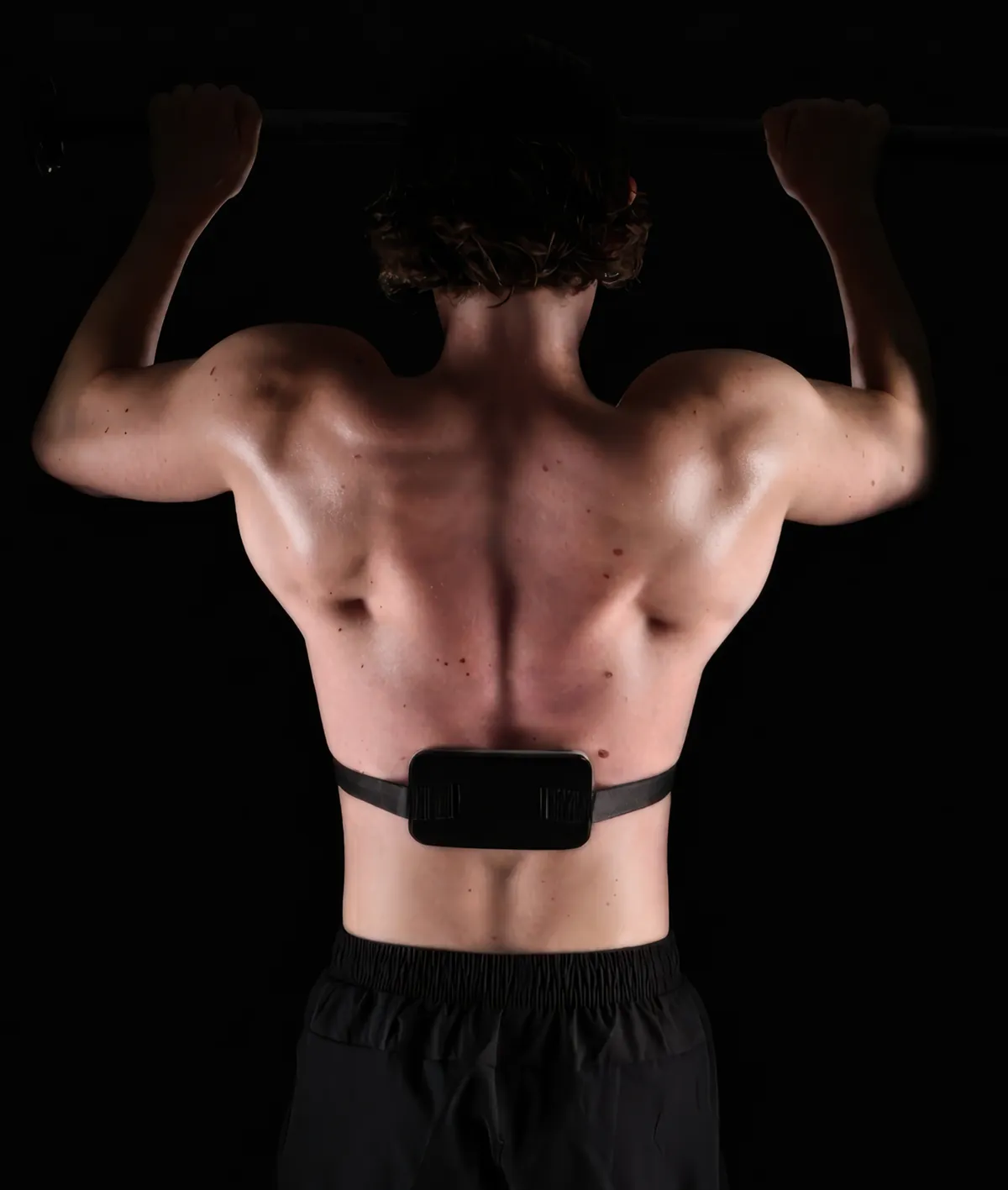
My 12-week weight-gain plan for people with pectus, with the Blender Protocol for the days your appetite won't cooperate.
- A 12-week weight-gain plan
- The Blender Protocol for low appetite

This article is for educational purposes only and does not constitute medical advice. Always consult a qualified healthcare professional before starting any treatment plan. View full disclaimer →