Contents · 10 sections
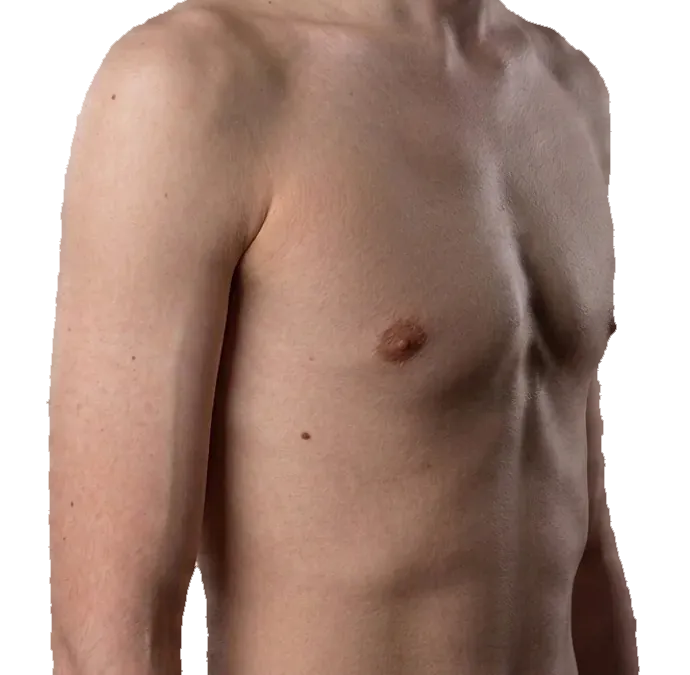
Pectus carinatum is a chest wall shape where the breastbone and the cartilage beside it grow outward, so the middle of the chest sticks out like a keel. You will also hear it called pigeon chest, bird chest or keel chest. They are the same condition.
It is the opposite of pectus excavatum, where the breastbone sinks in. And of the three conditions I work with, it is the one with the best odds without surgery, provided the chest is still flexible.
I did not have carinatum myself. My chest went the other way, a sunken sternum with a rib flare on top. What I know about carinatum comes from the research and from fitting braces for people who have it, and I will tell you where each claim comes from.
Pigeon chest, bird chest, keel chest: one condition
“Carinatum” comes from the Latin for keel, the ridge along the bottom of a boat. The everyday names all describe the same profile: a chest that comes to a point at the front instead of curving flat across.
You will see three spellings of the problem in search results and on forums:
- Pigeon chest is the most common everyday name.
- Bird chest or “bird chested” is the same thing.
- Keel chest is mostly used in older medical writing.
If someone has told you that you have any of these, they mean pectus carinatum.
What it looks like
The bump sits on the breastbone, the cartilage beside it, or both. Where it sits decides which type you have.
| Type | Where the bump is | How common |
|---|---|---|
| Lower or middle (chondrogladiolar) | The lower half of the breastbone and the cartilage beside it | By far the most common |
| Upper (chondromanubrial) | Just below the collarbones, often with a dip underneath | Rare |
| Asymmetric | One side of the chest stands out more than the other | Common, often mixed with the others |
The upper type behaves differently enough that some surgeons now treat it as its own condition, called pectus arcuatum. It is stiffer, and it responds less well to bracing.
One-sided bumps deserve their own explanation, and I have written one: asymmetrical pectus carinatum covers how the shape is classified and what changes in treatment.
Pectus carinatum vs pectus excavatum
| Pectus carinatum | Pectus excavatum | |
|---|---|---|
| Shape | Breastbone pushed out | Breastbone sunk in |
| Common names | Pigeon chest, bird chest | Sunken chest, funnel chest |
| Usually noticed | Around the growth spurt | Often in early childhood, worse at the growth spurt |
| Main non-surgical tool | Compression brace | Vacuum bell |
| How it responds without surgery | Best of the three when flexible | Slower, takes longer to hold |
The two are made of the same tissue, pushed in opposite directions, and they can turn up together. Some people have a dip on one side and a bump on the other. Carinatum can also appear after pectus excavatum surgery if the sternum is pushed too far forward.
What causes it
The direct cause is mechanical. The costal cartilage, which joins your ribs to your breastbone, grows too long for the frame it sits in. With nowhere else to go, it pushes the sternum forward. A 2014 study measuring the ribs and cartilage of carinatum patients found exactly that: overgrown cartilage and slightly undergrown ribs.
Why the cartilage overgrows is less clear. A few things are known:
- It runs in families. A parent or sibling with a pectus deformity raises the odds.
- It travels with some connective tissue conditions, Marfan syndrome being the best known.
- It often sits alongside scoliosis. A 2024 study found curvature of the spine was common across pectus subtypes, so it is worth having your back checked too.
- It is more common in boys.
What does not cause it: lifting weights, push-ups, sticking your chest out, or anything else you did. Posture can make a bump look bigger, but it did not build it. The full list, with the rarer syndromes, is in 13 causes of pectus carinatum.
When it appears, and whether it gets worse
Carinatum usually becomes noticeable in the early to mid teens, around the growth spurt. For some people it seems to arrive over a single summer.
It does not usually flatten by itself. The growth spurt is the period when it tends to grow more prominent, and once growth stops, the shape mostly stays where it is. That is not a reason to panic. It is a reason not to wait, because the same growth window is when the cartilage gives most easily under a brace.
Symptoms: is pigeon chest dangerous?
For most people, no. Carinatum is mainly a shape, not a threat to the heart or lungs. The things people actually report are:
- Tenderness over the bump, especially when lying face down or when something presses on it.
- Getting out of breath sooner than friends during hard exercise. This is less common and less well understood than in excavatum.
- Asthma, which turns up alongside carinatum often enough that it is listed as an associated condition.
- Self-consciousness. Taking the shirt off, swimming, changing rooms. For most of the people who message me, this is the real symptom.
See a doctor rather than relying on an article like this one if you have chest pain that is new or worsening, real breathlessness, palpitations, or a bump that is changing fast. A chest wall specialist can tell you whether anything else is going on.
How to check your own chest
Two checks matter more than anything else on this page.
The press test
Stand up and breathe out fully. Put the flat of your hand on the highest point of the bump and press gently backward.
If the bump moves back under moderate pressure, your chest is flexible. That is the single best sign there is. Clinicians measure the same thing with a device, as the “pressure of initial correction”, and in a 286-patient study they braced the flexible chests rather than operating on them.
If it barely moves, the chest is rigid. Bracing may still help partly, but this is the case to get properly assessed.
Bump height
Measure how far the highest point of the bump stands proud of the ribs beside it. Do it at the end of a full exhale, once a month, in the same light, and take a side photo each time.
That one number is how you will know whether anything you do is working. Without it, you will be judging progress by mood.
Severity scores like the Haller index come from a CT or MRI scan and were designed mainly for excavatum. For carinatum, the press test and the bump height tell you more of what you need to decide.
How it is fixed
There are three tools, and which one fits depends almost entirely on how flexible your chest is.
Bracing: the main non-surgical treatment
A compression brace presses on the bump, front to back, for many hours a day. Cartilage held under steady load remodels toward the shape it is held in, so the bump flattens over months.
This is not fringe. In a randomised controlled trial, groups braced 23 hours a day, 8 hours a day, or not at all, and every group did daily exercises. Every group improved, and the 23-hour group improved most, with no extra side effects. The variable that decides the result is wear time, and you control it.
A flexible chest usually shows measurable change in three to six months, with most of the correction inside the first year, followed by a period of night-only wear so the result holds. The detail on how bracing works, what it costs and how long it takes is in pectus carinatum brace treatment.
Exercise: the frame, not the bump
Training will not push your sternum back in. Muscle cannot do that, and anyone who tells you it can is selling something.
What training does is change the frame around the bump. A rounded upper back, forward shoulders and ribs held up make a carinatum read bigger than it is. A stronger back, a ribs-down posture and a well-built chest make it read smaller. That is why every group in the trial above trained alongside the brace. Pectus carinatum exercises covers the training side.
Surgery: for the rigid chest
If the chest does not move under pressure, or the deformity is severe, surgery is a legitimate option. The traditional operation is the Ravitch, which removes and reshapes the overgrown cartilage. There are also minimally invasive repairs that press the sternum back with a bar, a mirror image of the Nuss procedure for excavatum.
Surgeons who specialise in this have described carinatum as undertreated, and the wider literature has moved toward bracing the flexible chest first and keeping surgery for the rigid one. That is the order I would follow too.
Does age matter?
Yes, through one mechanism: cartilage stiffens as you get older. An adult chest usually needs more pressure, more months, and may only correct partly.
But the screening question is not your age. It is how much your bump gives when you press it. Some adult chests still move and some teenage chests barely do. If yours moves, bracing is worth a proper run.
Carinatum in children, and in women, comes with its own questions about growth, clothing and bras. Pectus carinatum in women covers the second one.
Where to start
If your chest is flexible, the route is short:
- Measure the bump height and take a side photo.
- Start the breathing and posture work tonight. It costs nothing. The free pectus carinatum plan lays out the phases and cites every study.
- Brace, built to your chest and set to a pressure you can wear for long hours. The carinatum brace is the one I fit.
- Re-measure monthly, and do not stop the moment it looks flat.
Every option, from free to coaching, is laid out side by side on the pectus carinatum page. If you are not sure it is carinatum at all, the free quiz will sort out which of the three you are dealing with.
Frequently asked questions
Is pectus carinatum the same as pigeon chest?
Yes. Pigeon chest, bird chest and keel chest are everyday names for pectus carinatum. They all mean a breastbone that sticks out.
Is pigeon chest dangerous?
Usually not. For most people it is a cosmetic and confidence issue, with some tenderness over the bump. New chest pain, real breathlessness or palpitations are a reason to see a doctor rather than read about it.
Does pigeon chest go away on its own?
It does not usually flatten by itself, and it often becomes more prominent through the teenage growth spurt. The good news is that the same window is when bracing works best.
Can exercise fix pectus carinatum?
Not on its own. Exercise cannot push the breastbone back. It improves the posture and build around the bump, which makes it less noticeable and supports bracing, but the brace is what flattens it.
Can adults fix pectus carinatum without surgery?
Often partly, sometimes fully. Adult cartilage is stiffer, so it takes more months and more pressure. If your chest moves when you press it, bracing is worth trying before surgery.
Is pectus carinatum genetic?
It runs in families, and it is linked to some inherited connective tissue conditions such as Marfan syndrome. Many people have no family history at all.
Can you have pectus carinatum and pectus excavatum at the same time?
Yes. Some chests have a bump on one side and a dip on the other, and carinatum can also appear after excavatum surgery. Each part is treated on its own terms.
Did lifting weights give me pectus carinatum?
No. Training does not create the deformity. A big, well-built chest can make the shape easier to see, but the cartilage grew that way on its own.
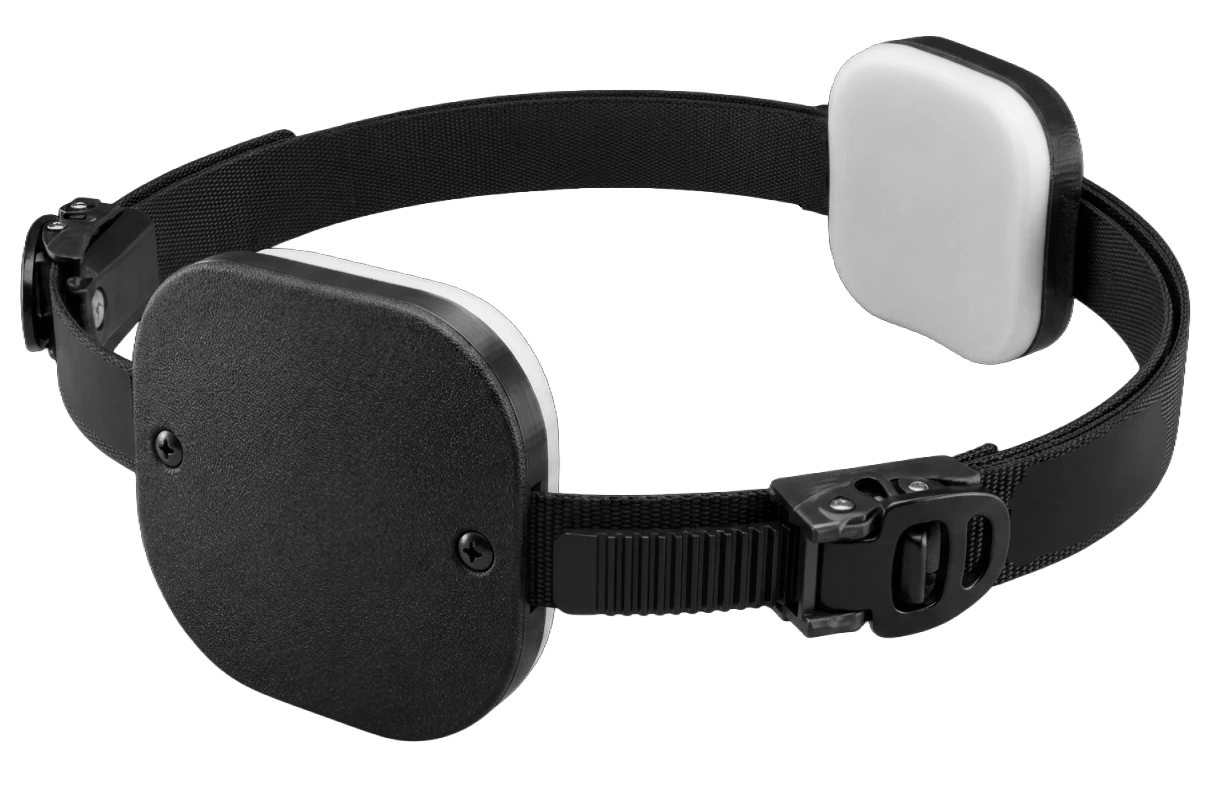
Compression is the lever that flattens a flexible carinatum. This is the brace I fit to clients, built to your chest measurements and set to a pressure you can actually live in.
- Built to your measurements, not a generic size
- Front and back pads that sit on the bump, not the ribs
- Pressure set to be worn for long hours, not cranked tight

This article is for educational purposes only and does not constitute medical advice. Always consult a qualified healthcare professional before starting any treatment plan. View full disclaimer →